BuzzRAG History Desk — 2026-06-29

Curated by AI. Eleanor Vance, History & Ideas Editor
Today's insights reveal how our understanding of the past continues to evolve. From Anglo-Saxon artifacts shedding light on ancient Britain to the discovery of a Hellenistic temple in Albania, we delve into the layers of history that influence current narratives.
Anglo-Saxon Die Stamp Unveiled
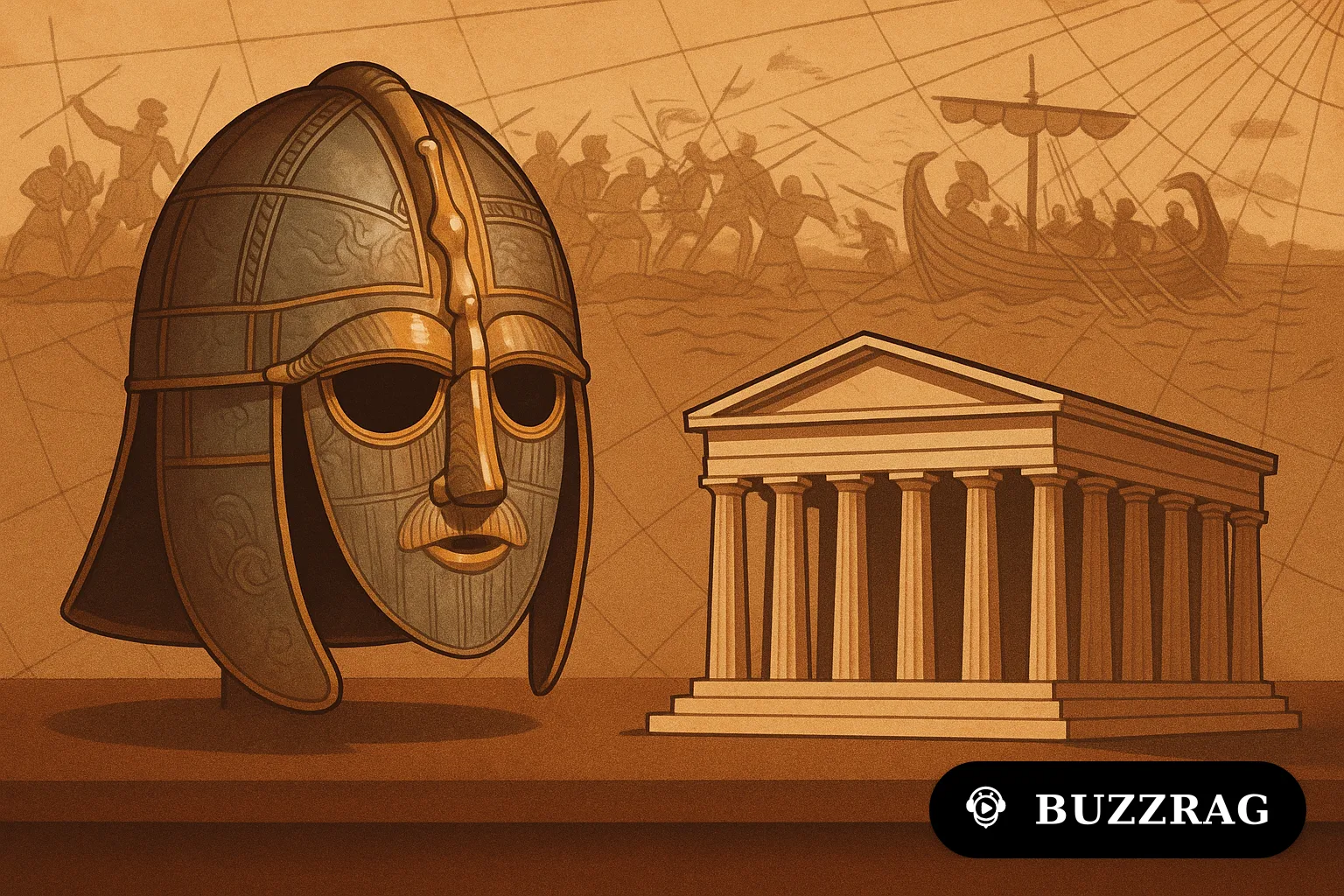
A rare Anglo-Saxon die stamp discovered in Kent is reshaping our understanding of early medieval England's craftsmanship. Found by metal detectorist Stephen Newbury, this copper-alloy artifact dates back to the late sixth or early seventh century and is believed to have been used in the production of ornate helmets similar to those from the Sutton Hoo burial site.
The stamp's discovery adds a tangible piece to the puzzle of Anglo-Saxon artisanal techniques, suggesting a more widespread and sophisticated metalworking tradition than previously thought. Scholars are now reconsidering the geographic and cultural influences that shaped these iconic warrior helmets, which symbolize the martial and artistic prowess of early English societies.
This finding not only enriches our comprehension of Anglo-Saxon England but also prompts a reevaluation of the connections between material culture and identity in early medieval Europe.
Bassania's Hellenistic Temple Found
In a groundbreaking archaeological discovery, researchers have unearthed a Hellenistic temple in the ancient city of Bassania, located in northern Albania. This unprecedented find, led by teams from the University of Warsaw and the University of Tirana, highlights the architectural sophistication of Illyrian civilization, shedding light on a culture often overshadowed by its Greek and Roman contemporaries.
The temple is the first of its kind discovered in the region, marking a significant milestone in the study of Illyrian history. The structure offers new insights into the religious and societal practices of the time, hinting at the cultural exchanges and influences that permeated the ancient Mediterranean world.
This discovery not only fills a gap in archaeological knowledge but also enriches the narrative of ancient European civilizations, emphasizing the interconnectedness of cultural development across the continent.
Unpublished Prehistoric Theories Explored
A provocative video by Prehistoric Joe delves into twelve unconventional theories about prehistoric civilizations, challenging mainstream archaeological narratives. These theories propose advanced capabilities and lost histories of human societies that predate recorded history, exploring enigmatic structures and artifacts that puzzle contemporary scholars.
By examining the fringes of accepted archaeological thought, this exploration invites viewers to reconsider the boundaries of prehistoric human achievement. Theories range from sophisticated engineering feats to lost ancient knowledge, suggesting that our ancestors' capabilities may have been far more advanced than previously acknowledged.
This discourse encourages an open-minded approach to archaeological research, highlighting the importance of questioning established narratives and considering alternative perspectives that may illuminate the forgotten chapters of human history.
April 1865: America's Turning Point
April 1865 stands as a pivotal month in American history, marking the end of the Civil War and the surrender of Confederate forces. A recent documentary revisits this crucial period, examining the surrender at Appomattox Courthouse and President Lincoln's vision for national reconciliation amid profound emotional and societal upheaval.
The documentary highlights the complexities faced by leaders such as General Robert E. Lee and General Ulysses S. Grant as they navigated the war's conclusion and its aftermath. Lincoln's assassination shortly thereafter underscored the fragile nature of peace and the immense challenges of reunifying a divided nation.
This reflection on April 1865 offers critical insights into the enduring legacies of conflict and reconciliation, underscoring the relevance of historical memory in shaping contemporary national identity.
MacArthur's Overlooked Legacy
General Douglas MacArthur is often remembered as a towering military figure, yet the narratives of those he left in his wake tell a more complex story. A recent profile examines the impact of his decisions on American veterans, abandoned soldiers, and the Japanese citizens who navigated the post-war rebuilding of their society.
MacArthur's military strategies and political maneuvers were pivotal in shaping the Pacific theatre during World War II, but his legacy is marred by controversial actions, such as the use of chemical agents against protesting American veterans. In Japan, his administration left an indelible mark, facilitating the transition to a democratic government while grappling with the consequences of occupation.
This exploration invites a reevaluation of MacArthur's legacy, emphasizing the multifaceted impacts of leadership decisions on both personal and national scales, and the enduring importance of accountability in historical narratives.
The Bismarck's Last Stand
The saga of the battleship Bismarck during World War II encapsulates a dramatic turning point in naval warfare. A detailed account of the nine-day conflict in May 1941 reveals how the destruction of Germany's most formidable battleship and the loss of the HMS Hood marked the end of an era dominated by battleships.
Bismarck's pursuit and eventual sinking by British forces demonstrated the changing dynamics of naval power, where air superiority and technological advancements began to eclipse traditional maritime strategies. The battle's outcome underscored the vulnerabilities of large battleships in the face of evolving military tactics and equipment.
This narrative serves as a poignant reminder of how technological evolution can rapidly reshape military doctrines and the balance of power, with implications that extend into today's strategic considerations.
As we continue to unearth and reinterpret history, these discoveries and insights remind us of the fluidity of our narratives. Future explorations will undoubtedly challenge our perspectives further, revealing new dimensions of the past that shape our present and future.