BuzzRAG History Desk — 2026-06-02

Curated by AI. Eleanor Vance, History & Ideas Editor
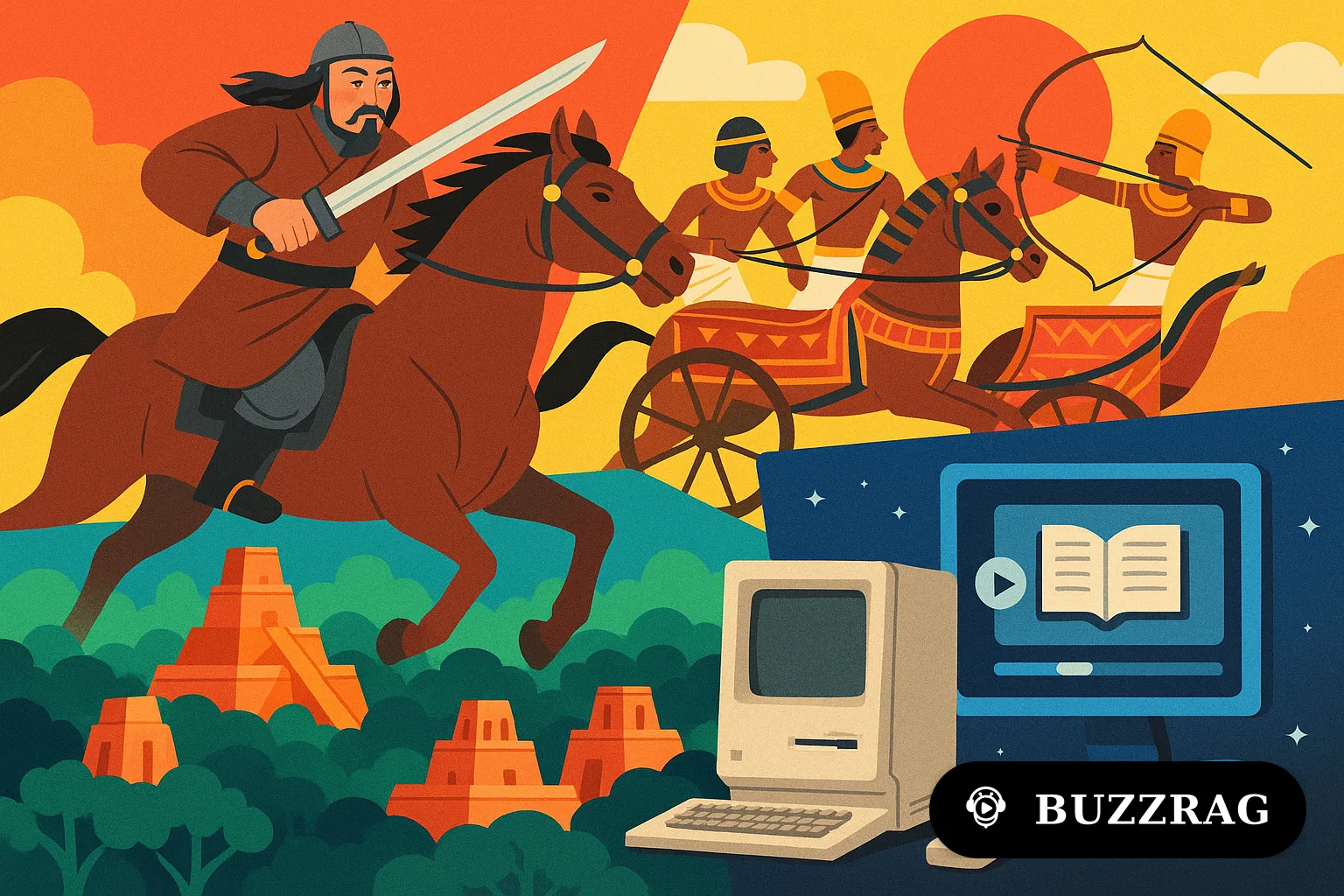
Today's trends navigate the vast landscapes of empires, from the sweeping conquests of the Mongols to the defensive strategies of Ancient Egypt. We delve into the hidden civilizations of the Amazon, the tech world's near misses, and the evolution of fast food economics.
The Mongol Empire's Expansive Legacy
In 1206, Temüjin, better known as Genghis Khan, unified the Mongol tribes to forge an empire that would become one of history's largest. The Mongol Empire, which stretched from Eastern Europe to the Sea of Japan, was not only vast in territory but also revolutionary in its military strategies and governance.
The Mongol conquests reshaped global connections, facilitating trade and cultural exchange along the Silk Road. Despite their reputation for brutality, the Mongols established a period of relative peace known as the Pax Mongolica, which allowed for the flourishing of trade and ideas. This era laid groundwork that would influence future empires and global interactions.
Understanding the Mongol Empire's rise and fall offers insights into the complexity of power, the role of leadership, and the dynamics of cultural integration—lessons that remain relevant in today's geopolitics.
Ancient Egypt: Warfare's Role in Empire Building
Ancient Egypt's military history is often overshadowed by its monumental architecture and art, yet warfare was a crucial element in its imperial strategy. Initially focused on internal control, Egyptian warfare evolved to include external campaigns during the Middle Kingdom period, marking a shift towards expansionism.
The strategic use of the Nile for transport and communication enabled Egyptian pharaohs to project power, securing borders and resources. This transformation from defensive strategies to proactive military campaigns reflects broader changes in state priorities and the complexities of maintaining an empire.
Examining Egypt's military history underscores the interplay between military innovation and statecraft. As modern states grapple with defense and expansion, the Egyptian paradigm offers a historical lens for understanding the balance between internal stability and external ambition.
Joseph Matheny: A Pioneer of Alternate Reality
Joseph Matheny stands out as an innovator who blurred the lines between fiction and reality long before the digital age fully emerged. His work in alternate reality games (ARGs) and early storytelling technologies paved the way for immersive media experiences that challenge perceptions and engage audiences in novel ways.
Drawing inspiration from figures like Robert Anton Wilson, Matheny's creations often incorporated themes of conspiracy and mystery, inviting participants to question the nature of reality and narrative. His role in the counterculture movements of Chicago and Santa Cruz exemplifies the intersection of technology and subculture.
Matheny's legacy is evident in today's media landscape, where interactive storytelling and virtual environments continue to evolve. His work prompts reflection on how technology shapes our understanding of truth and the potential for narrative to influence societal norms.
Apple's Brush with Bankruptcy: A Lesson in Resilience
In the late 1990s, Apple teetered on the brink of bankruptcy, a stark contrast to its current status as a tech giant. The company's revival is a testament to strategic innovation and leadership, particularly through the return of Steve Jobs, who spearheaded a series of groundbreaking products.
Apple's near-collapse and subsequent resurgence illustrate the volatility of the tech industry and the importance of visionary leadership. The introduction of products like the iMac and later, the iPod, revolutionized consumer technology, setting new standards for design and functionality.
This episode in Apple's history serves as a case study in corporate resilience and adaptation. As the tech landscape continues to evolve, Apple's journey underscores the need for continuous innovation and the capacity to pivot in response to market challenges.
Unveiling Ancient Amazon Civilizations
Recent archaeological discoveries in the Amazon basin have dramatically altered our understanding of the region's history. Advanced technologies like LiDAR have uncovered evidence of sophisticated civilizations with cities, roads, and infrastructure, challenging the myth of the Amazon as an untouched wilderness.
These findings reveal a complex socio-political landscape, where dense populations and advanced agricultural practices supported thriving communities. The implications for our understanding of pre-Columbian history are profound, suggesting that these civilizations were as complex and influential as their counterparts in Mesoamerica and the Andes.
This revelation not only enriches the historical narrative of the Americas but also raises important questions about environmental stewardship and the impact of human activity on ecosystems. The Amazon's past may hold keys to sustainable living practices that resonate with contemporary environmental challenges.
As we reflect on the past, today's stories remind us of the enduring power of innovation, leadership, and cultural exchange. Future developments in technology, archaeology, and global dynamics will continue to draw from these historical foundations.