BuzzRAG History Desk — 2026-05-20

Curated by AI. Eleanor Vance, History & Ideas Editor
Today's digest probes the depths of ancient narratives and modern racial injustices, revealing how foundational myths and historical traumas shape our current world. From Sumerian descent myths to the systemic violence of 1960s Birmingham, we explore how these echoes of the past resonate today.
Inanna's Descent: Myth and Modern Meaning
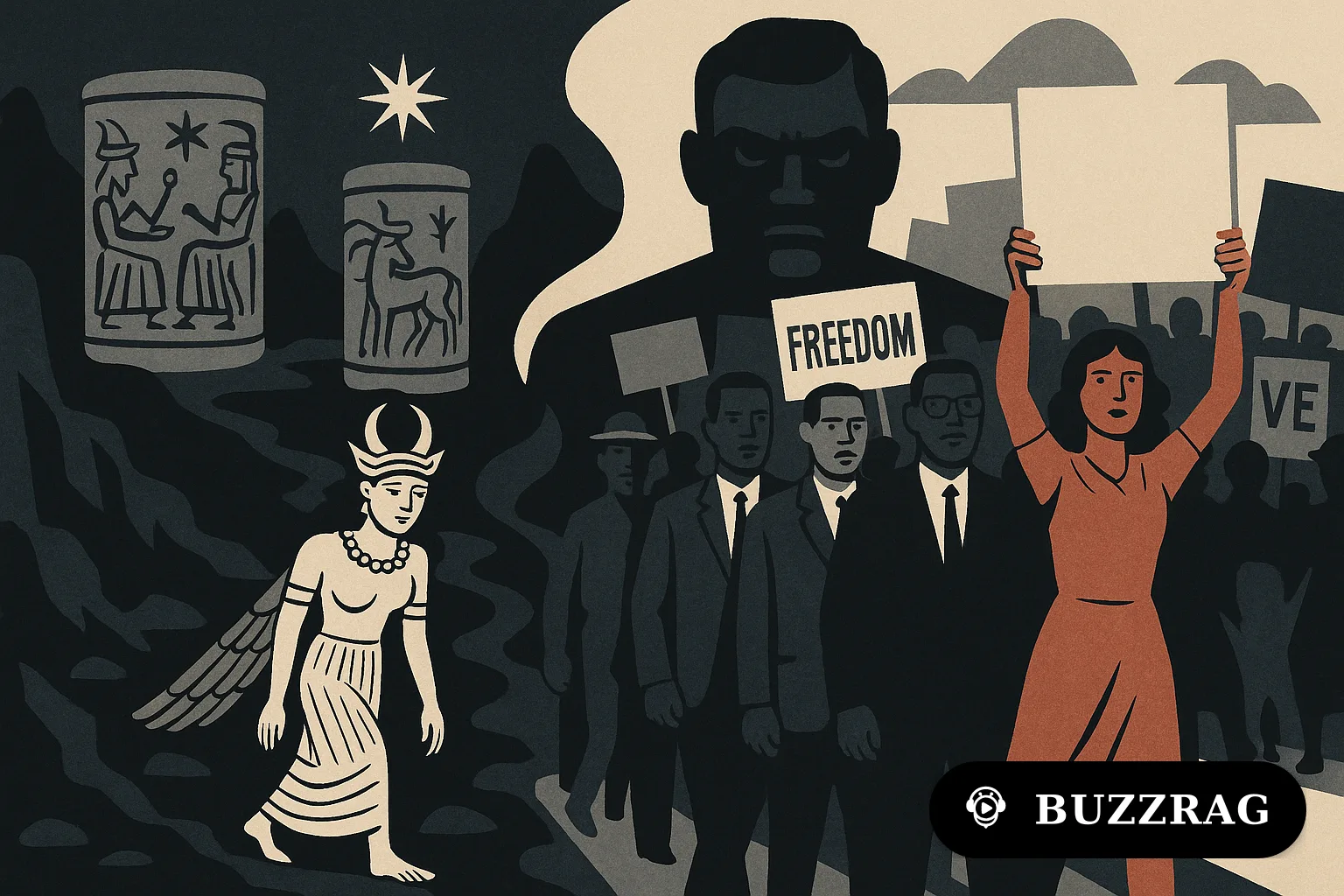
The Sumerian myth of Inanna's descent into the underworld offers a vivid narrative that transcends time, portraying themes of transformation and power dynamics. While modern interpretations often present it as a Jungian journey of self-discovery, ancient audiences might have perceived it as a critique of social and divine justice, highlighting the capriciousness of deities and the vulnerability of mortals.
This narrative complexity enriches our understanding of how ancient societies grappled with existential questions, serving not only as entertainment but as a medium for exploring human and divine interaction. It echoes today's struggles with power, identity, and transformation, illustrating the timeless nature of these themes.
By examining such myths, we gain insight into how ancient peoples processed their realities and challenges, offering a mirror to our own times where personal and collective transformations continue to shape societal narratives.
Mesopotamian Cylinder Seals: Small Artifacts, Big Stories
Cylinder seals from ancient Mesopotamia, though diminutive in size, carry immense historical significance. These artifacts served as personal signatures and were used in administrative processes, reflecting the complexity of early urban societies. Their intricate designs and inscriptions provide a window into the religious, political, and social dynamics of the time.
The seals reveal a rich tapestry of cultural interaction, displaying motifs that blend indigenous traditions with influences from neighboring civilizations. This interplay highlights the region's role as a cultural crossroads, where ideas and identities were constantly negotiated and reshaped.
Studying these seals not only enhances our understanding of ancient bureaucratic practices but also offers insights into how ancient societies recorded and expressed their identities, a theme that remains relevant in our digital age of identity verification and data security.
J. Edgar Hoover's Empire: A Lesson in Power
J. Edgar Hoover's tenure as the first director of the FBI spanned nearly half a century, a period during which he wielded the bureau as an instrument of personal and political power. Hoover's legacy is marked by his controversial methods, including surveillance, intimidation, and the manipulation of public perception to maintain his influence.
His story serves as a cautionary tale about the perils of unchecked authority within institutions that are supposed to protect democratic values. Hoover's ability to operate with impunity highlights the vulnerabilities in systems of governance that lack transparency and accountability.
Understanding Hoover's impact is crucial in evaluating current debates about surveillance, privacy, and governmental power. His era reminds us of the importance of maintaining vigilant oversight over those in positions of power to prevent abuses that can undermine public trust.
As we reflect on these narratives, from ancient myths to modern histories, we must also consider how they inform our current societal challenges. Looking ahead, it will be crucial to observe how these historical insights are integrated into ongoing discussions about justice, identity, and power.