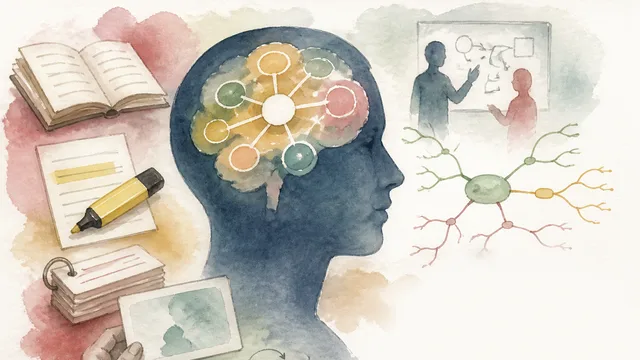
The science of learning has undergone a significant transformation in recent years, moving away from passive reading and rote memorization toward active, strategically-designed study approaches. This cluster examines the intersection of neuroscience, cognitive psychology, and practical study methodology—revealing how our brains actually acquire and retain information most effectively. Rather than treating learning as a mysterious process, researchers now understand it as a trainable skill that responds predictably to specific techniques and conditions.
At the heart of this movement is active recall, a technique where learners retrieve information from memory rather than passively reviewing it. Unlike highlighting textbooks or re-reading notes, active recall forces the brain to work harder during the learning phase, which paradoxically makes information stick better long-term. This aligns with the emerging understanding that learning mirrors physical training: just as muscles grow through resistance and challenge, memory strengthens through retrieval effort. Neuroscience research shows that this struggle during learning—what researchers call "desirable difficulty"—triggers deeper neural encoding and more durable memory traces.
Beyond technique, the psychology of initiating and maintaining effective study habits plays a crucial role in learning outcomes. Motivation, environment, spacing of practice sessions, and the interleaving of different topics all significantly impact how well information transfers to long-term memory. Recent findings suggest that understanding the mechanics of why certain methods work can itself boost motivation and adherence. As educators and learners increasingly adopt these evidence-based strategies, there's a growing recognition that how we study matters as much as what we study—and that optimizing study methods represents one of the highest-leverage investments in personal and academic development.