BuzzRAG Growth Desk — 2026-09-23

Curated by AI. James Emeka, Personal Development Editor
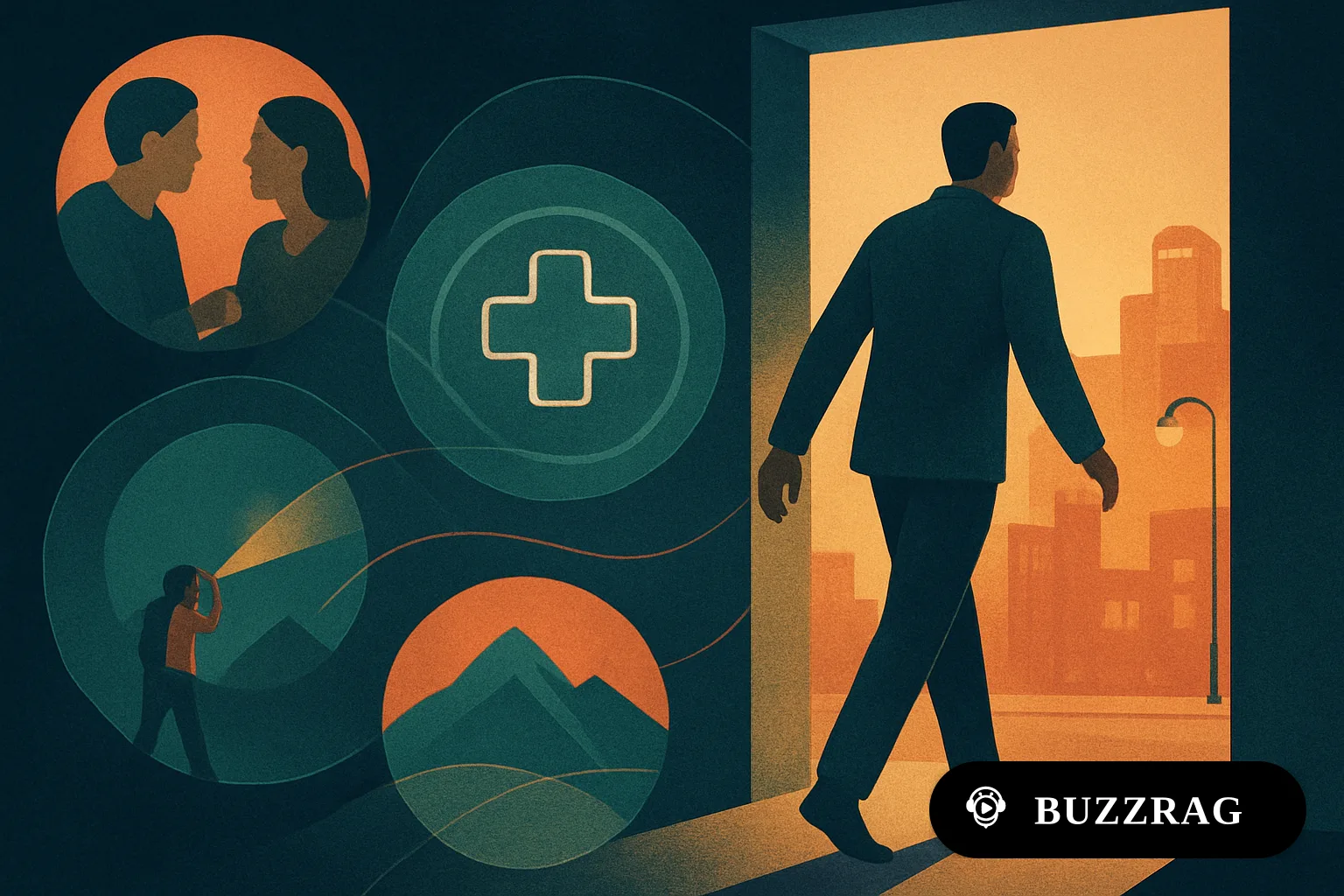
Today’s mix connects everyday behavior with larger systems: leaving the house can support mood, while access to health care and the quality of mental-health care shape whether people can recover and cope. The strongest throughline is a demand for agency without oversimplification—from psychedelic therapy and donor conception to self-blame, overdose, and suicide prevention.
The Case for a Small Exit From the House
A new episode argues for making a deliberate effort to leave home, even when the outing is brief, and pairs that idea with advice on reconnecting with people and resisting the pressure to have an opinion on everything. The premise is modest, but useful: a walk around the block, a coffee outside, or a short errand can interrupt an isolating routine without pretending to solve depression or anxiety.
Research on physical activity, daylight exposure, social contact, and behavioral activation gives the general idea some support, particularly when low mood makes avoidance self-reinforcing. But a podcast discussion is not evidence that stepping outside produces a large or universal happiness effect. The practical takeaway is to treat the suggestion as a low-cost experiment: choose an achievable outing, notice how it affects energy and mood, and seek professional help if withdrawal is persistent, severe, or impairing. Reaching out to an old contact can work similarly when it is specific and pressure-free rather than a demand to instantly restore closeness.
ACA Enrollment Cuts Put Coverage Verification Under the Microscope
The administration says it plans to remove 760,000 Affordable Care Act enrollees it alleges were fraudulently enrolled or do not exist, estimating $2.2 billion in savings. Those are official claims, not independently established findings in the supplied report, and the practical consequences will depend on how identities, eligibility, appeals, and legitimate household records are reviewed.
For people who rely on marketplace coverage, an erroneous termination can mean missed prescriptions, delayed care, or an unexpected bill. Fraud controls can protect public programs, but aggressive automated checks also create administrative burdens for people with unstable housing, changing income, language barriers, or limited access to documentation. The key safeguards to watch are clear notices, meaningful appeal windows, continuity of treatment, and transparent evidence about how many cases are confirmed versus merely flagged. Until those details are available, the headline number should be treated as a policy proposal and enforcement action with potentially serious health consequences—not as proof that every affected enrollee is fictitious or fraudulent.
Psychedelic Therapy Needs More Than Good Intentions
Trauma-informed care in psychedelic therapy centers on agency, consent, relational safety, and the possibility of repairing harmful expectations within a therapeutic relationship. That framework matters because psychedelic experiences can be emotionally intense, suggestible, and difficult to integrate, especially for people with trauma histories or limited support after a session.
The language is sound, but it should not be mistaken for proof that psychedelic treatment is broadly safe or effective. Early clinical research is promising for some conditions, yet studies are often controlled, carefully screened, and delivered by trained teams—circumstances that may not resemble commercial or loosely supervised settings. A responsible approach includes screening for psychosis and mania risk, discussing medication and medical contraindications, establishing consent that can be revisited, and providing follow-up integration rather than treating the session as a cure. Regulation, practitioner training, emergency planning, and long-term outcome data will determine whether trauma-informed principles become meaningful protection or simply another layer of wellness jargon.
Building Security for the Non-Genetic Parent
Families formed through donor conception can face a particular strain when one parent is not genetically related to the child. The challenge is not a lack of love; it can involve uncertainty about identity, fears of being treated as less legitimate, uneven social recognition, and the pressure to manage those feelings while caring for a new baby.
Support begins before conception, with honest conversations about disclosure, family language, legal parentage, and how each partner will respond to questions from the child and relatives. Couples can also make the non-genetic parent’s role visible in everyday caregiving, seek counseling from someone familiar with donor conception, and connect with families who share the experience. Children benefit from age-appropriate, truthful information rather than a dramatic late revelation, while parents need room to acknowledge ambivalence without turning it into a burden the child must carry. The most useful support is preventive and relational: strengthen the couple’s communication before stress, sleep loss, and outside assumptions magnify the problem.
Spotlight Drones Extend the Reach of Mountain Rescues
A UTV driver who fell roughly 250 feet down a slope in Hot Sulphur Springs, Colorado, was rescued with the help of lighting drones and a technical rope system. In terrain where darkness, unstable footing, and limited visibility can put rescuers at additional risk, an airborne light source can provide information and illumination without immediately sending another person into the most dangerous position.
The rescue is a compelling example of technology supporting—not replacing—specialist judgment. Drones can help locate people, illuminate anchors and approaches, and improve coordination, but they depend on trained operators, battery life, weather conditions, communications, and a team capable of performing the extraction. The broader safety lesson is less glamorous: protective equipment, sober route planning, check-ins, and knowing when terrain exceeds a driver’s skill remain the best defenses. As agencies adopt more drone capability, useful questions include whether the tools reduce responder exposure, how privacy is handled, and whether rural teams have the training and funding to use them reliably.
When Overdose and Suicide Prevention Overlap
A September analysis argues that two public-health observances may be counting overlapping groups: people affected by overdose and people who die by suicide. The observation rests on a troubling pattern—overdose deaths rose sharply while suicides also increased—but the relationship is not simple, and death records do not always capture intent clearly when multiple substances, mental-health symptoms, and social crises are involved.
That ambiguity has practical consequences. Prevention systems are often divided between substance-use treatment, suicide prevention, emergency medicine, and social services, even though a person may move through all four. Screening for suicidal thinking in addiction care, offering naloxone and treatment for substance-use disorder in mental-health settings, and training clinicians to discuss both risks without judgment can close some of those gaps. Families also need language that avoids turning a complicated death into a moral verdict. Better death investigation, linked data, and culturally competent care could clarify the overlap while supporting interventions that do not require officials to know the exact intent before offering help.
Self-Blame Can Feel Like Control—and Still Cause Harm
When people experience loss, illness, or another painful event, self-blame can offer the illusion of control: if everything was their fault, perhaps the future can be made safe by trying harder. That mental move is understandable, but it can quickly become a barrier to self-care, honest assessment, and accepting help from other people.
A more useful response separates responsibility from global condemnation. It asks what was genuinely within someone’s control, what information was unavailable at the time, and what action is possible now—without converting uncertainty into a permanent judgment about character. This is not an argument to ignore accountability or deny harm; it is a way to make learning possible without adding needless punishment. Evidence-based therapies often address guilt, shame, rumination, and harsh self-criticism through techniques such as cognitive restructuring, compassion-focused work, and behavioral change. If self-blame is persistent, linked to trauma, or accompanied by hopelessness or thoughts of self-harm, professional support matters more than a motivational slogan.
Next, the useful test for these stories is whether institutions turn good principles into accessible practice: verified coverage without wrongful loss, psychedelic care with real safeguards, and prevention systems that share information across old boundaries. On the personal side, small actions—an outing, a conversation, a fairer account of responsibility—remain worthwhile when they are treated as experiments, not promises.