BuzzRAG Culture Desk — 2026-10-06

Curated by AI. Mateo Ruiz, Arts & Culture Editor
Today’s culture stories circle the tension between public identity and private life: what artists owe their work, what fame asks of performers, and what audiences carry from childhood. There’s also a reminder that a catchy apocalypse date can say more about its author—and its era—than about the future.
Barbara Kingsolver’s quieter reckoning with art and compromise
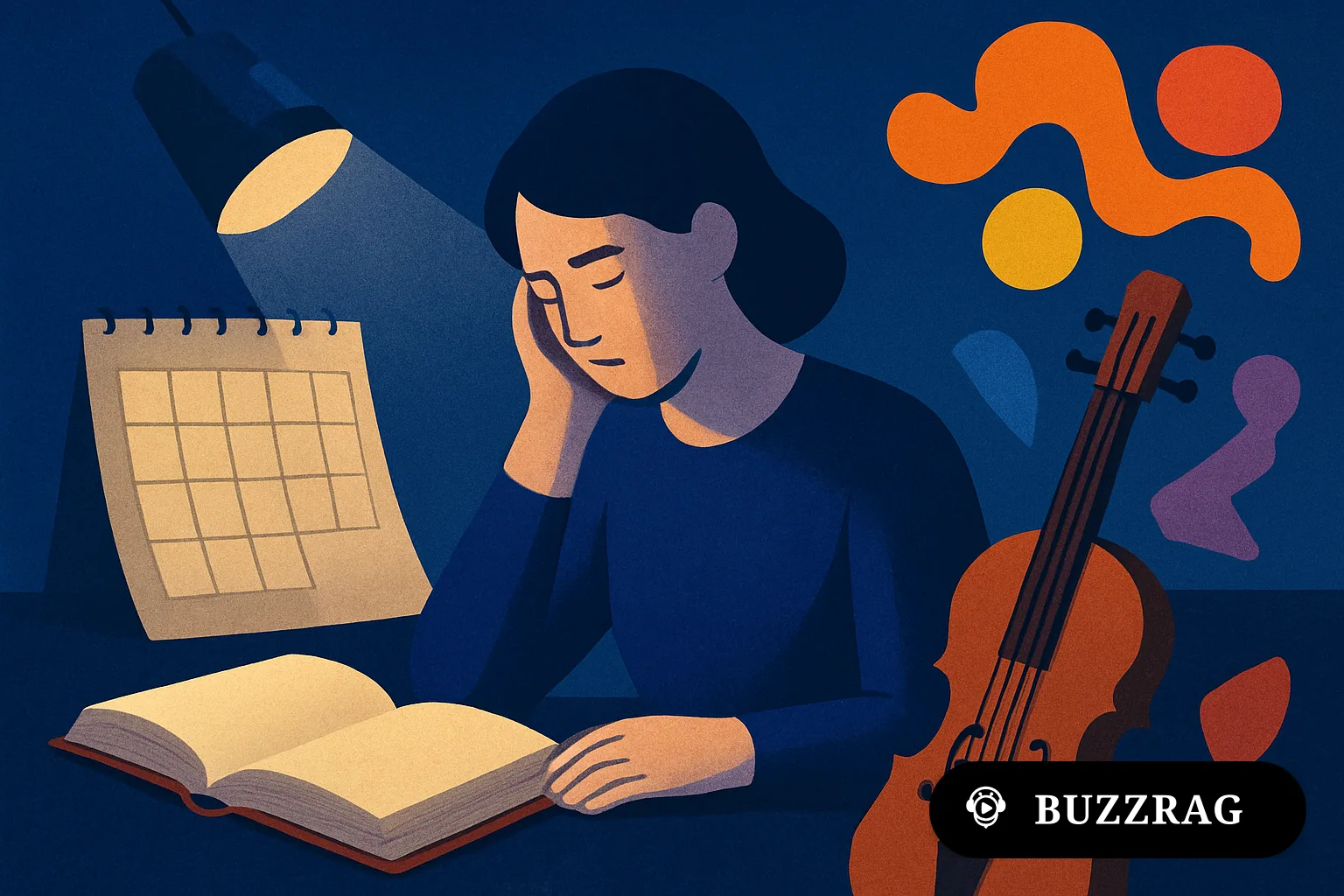
In *Partita*, Barbara Kingsolver turns from the high-voltage social landscape of *Demon Copperhead* toward a more intimate question: what should an artist’s talent be for? The review describes a story shaped by music, middle age and the compromises people make between pursuing mastery and building a life among others. Its central tension is recognisable well beyond the concert room: devotion can deepen a life, but it can also consume the time and relationships that make that life worth living.
The Guardian’s assessment is mixed rather than reverential, noting that some sexual writing threatens to unsettle the novel while finding rich rewards in its larger inquiry. That ambivalence suits a book interested in the imperfect bargains behind creative work, rather than the clean myth of genius. Coming after a widely celebrated novel, *Partita* also tests whether a writer can change scale without simply repeating an earlier triumph. The more compelling question may be whether art flourishes through total sacrifice—or through the less glamorous act of making room for other people.
Helen’s *Linda’s Head* draws attention from the underground
The Quietus has placed *Linda’s Head*, a release by Helen, among the day’s music conversation. The available listing offers little detail about the review’s specific verdict or the record’s sound, so the headline is best read as a signal of critical attention rather than a basis for claims about its style. Even so, a title this oblique invites listeners to approach the work without the usual pop shorthand of a single, a celebrity narrative or a ready-made genre label.
That kind of coverage matters in a music culture increasingly organised around instant recognition: familiar names and fast-moving clips can crowd out records that ask for slower attention. Independent criticism can give those releases a place in the wider conversation, though discovery still depends on readers following the trail from review to listening. The next useful measure will be the response to the music itself—whether the album’s ideas travel beyond the initial notice and find an audience on their own terms.
Slayyyter turns her pop persona into a two-sided mirror
Slayyyter has announced *wor$t man in america*, a new album designed to mirror and flip the world of *WOR$T GIRL IN AMERICA*. The announced songs include “brand new chanel$” and “crank 2,” suggesting a project built around reversals rather than a clean break from its predecessor. The deliberately abrasive title and mirrored setup make the album’s framing part of the story: a pop persona can be a character, a provocation and a tool for taking control of the joke at once.
The announcement has drawn coverage across music and entertainment outlets, a sign that the project is landing beyond a narrow fan conversation. The interesting test will be whether the inversion changes the emotional or musical stakes, not just the album’s point of view. Pop has long used exaggeration to expose the rules around status, gender and consumption; a paired record can make those rules newly visible by showing how quickly the same symbols change meaning when the narrator does. The tracklist and eventual listening will reveal how far the mirror goes.
Arthur’s 30-year television milestone arrives tomorrow
The animated series *Arthur* premiered on PBS Kids on October 7, 1996, putting its 30th anniversary one day away. The anniversary is a timely prompt to revisit a children’s program whose everyday school, family and friendship stories became a durable part of many viewers’ after-school routines. Its cultural footprint is less about spectacle than familiarity: the repeated pleasure of returning to a community of characters and seeing ordinary problems treated as worth talking through.
That modest approach helps explain why the milestone can resonate across generations. Children’s television is often dismissed as disposable, yet its language and routines become part of how people remember growing up—and what they later share with younger viewers. An anniversary can also sharpen questions about what today’s children are offered: which stories make room for curiosity, conflict and difference without turning every lesson into a lecture? The occasion is a chance to measure not only the show’s longevity, but the standards audiences bring to the next generation of children’s media.
Michael Douglas reflects on fame, family and performing himself
In the book *One Helluva Ride*, Michael Douglas looks back on a career formed partly in the shadow of his father, Kirk, before establishing himself as an Oscar-winning actor and producer. In a conversation with NPR, Douglas reflects on the difficulty of being oneself on screen—a revealing phrase from someone whose profession depends on inhabiting other lives while remaining recognisable to the public. The memoir’s appeal lies in that double perspective: a family inheritance can open doors and set a standard that is difficult to escape.
Hollywood dynasties are often narrated as either effortless privilege or burdensome legacy; Douglas’s account points toward the messier overlap between the two. His story also offers a view of celebrity across changing eras of the film business, from the old studio system’s long shadows to a culture where every public image can be endlessly replayed. The book’s most interesting measure will be how much it moves beyond familiar career landmarks to show the person negotiating them—and what that negotiation reveals about performance as both craft and public identity.
A soap-opera blame game sets up the week’s twists
A new spoiler video for *General Hospital* previews an argument between Sonny and Justine, with Justine blaming Sonny for an attack on Sidwell. The teaser promises further upheaval across the week, but gives little reason to treat its exclamation-point framing as anything more than the genre’s familiar invitation to speculate. In a long-running soap, the pleasure is often less about whether conflict arrives than how suspicion, loyalty and withheld information are rearranged around it.
Spoiler coverage is a small but revealing part of television fandom: it turns upcoming episodes into a shared puzzle, while asking viewers to decide how much surprise they want to preserve. For a series built on accumulated relationships and reversals, the accusation matters mainly as a new pressure point among characters with histories viewers already know. The episode’s execution will determine whether the dispute deepens those connections or simply clears the way for the next twist. Either way, the weekly cliffhanger remains an especially durable form of serialized storytelling.
Newton’s 2060 end-date: an old prophecy in a modern age of dread
A widely circulated account revisits Isaac Newton’s 1704 calculation that the world would end in 2060. The date makes for a striking headline, especially in an era when environmental warnings and religious apocalyptic language often compete for public attention. But Newton’s forecast came from his study of biblical prophecy, not from a scientific model of planetary collapse; it is better understood as evidence of how a major scientific thinker also engaged with the religious questions of his time.
That distinction matters when old predictions are pulled into present-day anxiety. A date attached to Newton can make an apocalyptic claim feel newly authoritative, even though the method and meaning behind it belong to a different intellectual world. The more useful cultural story is the persistence of the end-times imagination: each era translates uncertainty into a countdown, drawing on whatever forms of authority its audience trusts. With 2060 now close enough to picture but still decades away, the prophecy offers a lens on our appetite for deadlines—and a reminder to separate historical curiosity from evidence about the future.
Tomorrow brings the anniversary of a beloved children’s television debut, while the newly announced album and memoir invite longer looks at how performers construct a self in public. Watch, too, for the quieter test running through today’s books and music: whether creative work can make room for a life beyond the spotlight.