BuzzRAG Business Desk — 2026-11-25
Curated by AI. Marcus Webb, Business Desk Editor
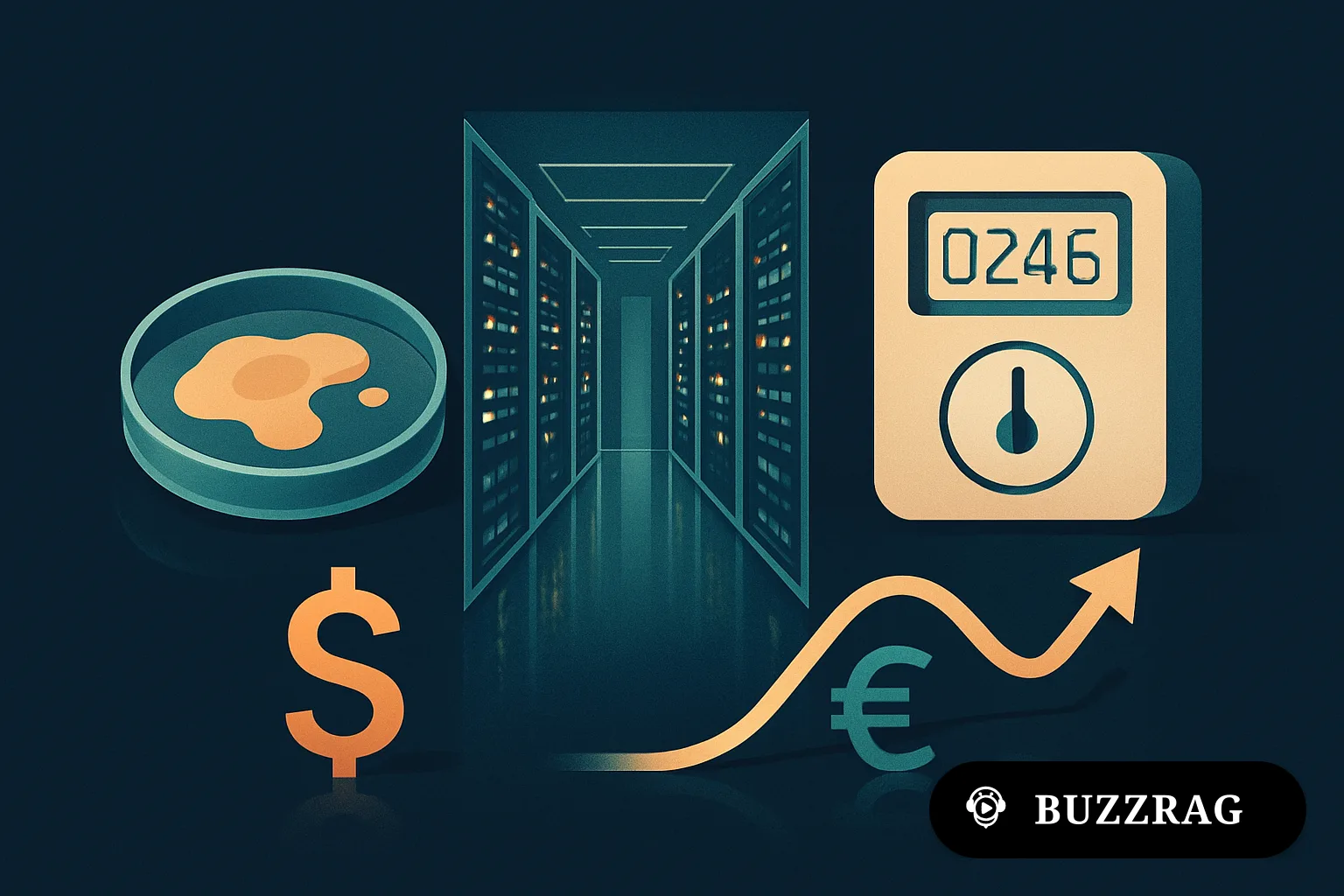
Today’s business agenda ranges from the expensive build-out of AI infrastructure to the everyday cost of keeping homes warm and powered. Investors are placing bets on biotech and software verification, while the UAE’s growth ambitions and a high-profile trade-secrets verdict put economic confidence and corporate accountability in focus.
VCs flag biotech bets, but a watchlist is not a verdict
A roundup of 25 biotech startups picked by venture capitalists puts investor attention on a sector where scientific promise can take years—and substantial funding—to become a commercial product. The available report details do not identify the companies or explain the selection criteria, so the list is best read as a snapshot of investor interest rather than a ranking of likely winners.
Biotech financing is unusually exposed to long development timelines, clinical-trial outcomes and regulatory decisions. A startup can attract prominent backers and still face years of technical and financial risk before reaching revenue; even successful products must find buyers and demonstrate value against existing treatments. For founders, a place on a VC watchlist may help with visibility, but it is not a substitute for capital or evidence. The more useful test will be whether these companies can secure follow-on funding and produce results that support their scientific and commercial claims.
UAE targets 7%–8% growth as IMF raises its forecast
A UAE minister says the country is optimistic about achieving 7%–8% economic growth next year, following an upward revision to the International Monetary Fund’s forecast. The minister attributes confidence to a “different” economic model, though the available details do not specify which sectors or policy changes are expected to deliver the targeted pace. The government’s ambition and the IMF’s forecast are related signals, but they are not the same projection.
A strong headline rate can reflect rapid expansion, yet it does not tell households or investors how evenly gains will be shared, how durable they are, or what risks could interrupt them. The underlying composition of growth matters: activity supported by broad private-sector demand has different staying power from growth concentrated in a few large projects or industries. The next questions are what assumptions underpin the official target and whether incoming data on investment, trade and employment support it. For now, the forecast revision offers encouragement, not a guarantee.
Huawei trade-secrets verdict delivers a mixed legal outcome
A New York jury found Huawei guilty of stealing trade secrets but acquitted the company of racketeering after a months-long trial. The split verdict leaves two distinct conclusions: the jury accepted a trade-secrets charge while rejecting the racketeering allegation. The available report does not specify the precise findings, potential penalties or next steps, so the practical consequences cannot yet be fully assessed.
Trade-secret cases can turn on evidence about how information was obtained, handled and used, making the verdict relevant beyond the companies and individuals involved. For businesses, it is a reminder that protecting technical knowledge depends on enforceable controls and documented practices, while allegations still have to be proved in court. The acquittal also matters: it limits the claims the jury accepted, rather than making the trade-secrets finding disappear. Attention now turns to any sentencing or post-trial proceedings and to whether the judgment changes the parties’ commercial or legal positions.
Households adjust routines to manage energy bills
Three people describe steps they take to keep energy bills under control, including one household’s decision to run the washing machine only on Sundays. The accounts put a personal face on pressure that is usually presented through average prices or policy announcements: consumers are changing routines and weighing when, and how often, to use energy at home.
These measures may help people manage consumption, but household tactics cannot by themselves resolve whether energy is affordable or whether bills reflect costs that consumers can realistically influence. The impact also varies: people with flexible schedules, efficient appliances or control over their home’s heating have options that others may not. Individual stories are not a measure of national trends, but they show how cost pressures can reach into ordinary decisions. The broader test for policymakers and suppliers is whether bills ease sustainably, rather than simply shifting more responsibility onto households to ration use.
Dell raises annual outlook again as AI server sales surge
Dell has lifted its fiscal-year revenue outlook for the third time, citing demand from the rapid expansion of AI data centers. The company now expects about $202 billion in revenue for the year ending in January, including $78 billion in AI server sales, compared with a $192 billion forecast in September. The scale of the revision signals a sharp increase in expectations for server shipments, although forecasts are not the same as completed sales or collected cash.
The figures also underscore how much of the current AI investment cycle is flowing to the hardware and infrastructure needed to build data centers. Suppliers benefit when customers commit to equipment, but the spending case ultimately depends on whether those customers can earn adequate returns from AI services and applications. Dell’s repeated upgrades are encouraging evidence of near-term demand, not proof that every planned data-center investment will pay off. Investors will be watching order conversion, margins and delivery capacity, as well as whether demand holds after large customers complete their current build-outs.
Sequent draws backing for software verification tools
Jann Tallinn, an investor who led Anthropic’s first major funding round, is backing Sequent, a startup developing AI tools to help developers mathematically verify software behavior. The pitch sits at the intersection of generative AI and software assurance: as AI tools are used more widely in development and security work, companies need ways to check that systems behave as intended. The available report does not disclose the size or terms of Tallinn’s backing.
The distinction between generating code and proving properties about it is important. Verification tools may help teams catch certain classes of errors, but they do not automatically establish that an entire product is secure, reliable or fit for use. Adoption will depend on whether the software works on real development workflows, integrates with existing tools and delivers enough confidence to justify its cost. Tallinn’s involvement may attract attention and help the company reach investors or customers; the commercial test remains whether engineering teams rely on the product beyond trials and early demonstrations.
Bound secures $50 million debt facility for FX risk business
Bound has secured a three-year, $50 million debt facility from alternative credit manager Viola Credit to support its trading book, according to the available report. The company offers an AI-powered foreign-exchange risk-management platform aimed at mid-market businesses. Unlike an equity raise, a debt facility provides financing that generally has to be repaid under agreed terms; the report does not disclose the pricing, covenants or how much of the facility Bound expects to draw.
Access to capital can help a platform support customers managing exposure to currency movements, but it also puts focus on how that financing is used and how risks are controlled. A larger trading book may support more client activity, while exposing the company to funding costs and operational demands. For mid-sized firms, currency swings can affect the cost of imports, overseas revenue and cash-flow planning, but software alone cannot remove market risk. The key indicators will be customer growth, the quality of Bound’s risk controls and whether the business can generate enough revenue to cover the cost of borrowed capital.
The next signals to watch are whether AI infrastructure orders convert into durable returns, whether the UAE’s growth target is backed by activity across the economy, and what the trade-secrets verdict means in practice. For startups, investor attention and new financing are only opening moves; customers, measurable results and disciplined use of capital will decide what lasts.