BuzzRAG Business Desk — 2026-11-03

Curated by AI. Marcus Webb, Business Desk Editor
Today’s business headlines trace the cost of persistent inflation from central-bank policy to household budgets and airline tickets. Elsewhere, investors face a familiar challenge: separating meaningful business evidence from polished pitches and sparse earnings materials.
Australia raises rates again as inflation persists
The Reserve Bank of Australia has lifted interest rates to their highest level in 18 years, its fifth increase this year. The move was expected by economists polled by Reuters, but another rise still tightens financial conditions for households and businesses already managing higher costs.
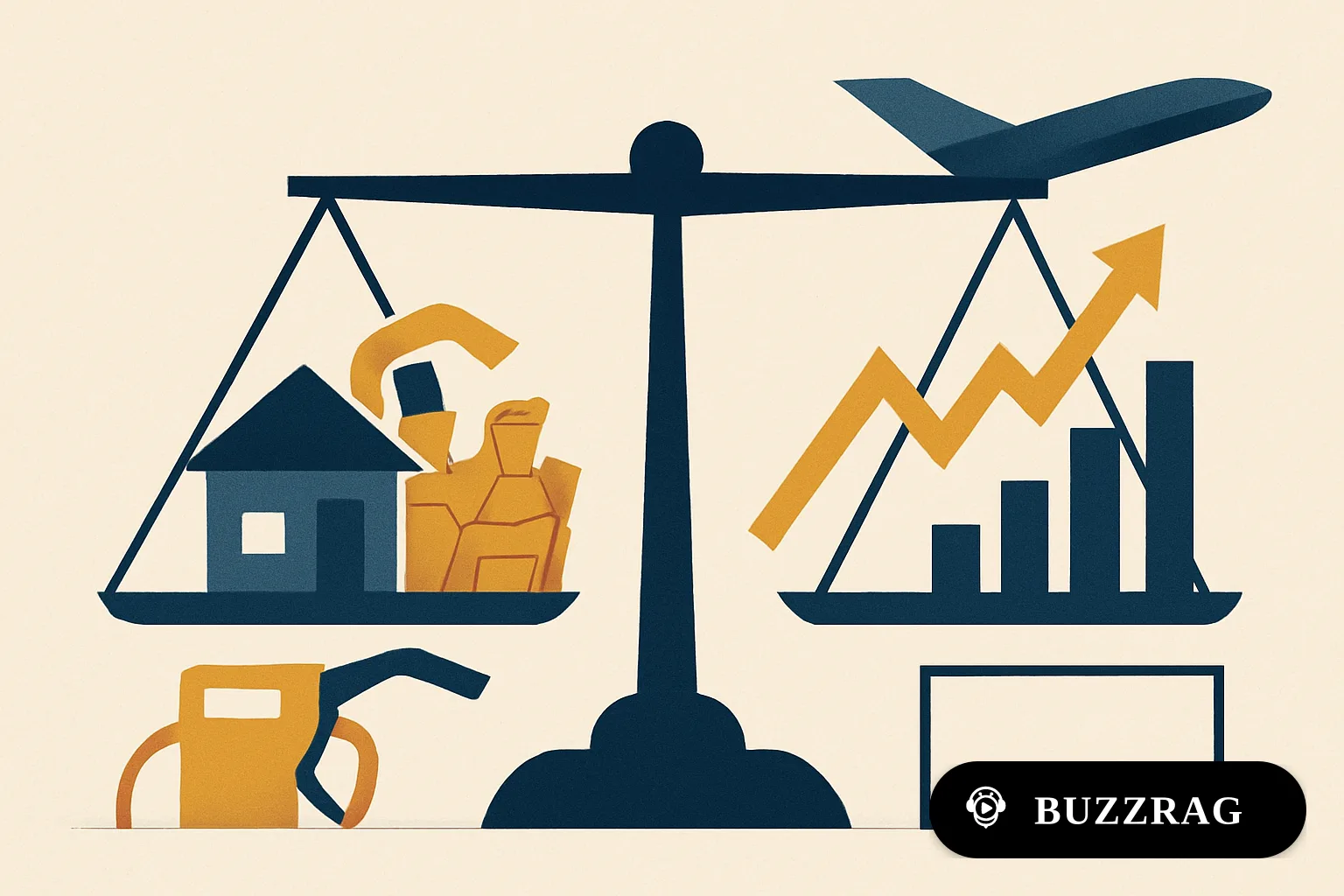
Higher rates are intended to cool demand and bring inflation under control, but the effects are uneven. Borrowers with variable-rate mortgages can see repayments rise, while businesses may face pricier financing and consumers may pull back on spending. Savers could benefit from better returns on deposits, though that does little to offset higher bills for those carrying debt. The key question is whether inflation eases enough to end the run of increases without a sharper slowdown in employment and consumption. Upcoming inflation and labor-market readings will help show whether the RBA’s repeated tightening is working—or whether borrowers are being squeezed for longer.
Dumpster diving turns discarded goods into household savings
People searching commercial bins for usable clothes and other goods say they are saving hundreds by recovering items that retailers have thrown away. The practice, sometimes called dumpster diving, sits at the intersection of household budget pressure and the large volume of merchandise that goes unsold or is discarded.
The savings can be tangible for people who find usable clothing, toiletries or equipment, but the activity is not a dependable substitute for income: what is available varies, and items may be damaged or unsafe. It also raises questions about why goods are being thrown out rather than discounted, donated or returned to circulation. Retailers’ disposal practices can reflect logistics and costs as well as decisions about inventory and resale. For consumers, the trend is a resourceful response to expensive essentials; for businesses, it is an uncomfortable reminder that products treated as waste can still have value to someone who cannot afford the shop price.
Fuel costs put pressure on airline profits and fares
Ryanair has warned that European airfares could rise by as much as 20% as fuel hedges expire, while reporting first-half profit after tax down 15% to €2.15 billion. The company says the price of its unhedged jet fuel doubled, exposing how quickly a major operating cost can eat into earnings when protection against price swings runs out.
Fuel hedging can help airlines lock in prices ahead of time, but it only covers a portion of future needs and for a limited period. When those contracts expire, carriers have to buy more fuel at current market prices, absorb the cost or try to pass it on to passengers. A potential fare increase is a warning, not a guarantee: competition, demand and how much capacity airlines offer will shape what travelers actually pay. The next test is whether fuel costs remain elevated and whether airlines can raise ticket prices without pushing price-sensitive customers to delay or cancel trips.
AI-generated pitch decks risk blending startups together
Venture investors are increasingly seeing startup pitch decks that sound alike after founders turn to generative AI to help write them. The concern is not simply that the slides are machine-made; it is that a tool designed to produce fluent, familiar language can make weak or undifferentiated business ideas look temporarily polished without making them more distinctive.
A pitch deck is a sales document, but investors still need evidence: a clearly defined customer problem, credible demand, a workable route to revenue and a team able to execute. AI can speed up drafting and improve presentation, yet it cannot supply proof that customers will pay or that a company has an advantage competitors cannot copy. If investors are facing a “sea of sameness,” founders may need to show original customer insight and hard operating data rather than more refined phrasing. The practical test is whether the technology helps a business explain what is genuinely different—or merely makes the same claims sound smoother.
Alger fund commentary offers a Q3 snapshot, but figures are absent
Alger Growth & Income Fund has released a third-quarter 2026 commentary, but the material provided here contains no excerpt or performance figures. That means there is not enough information to assess the fund’s returns, portfolio changes, market outlook or the reasons behind any investment decisions.
For shareholders, the title alone is not a verdict on how the fund performed. The useful details to check in the full commentary include returns against the fund’s benchmark, the effect of its largest holdings, changes to sector exposure and the managers’ explanation of risk. Fees and the fund’s income profile also matter: a growth-and-income mandate can involve trade-offs between capital appreciation and distributions. Investors should distinguish the managers’ account of a quarter from independently verifiable results, and compare those results with an appropriate benchmark over more than one period. Without the underlying figures, claims about winners, losers or strategy would be speculation.
Nexa Resources posts Q3 results presentation
Nexa Resources has published a presentation accompanying its third-quarter 2026 results, but no financial or operating details were included in the information supplied for this digest. The headline identifies the company and the document type; it does not, on its own, establish whether revenue, earnings, production or cash flow rose or fell.
For a mining company, investors will want to examine production volumes, realized prices, operating costs and any guidance changes, alongside debt and cash generation. Commodity prices can lift reported revenue even when costs or output trends weaken, so headline growth needs to be tested against margins and cash flow. Investors should also look for explanations of disruptions, capital spending and the assumptions behind forecasts. The presentation’s figures and management’s commentary are necessary to judge the quarter; without them, a confident account of performance would be misleading. The useful question is whether the results show durable operating improvement or simply reflect shifting market prices.
Regeneron releases Q3 results presentation
Regeneron Pharmaceuticals has issued a presentation for its third-quarter 2026 results, with the item also picked up by Seeking Alpha. No excerpt or figures accompany the listing, so it offers no basis for describing the company’s earnings, product sales, research progress or outlook. The presence of an earnings presentation signals a reporting event, not whether the results beat or missed expectations.
Investors assessing a drugmaker’s quarter typically need to separate current product revenue from pipeline potential. Sales trends, pricing and demand can influence near-term results, while clinical milestones and regulatory decisions carry uncertain timelines and outcomes. Research spending and any changes to guidance also help show what management is prioritizing and how much it expects to invest. A presentation is the starting point, not independent verification: reported figures, disclosures and comparisons with prior periods are needed to assess the business. Until those details are available, claims about growth drivers or risks would go beyond the information provided.
The next signals to watch are Australia’s inflation and jobs data, the fuel-cost backdrop for European carriers, and the underlying figures in the Q3 investor materials. Those details will show whether today’s headlines mark lasting shifts in household costs and company earnings—or early warnings that still need confirmation.