BuzzRAG Business Desk — 2026-09-24

Curated by AI. Marcus Webb, Business Desk Editor
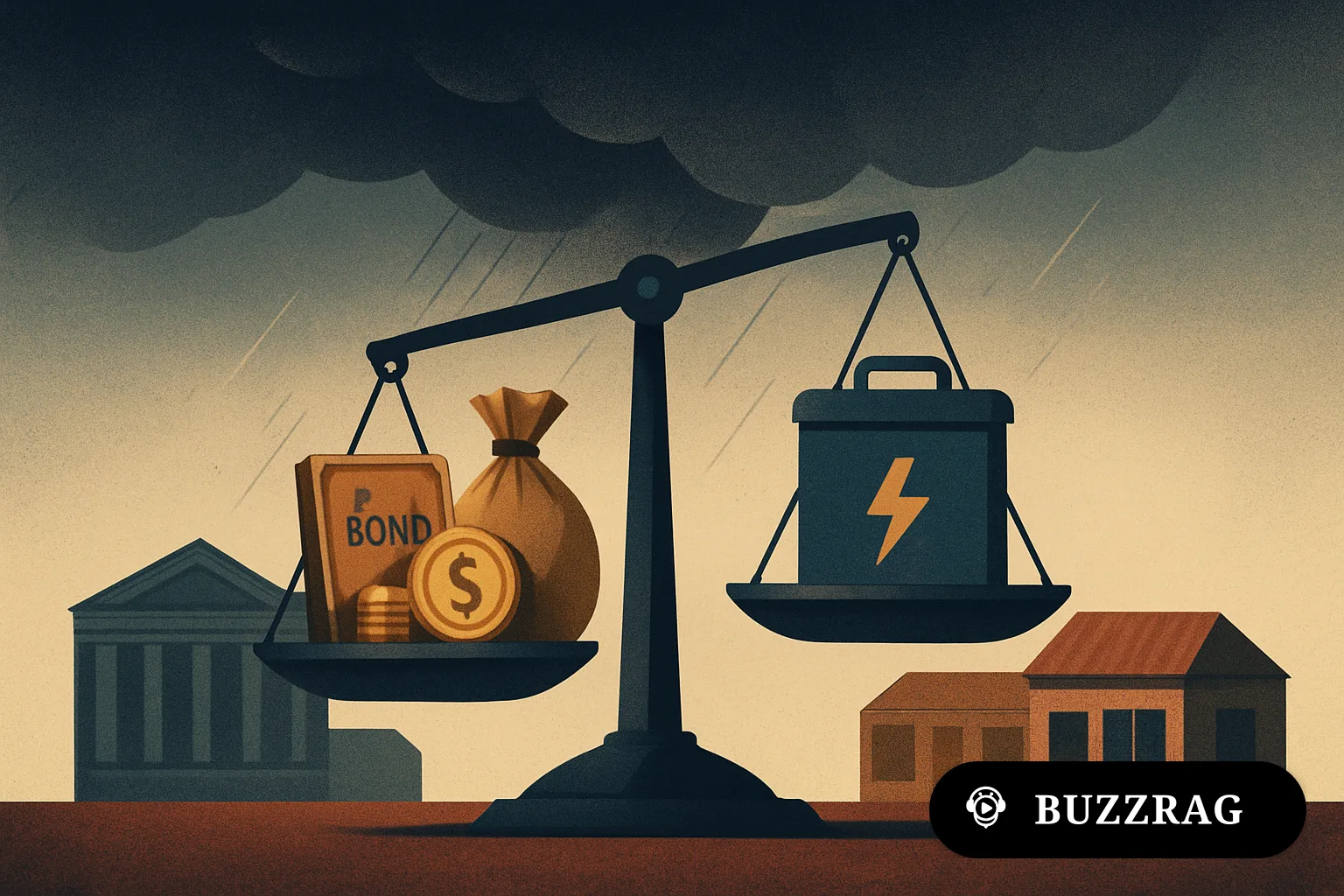
The day’s business story is less about a single market shock than a mounting pressure problem: borrowing costs are rising while governments, companies and aid agencies face tougher choices about where to spend. France’s budget fight and higher Treasury yields put public finances under scrutiny, while food agencies warn that funding gaps are colliding with conflict and climate stress. Elsewhere, courts are testing the limits of retail imitation, a luxury automaker is betting on electric demand, and the sudden closure of fitness studios offers a reminder that consumer-facing growth stories can unravel quickly when cash runs short.
Investor attention turns to Everpure’s public-company case
A shareholder and analyst call involving Everpure has emerged as one of the day’s more closely watched corporate disclosures. The available headline provides little detail about the company’s claims, financial outlook or the questions raised by investors, so the significance rests less on a headline-grabbing announcement than on what the transcript may reveal about operating performance, capital needs and management’s explanation of its strategy.
For investors, an earnings-call transcript is useful precisely because it captures the exchange between prepared corporate messaging and follow-up questions. The details to examine are cash generation, customer concentration, debt obligations and any mismatch between projections and reported results. Without those figures, it would be premature to treat the call as evidence of either a turnaround or a crisis; the next meaningful signal will be whether the company’s filings and subsequent disclosures support management’s account.
France’s budget arithmetic becomes a bond-market problem
France is heading into another fraught budget confrontation, with the government’s political survival increasingly tied to its ability to contain a widening deficit. The immediate concern is not simply whether lawmakers approve a spending plan, but whether repeated uncertainty will push investors to demand a higher return for holding French debt.
That feedback loop can become expensive quickly. Higher yields raise the cost of refinancing existing obligations and narrow the room available for public services, tax relief or industrial support. A government that falls over its budget may face a fresh election or prolonged legislative paralysis, neither of which reassures bondholders. The next test will be whether political leaders can assemble a credible fiscal package without deepening social opposition—and whether markets believe the promised savings are deliverable rather than another short-lived compromise.
Aid cuts leave food agencies with less room for error
Food-security agencies are warning that the world is entering a period of overlapping shocks with fewer resources to absorb them. Conflict, extreme weather, higher fuel and financing costs and elevated food prices are arriving as cuts to donor support, including from the United States, reduce the capacity of international agencies to buy, transport and distribute assistance.
The danger is not limited to people already receiving emergency rations. When relief operations are scaled back, families may sell assets, withdraw children from school or skip meals, while governments face pressure to subsidise food and fuel at a time when their own borrowing costs are climbing. Reduced monitoring also makes crises harder to see until they become more expensive to address. The unresolved question is whether other donors will fill the gap or whether the aid system will shift toward narrower, late-stage responses.
Dutch ruling raises the cost of retail imitation
A Dutch court has barred Lidl from selling sandals judged to copy the distinctive design associated with a premium footwear maker, and ordered the retailer to pay compensation and legal costs. The case puts a familiar discount-retail tactic under sharper legal scrutiny: borrowing the visual language of a recognisable product while selling a cheaper alternative under a different name.
For retailers, the ruling is a reminder that private-label strategy carries more than reputational risk when a design is commercially distinctive. A product can avoid using another company’s logo and still attract litigation if its appearance, shape or overall presentation is found to infringe protected rights. For branded manufacturers, successful enforcement can defend pricing power; for shoppers, it may reduce the supply of low-cost lookalikes. The broader contest will be over how much design protection courts are willing to grant in crowded consumer categories.
Soaring Treasury yields spread through the economy
The jump in Treasury yields is a government-finance story with consequences well beyond bond traders. When investors demand more interest to lend to the US government, the cost of funding deficits rises, and Treasury rates also help set borrowing benchmarks for mortgages, corporate loans, student debt and other forms of credit.
The move reflects several pressures at once, including concerns about inflation, the supply of new government debt and the possibility that interest rates will remain high for longer. Higher yields can offer savers better returns, but they make it more expensive for businesses to invest and for households to refinance or buy homes. They also increase the federal government’s interest bill, potentially forcing harder choices on taxes and spending. The key signal now is whether yields stabilise or continue climbing, turning a market repricing into a broader drag on demand.
Luxury carmaker takes its electric bet to Crewe
Bentley has unveiled its first fully electric vehicle, with production planned on a new line at its long-established Crewe base. The move marks a significant industrial transition for a luxury manufacturer whose business has traditionally depended on large, high-margin vehicles powered by combustion engines.
Electrification offers a route to meet tightening emissions rules and to compete in a premium market where software, quiet performance and customisation increasingly matter. It also brings substantial execution risk: luxury buyers may expect long range, rapid charging and a level of craftsmanship that can make electric vehicles expensive to engineer. The new production line should preserve skilled manufacturing work at the site, but it will also require different supply chains and technical capabilities. The commercial test will be whether the vehicle attracts new electric buyers without alienating customers who value the brand’s established driving character.
Fitness-studio closures expose the fragility of growth-by-membership
Common Bond, the owner of Barrecore and Boom Cycle, has closed its studios until further notice, according to an email sent to customers. The abrupt shutdown illustrates how quickly a consumer-services business can move from expansion to disruption when fixed costs, lease commitments and weaker cash flow overwhelm the membership model.
Gyms and boutique fitness operators have faced a difficult cost structure: customers can cancel or pause subscriptions, while rent, staffing, equipment and energy bills continue. Even a well-known studio network can be vulnerable if it relies on continued membership growth or expensive financing rather than durable operating cash. Customers now face uncertainty over classes, prepaid packages and potential refunds, while instructors and other staff may bear the immediate employment cost. The next important disclosures will concern administration or restructuring plans, the treatment of customer credits and whether another operator is willing to take on the sites.
The next few sessions will show whether the bond-market pressure is becoming a sustained financing problem for governments and businesses, or merely a sharp repricing. Watch also for evidence of who absorbs the cost of adjustment: taxpayers, borrowers, aid recipients, workers or consumers. Corporate disclosures will matter as much as headlines, particularly where management promises growth while cash and financing conditions move in the opposite direction.