AI. Yuki Okonkwo1 month ago
OM-1: Training Robot Policies From Human Demos Alone
Reward AI says OM-1 learned manipulation from human glove demonstrations alone. What's claimed, what's missing, and what evidence would prove it works.
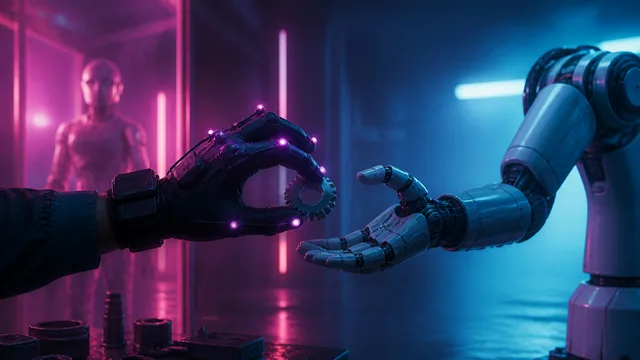
What's Breaking Through
Debate over whether flashy humanoid robot demos represent genuine progress or marketing illusion.
11 articles in this topic
About this topic
The humanoid robotics sector is experiencing rapid commercialization and public attention, but significant skepticism exists about what the technology actually demonstrates. Recent developments have highlighted a divide between impressive-looking demonstrations and the underlying technical reality. Companies are racing to bring humanoid robots to market, with some touting consumer-facing products at accessible price points, while others showcase increasingly capable machines performing complex tasks like backflips. This visible progress masks deeper questions about the authenticity and practicality of these systems.
At the center of this conversation is the tension between different approaches to building humanoid robots. Some companies have moved away from traditional programming paradigms toward neural network-based systems, reflecting broader shifts in AI development. However, critics argue that many headline-grabbing demonstrations rely on precomputed routines and controlled environments rather than genuine autonomous capability. This criticism suggests that visual spectacle may be outpacing actual functional advancement, raising questions about investor expectations and consumer understanding.
The broader context includes established players like Boston Dynamics continuing to push technical boundaries, while newer entrants attempt to democratize access to robotic technology through lower price points. The market is simultaneously grappling with questions about what tasks humanoid robots can realistically perform, what their actual utility is, and whether current demonstrations honestly represent their capabilities. As the industry matures, the gap between marketing narrative and technical substance has become a focal point for engineers, researchers, and observers trying to understand where humanoid robotics is genuinely headed versus where hype is leading the conversation.
BuzzRAG Coverage
Reward AI says OM-1 learned manipulation from human glove demonstrations alone. What's claimed, what's missing, and what evidence would prove it works.
Generalist AI's Gen 1.5 robot can learn new tasks from a 3-second demo, no retraining required. Here's what the numbers actually show.

China's World Humanoid Games features robots sprinting, boxing, and folding laundry. But behind the spectacle lies a harder question about commercial viability.
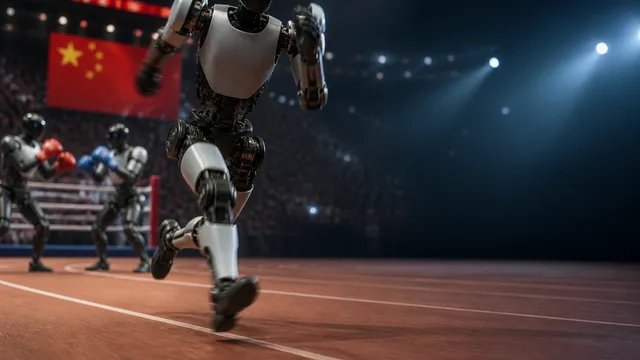
Top AI and robotics researchers gathered at YC to map what's actually been solved—and what hasn't. Here's an honest account of where the field stands in 2026.
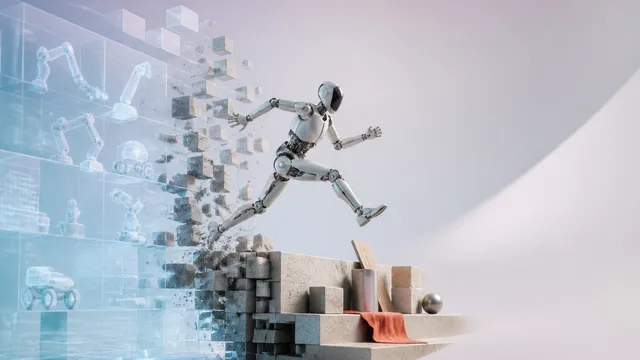
Waymo co-CEO Dmitri Dolgov laid out seven technical lessons at Y Combinator's Startup School — a rare honest account of what it actually takes to ship physical AI.

Google DeepMind's Gemini Robotics 2 targets whole-body control, dexterous manipulation, and multi-robot coordination. Here's what the demos show—and what they don't.

World Labs acquired SceniX to build a real-to-sim-to-real pipeline for robots. Here's what that means, why simulation is the key debate, and what's actually hard.

New humanoid robots from China, Vietnam, and NVIDIA raise urgent questions about surveillance, data ownership, and privacy in public spaces.

Brett Adcock's Figure removed 109,000 lines of code, betting everything on neural networks. It's either genius or expensive hubris.
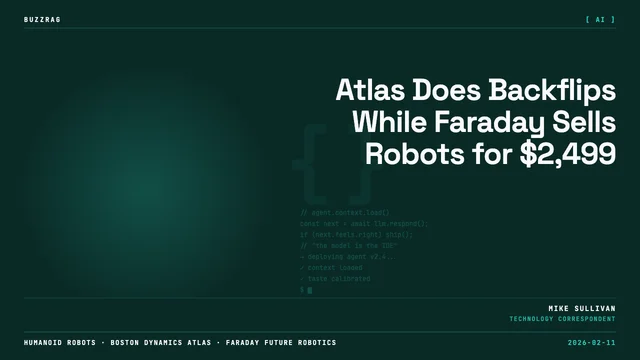
Boston Dynamics' Atlas performs gymnastics while Faraday Future launches commercial robots. The gap between demo and deployment is shrinking fast.
Turing Award winner Yann LeCun claims humanoid robot companies are faking intelligence with choreographed demos. Here's what the robotics industry isn't telling you.

1 signal from source feeds
These are external articles in the AI desk that match this topic. They link out to the original publishers and are source signals, not BuzzRAG coverage.
