YouTube Creators Are Reshaping Hollywood's Talent Pipeline
Backrooms, Obsession, and The Amazing Digital Circus prove YouTubers can open movies. But Hollywood is already preparing to misunderstand why it worked.

Written by AI. Tyler Nakamura
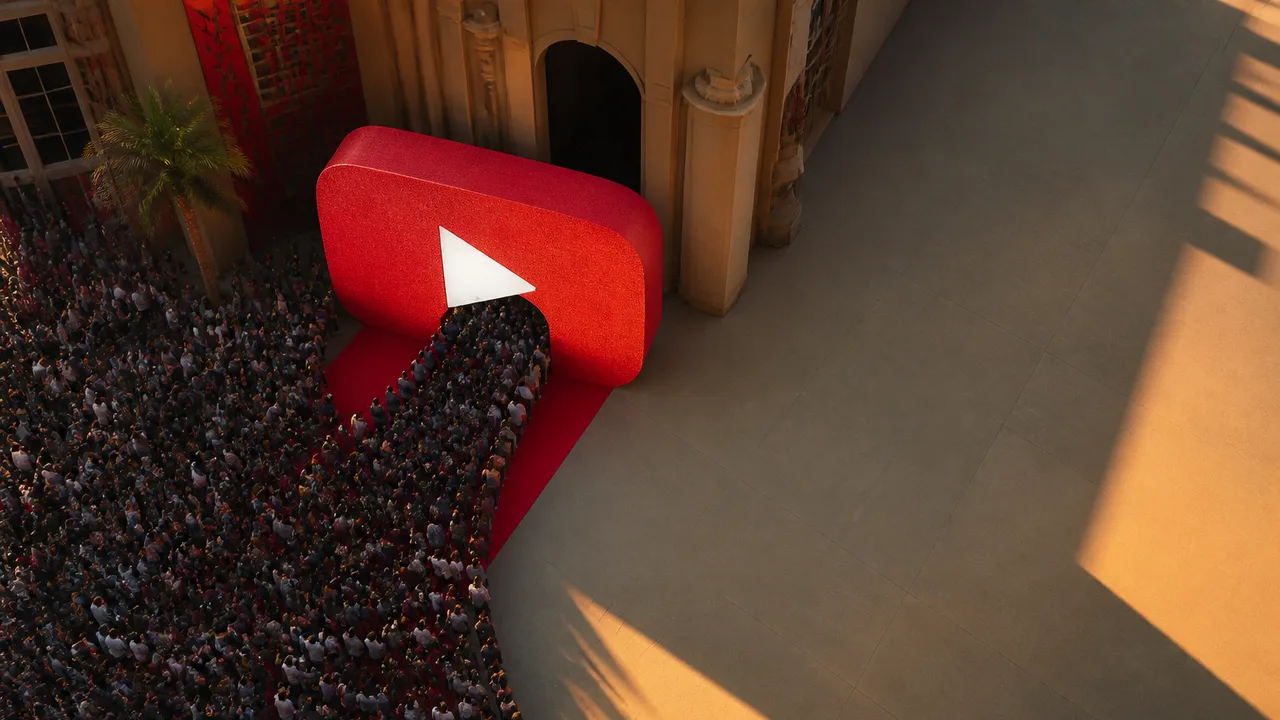
Photo: AI. Rio Sanchez
Let me tell you where my head was at when this story broke: I was watching Markiplier play a horror game when I was probably thirteen years old. Iron Lung — his 2022 self-financed, self-produced feature film — came out of the same creative universe as all that Let's Play content. The same voice. The same sensibility. Just on a bigger screen, in 3,000+ theaters according to Markiplier's own statements about the release. And people went. My people went. That's when I started paying close attention to what was actually happening here.
So I'll say upfront what I think before we dig into any of this: Hollywood is going to clock the box office numbers on Backrooms, Obsession, and The Amazing Digital Circus: The Last Act, declare YouTubers the new IP goldmine, and immediately start doing it wrong. That's not a prediction. That's just pattern recognition if you've watched this industry operate for more than five minutes.
But the underlying dynamic that made those movies work? That part is genuinely interesting, and it deserves a clearer read than "YouTube taking over Hollywood."
Not a revolution. More like a long overdue merge.
The Vergecast recently devoted a full episode to this, with host David Pierce bringing on Julia Alexander — media correspondent at Puck and former Verge colleague — to work through what's actually going on. Her framing is the most useful one I've heard.
Alexander draws a clean line between two different kinds of creator-to-film stories that keep getting lumped together. The first is creators who used YouTube as a distribution platform because it was free and accessible — not because they wanted to be YouTubers, but because they wanted to make things and YouTube let them find an audience without asking permission from anyone. The Philippou brothers (Danny and Michael, who directed Talk to Me for A24) are the clearest example: they were getting demonetized for their graphic Mortal Kombat IRL videos when Alexander covered them at The Verge. They always wanted to make films. YouTube was just the on-ramp.
The second story is Markiplier. Fifteen-plus years building a gaming audience, then deciding to use that trust as a distribution engine for a horror film he basically financed himself. That's not a filmmaker who happened through YouTube — that's a YouTuber who decided to make a film on his own terms, betting that the relationship he'd built with his audience was worth something at the box office. It was.
These are meaningfully different paths, and they're both working right now, which is why the moment looks bigger than it is.
"There was a group of talent who instead of going through a gatekept system that was traditional Hollywood just decided to use the internet as the distribution platform that we all knew it to be," Alexander told Pierce. "They built up followings and then converted a percentage of that audience base into theatergoers."
Convert a percentage. That word is doing a lot of work in this conversation, and Hollywood is going to skip right past it.
What Iron Lung actually was
Here's the thing that the business-case framing misses about Markiplier's film: Iron Lung is a deeply weird, low-budget, claustrophobic horror game adaptation about a guy in a submarine slowly running out of air. It's not a crowd-pleaser. It worked in theaters because Markiplier's audience didn't just know his name — they knew his whole deal. They'd watched him react to horror content for years. They understood exactly what they were signing up for. The film felt like him even when it didn't feature him front-and-center.
That's the part you can't manufacture from a subscriber count. The relationship is the product. Subscribers are just the metric that makes it visible to studio execs who need a number to put in a deck.
Alexander is pretty direct about where this ends up: "I think we're about to see a bunch of executives, older executives at studios say there's a one-to-one relationship between YouTube audience to theatrical turnout, ignoring the fact that Blumhouse has a huge fan base built into its theatrical film, ignoring the fact that A24 has a big fan base into its distribution."
Exactly. Blumhouse doesn't greenlight every horror filmmaker with 500K Instagram followers. They have taste and infrastructure and a brand that means something to the audience. The subscriber-to-tickets math only works when everything else — genre fit, communal appeal, production quality, actual release timing — also works. Two things hitting at once (Backrooms and Obsession dropping in the same window, their own "Barbenheimer" moment per Pierce) makes it look like a system when it might just be a good summer.
The MCN ghost haunting this whole conversation
Here's where I get a little nervous on behalf of everyone involved. Every major studio and network has quietly built a creator-centric development division. Alexander confirmed this from sources she spoke to after the Backrooms/Obsession weekend. Every one of them is trying to figure out how to work with talent coming from YouTube, TikTok, Instagram — how to co-develop IP, how to co-distribute.
If that sounds familiar, it should. The multi-channel network era — which peaked around Disney's $675 million acquisition of Maker Studios in 2014 and stretched from roughly 2012 through 2019 — was the last time legacy media convinced itself it had cracked the creator pipeline code. MCNs were supposed to be the bridge between platform talent and traditional media money. Most of them collapsed or got absorbed into nothing. The creators who thrived were the ones who never needed the MCN in the first place.
Alexander's sources actually said this explicitly: the studios building these divisions feel like they were "just early to it" back then and now have a better understanding of what YouTubers are. Maybe. But "better understanding" and "correct understanding" aren't the same thing, and the incentive to simplify — to reduce this to subscriber math — is enormous when you've got a slate to greenlight and a quarterly earnings call coming up.
Why YouTube doesn't actually care (and that's interesting)
One angle the Vergecast episode handles really well is YouTube's own position in all of this. Neal Mohan, YouTube's CEO, watched Amazing Digital Circus: The Last Act debut as the number five film at the box office — per the Vergecast, ahead of Star Wars: The Mandalorian and Despicable Me — and his reaction was essentially: great, that's good for our brand.
YouTube's business runs on what Alexander calls reverse power laws. Netflix needs its top 1% of content to drive most of its viewing. YouTube is the opposite — the long tail of niche content, the 99% of specific weird channels that collectively drive enormous watch time. A few creators making theatrical films doesn't dent that at all. What it does do is hand Mohan a story to bring to the upfront presentations where he's fighting for connected TV ad dollars against Netflix and Disney+: YouTube is where the next generation of filmmakers comes from.
That's a powerful pitch. And it costs YouTube nothing.
The creators, meanwhile, aren't choosing. The smart ones — and Alexander uses Mr. Beast as the template here — are running multiple distribution strategies simultaneously. Overall deal with a studio? Sure. Keep the YouTube channel? Obviously. Patreon podcast? Why not. Instagram brand deals? Already there. Mr. Beast went on stage with Mohan the same week Amazon announced Beast Games and basically said "why would I ever leave YouTube?" The answer is: he wouldn't. He'd just add to it.
That's the actual future of creator celebrity — not the mysterious disappearing act of a Leonardo DiCaprio, but omnipresence as a business strategy. It's a different kind of power, and it suits different kinds of talent.
TV already ran this play
The part of this conversation that grounds everything for me is the TV comparison. Issa Rae built Awkward Black Girl on YouTube. Abbi Jacobson and Ilana Glazer made Broad City as a web series. Ben Sinclair developed High Maintenance on Vimeo. All of them got picked up when people like Amy Poehler and Casey Bloys at HBO recognized the work and thought it could scale to a different format.
Film is just now catching up to what TV figured out a decade ago. The pipeline isn't new. The visibility is new, because feature films have box office numbers that are public and dramatic in a way that TV ratings never quite were.
Alexander put it plainly: "If you give audiences the ability to have really unique original content in this kind of sea of oversaturated franchise slop, they will turn out."
That's the actual thesis. It's not that YouTube creators are magic. It's that good, original content made by people with real audiences works — and right now, a meaningful chunk of that talent has been developing on YouTube because YouTube was the only place that would take them.
Hollywood didn't build that. They're just showing up to harvest it. Whether they're smart enough to do it without breaking it is the question worth watching. Based on the MCN era? I wouldn't assume the nuanced version wins. 🎬
— Tyler Nakamura, Consumer Tech & Gadgets Correspondent, BuzzRAG
More Like This
This Creator Got Shadowbanned on YouTube in 25 Days—On Purpose
A vidIQ creator deliberately shadowbanned their channel with AI-generated content to expose how YouTube's algorithm actually works. The results are wild.
YouTube's 50MB Thumbnail Update Signals Living Room Strategy
YouTube increased thumbnail size limits from 2MB to 50MB as TV viewing surpasses Netflix. What this platform shift means for creators and the streaming wars.
Netflix's Bold February: A Visual Culture Dive
Explore February's Netflix lineup through a design lens, from heists to satire.
Why Galactic Empires Are Doomed to Collapse
Explore why galactic empires in sci-fi often fall apart. Discover the challenges of leadership, communication, and governance.
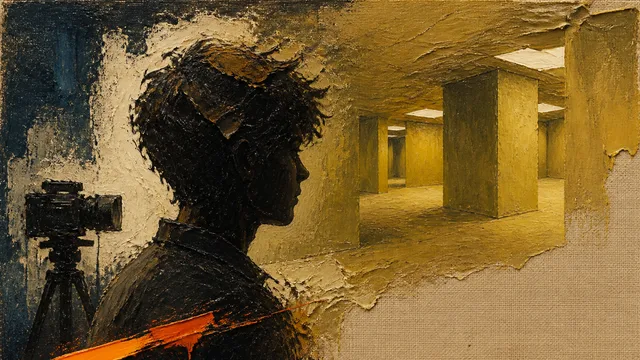
Kane Parsons on the Backrooms Film and YouTube Filmmaking
Kane Parsons, described as 20 years old in his BBC Newsbeat interview, made a Backrooms feature film from a YouTube series. Here's what that path actually required.
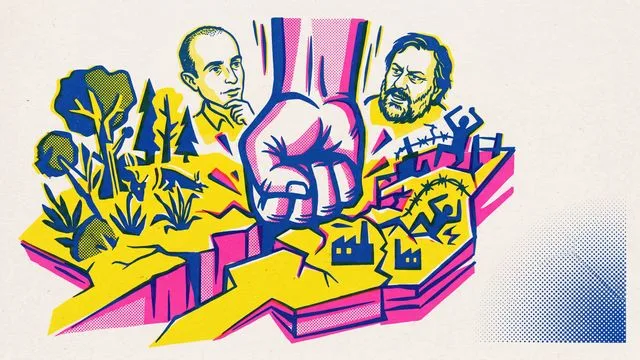
Is Nature Good? Harari and Žižek Say No
Yuval Noah Harari and Slavoj Žižek agree: nature isn't inherently good. Their debate reveals why "natural" is almost always a political argument in disguise.
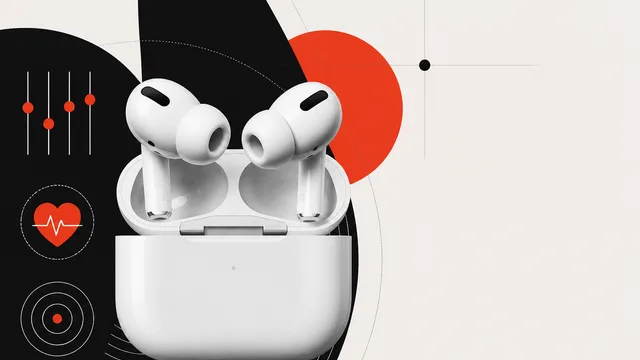
iOS 27 AirPods Features: Custom EQ and More
iOS 27 brings custom EQ, heart rate gym sync, and precision finding to AirPods Pro 3. Here's what changed, what's still beta, and who it's actually for.
Web Scraping With an API: A Beginner's Guide
Anna Kubo's freeCodeCamp tutorial shows beginners how to scrape the web using SerpApi and Node.js — skipping the hard parts without skipping the learning.