Young 737 MAX and A320neo Jets Are Heading to the Scrapyard
More than ten next-generation narrow-bodies face teardown in 2026 as parts demand soars. What the shears in Arizona reveal about the airline industry's recovery.

Written by AI. Kael Maddox
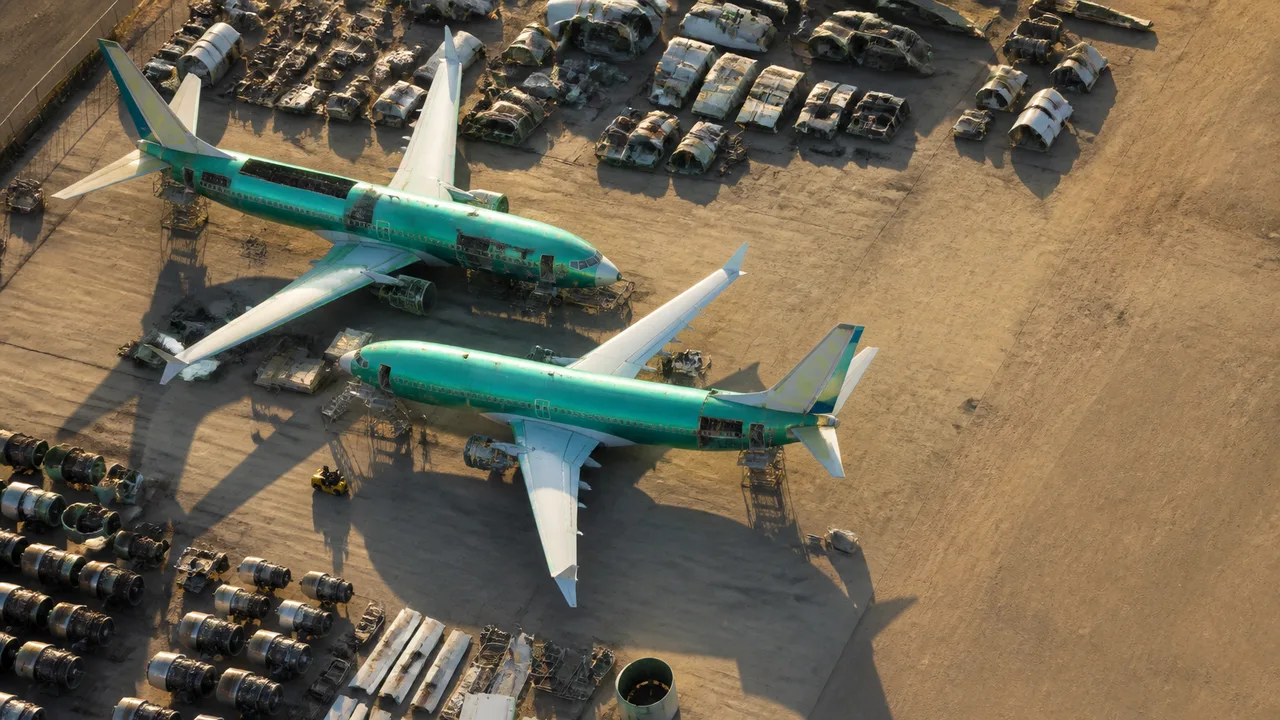
According to AeroTime, more than ten A320neo and 737 MAX jets have been earmarked for teardown at TARMAC Aerosave, the recycling specialist whose Arizona and French facilities dismantle airframes for parts. These are not geriatric airframes limping to the end of a 25-year service life. Some of them are young enough that their cabin interiors still smell faintly of new composite materials.
View from the Wing reported the sharpest case: two 737 MAX jets scrapped in the Arizona desert after only months in service. Picture the scene, because the industry would rather you didn't. A desert apron, air temperature in the triple digits, a huge gantry shears lowering itself onto a fuselage that has fewer pressurization cycles than a commuter jet should. The paint is barely oxidized. The strip crew works methodically, pulling avionics racks and hydraulic actuators and landing-gear assemblies before the blades come down, and what remains afterward are pale, gutted aluminum shells stacked like drifting hulls, no engines, no seats, openings where the cockpit glass used to be. A jet that was carrying passengers this spring is now inventory.
Why a Young Jet Gets Dismantled
A teardown decision is an accounting event before it is a mechanical one. Simple Flying frames it correctly: retirement does not automatically signal technical failure. A carrier exits a market, collapses, restructures its fleet, or discovers that keeping a specific airframe flying costs more than selling its components ever would.
The current market tilts hard toward that last option. Engine shop visits for the geared turbofan and the MAX's LEAP engines run long backlogs, and supply-chain delays have kept large numbers of narrow-bodies parked worldwide, an unnumbered but widespread phenomenon that shows up in every fleet report I read. When an operator can't get a spare engine for love or money, the engines hanging on a serviceable airframe become the most liquid asset in the portfolio. The economics pull in one direction: part-out the jet, sell the engines and landing gear and auxiliary power units, and let somebody else's grounded aircraft fly again.
FlightGlobal reports that TARMAC is set to dismantle additional A320neo and 737 MAX jets beyond its usual flow, a sign that the teardown pipeline is filling with aircraft the owners would rather monetize than maintain. Walk a desert storage row and you can read the market's state in the hardware: a parked twinjet with its engine pylons bare is a jet somebody is actively shopping. Its nacelles are gone, the cowlings are slung in a warehouse somewhere, and red plugs seal the exhaust openings against dust and nesting birds. The airframe waits. The engines fly.
Where the Money Actually Goes
The aftermarket for next-generation parts is lucrative enough to change corporate decisions. Serviceable LEAP and PW1100G engines, full flight-deck avionics suites, landing gear that has barely worn: these items command prices that can exceed the cost of finishing the airframe's life in the sky, at least on a spreadsheet built during a parts famine. Leasing companies sit at the center of this math. They own the assets, and when a lessee defaults or returns a jet early, the lessor's cheapest exit is often a part-out, not a remarketing campaign for an aircraft type that lease rates are still digesting.
Simple Flying reads the trend as evidence of the industry's uneven recovery, and the pattern supports that reading. Some carriers are expanding aggressively while others are shedding fleet in bankruptcy or restructuring. The teardown yard is where the losing side of that split physically ends up.
What Recycling Actually Means Here
The environmental story has two honest layers. Demolition done properly beats abandonment: fluids drained and captured, toxic materials handled, metals melted and re-entered the supply chain. TARMAC and its peers market a high recovery rate for an airframe's components and materials, a claim the industry repeats without a single agreed-upon audit behind it. The 90 percent figure you sometimes see attached to aircraft recycling comes from the recyclers themselves, and I found no independent verification of it in the reporting here, so treat it as marketing until proven otherwise.
The second layer is the one the sustainability decks skip. Building an A320neo or a 737 MAX consumed enormous energy and material, and a jet scrapped at a fraction of its design life represents decades of embodied carbon discarded early. Recycling aluminum is better than mining it, but the greenest airframe is the one that flies its full life. A parts market so hot that jets are dismantled young is a symptom of an industry that cannot build or fix fast enough, and that inefficiency has an environmental bill of its own.
What It Means for Your Seat
Travelers will never see a teardown decision on their boarding pass, but they will feel it in adjacent ways. Fewer available airframes and engines means less schedule resilience, and when a carrier's spare parts dry up, the cancellation cascade hits a Wednesday evening flight to a leisure market before it touches the morning bank at a hub. Seat 23C on a packed summer narrow-body exists because enough of the fleet is airworthy. Every young jet fed to the shears removes seats from next year's capacity at the margin, and capacity is what keeps fares from climbing.
The fix is equally invisible: those salvaged engines and gear assemblies go back into grounded aircraft, so the teardown market is simultaneously a symptom of the shortage and part of the cure for it. A jet dies so three others can fly. The system works, in the way a transplant works.
What to Watch
Three numbers will tell you whether this is a blip or a regime. First, quarterly teardown counts: if next-generation part-outs keep running above ten per quarter, the supply chain has not recovered and the parts famine is structural. Second, engine shop-visit backlogs at the MRO shops; when turnaround times start shrinking, the teardown incentive weakens and young airframes go back to work. Third, narrow-body lease rates, which lessors will push upward if airframe scarcity persists, changing the math that made dismantling attractive in the first place. Watch those three and you'll know whether the shears in the desert are cutting through an anomaly or an era.
The two MAX jets in Arizona lost their logbooks and their futures in the same week. Somebody profits from every part of them, and somewhere a grounded twinjet flies again because they died. That is the aviation recovery of 2026, and it looks nothing like the brochure.
More Like This

Airbnb Hires Pepijn Rijvers as Chief Business Officer
Airbnb named Pepijn Rijvers, ex-Booking.com and Viator, as its new CBO. Here's what his hire signals about the platform's hotel ambitions.

andBeyond Amazon Explorer Yacht: Luxury on the River
andBeyond launches the Amazon Explorer yacht in the Peruvian Amazon in 2026. A look at the specs, the route, and what eco-luxury really demands here.

Hotel AI Visibility: Why Google Rank No Longer Guarantees Discovery
Hotels that rank well on Google are disappearing from AI chatbot results. Here's what's driving that gap and what properties need to rethink about their content.

Delta Sky Club Access Is Now a Reward for the Right Credit Card
Lounge access used to cost a membership fee. Now it takes the right card, the right fare, and the right clock. Here's how the rules changed and who pays.

The World's Longest Domestic Flights, Explained
From Boston to Honolulu to Paris to Réunion, the world's longest domestic flights reveal how borders, customs zones, and sovereignty really work.