Wolverine Leads US Sales as September Markets Diverge
Marvel's Wolverine topped US game sales, but September's hardware and content figures moved in opposite directions. What the numbers mean for studios and players.

Written by AI. Mike Wierzbicki
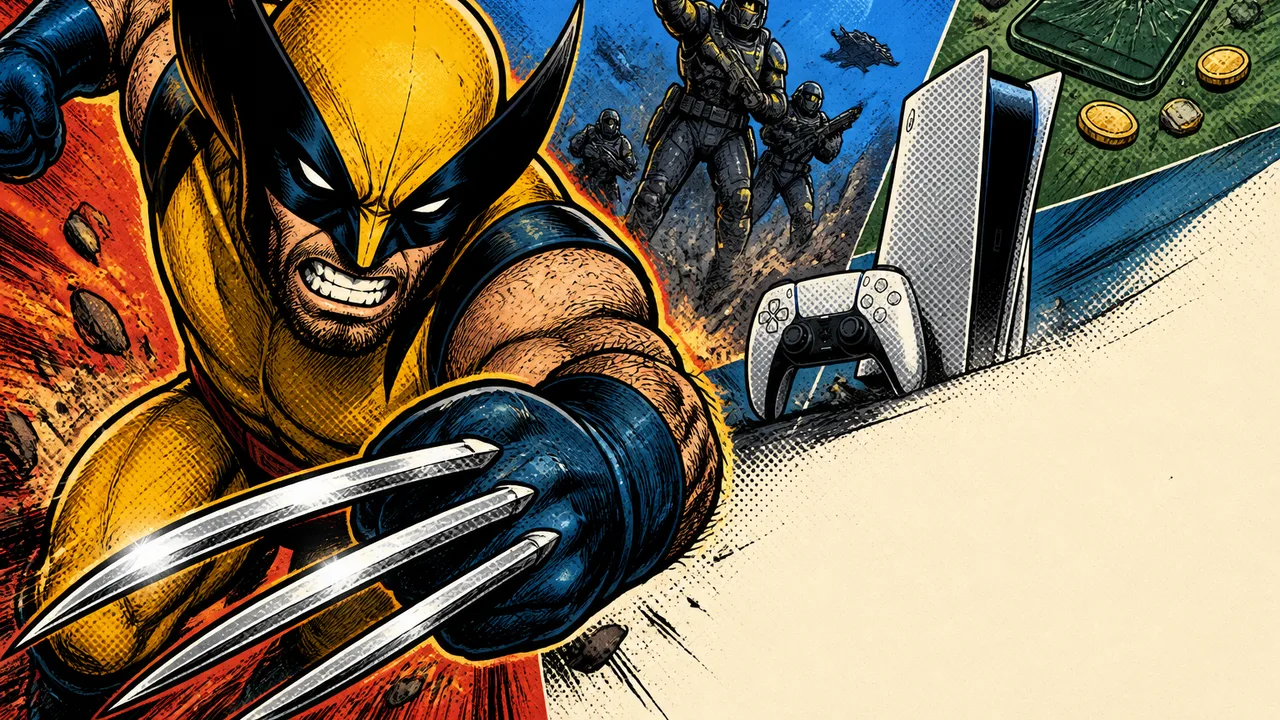
Marvel's Wolverine led US game sales in September 2026, while the wider market moved in several directions at once. PlayStation 5 hardware spending rose sharply. Spending on games and other content fell. A publisher can celebrate the first result; anyone trying to understand the business has to account for all three.
In Circana's September US figures, Wolverine ranked first for game dollar sales and delivered the highest launch-month dollar sales for a Sony-published title since Helldivers 2. PS5 spending rose 43% from a year earlier, and PS5 unit sales rose 22%. Across all platforms, hardware spending increased 12% to $362 million. Those are substantial gains for Sony in this US tracking period, which ran from August 30 to October 3 rather than matching the calendar month exactly.
Content spending declined 2% to $4.2 billion, led by a 14% drop in mobile spending. Spending on console content grew 8%, and PC content grew 27%. Overall projected spending across content, hardware and accessories fell 1% to $4.8 billion. Wolverine reached the top of a busy game chart, with eight new releases in its top ten, while the largest reported spending category moved down.
One Hit, Several Markets
A dollar-sales chart answers a narrow question: which listed games generated the most measured spending during the period? It does not count how many people bought each game. Nor does a first-place finish tell us whether people spent more on games overall. The console and PC increases sit alongside the mobile decline inside a falling content total. Treating Wolverine's lead as a proxy for the whole US games market would substitute one product ranking for a category measure.
Wolverine led game sales, PS5 led hardware sales in both dollars and units, and its year-over-year unit gain shows more consoles sold, not just more money taken in. Sony also recorded its highest monthly share of hardware dollars since May 2025. The numbers describe a strong September for PlayStation, even as the broader content total declined.
For a developer deciding which audience to build for, though, those categories pose different questions. Growing console content spending suggests more dollars flowing through that part of the US market during this period; it says nothing by itself about how evenly those dollars reached individual games. A top-ten full-game chart will likewise put a launch in view more clearly than it puts a change in mobile spending. Budgeting for a project on the strength of a platform's headline month would require a more precise view of its prospective buyers than an aggregate sales chart can give.
The hardware numbers sharpen that point. Total hardware unit sales fell 3% year over year, despite PS5 units rising 22%. Switch 2 unit sales fell 14%, and Xbox Series units fell 27%. In dollars, Switch 2 spending fell 12% and Xbox Series spending fell 2%. PS5's increase was large enough to coexist with falling unit sales across hardware overall. A growing total hardware dollar figure therefore describes an uneven platform market, not an equal lift for every console maker.
PS5's 43% spending increase also exceeds its 22% unit increase. Unit growth supports a claim of stronger PS5 sales volume; dollar growth captures more than volume alone. Prices and the mix of hardware sold can affect spending too. The gap should keep anyone from treating the 43% figure as the percentage increase in consoles purchased, or assigning all of it to Wolverine. The game and the console performed well in the same period; the figures do not isolate how many PS5 buyers came for Wolverine.
Xbox's result has a longer shadow. Xbox Ecosystem console unit sales reached a record low for September, matching the previous September low set in 2025. That history makes this year's drop more consequential than a one-month dip viewed alone. It still describes US September console units, rather than every way players might spend money in the Xbox ecosystem. For teams evaluating a console release, the direct signal here is the direction of new hardware sales in one territory and period.
What the Helldivers Benchmark Measures
The comparison behind Wolverine's Sony milestone reaches back to February 2024, when Helldivers 2 launched. Both games produced a standout launch month in dollar sales for the publisher, but their routes to that benchmark differed. Helldivers 2 launched on PC and PS5 at $40; Wolverine launched as a PS5 exclusive at $70. The older game's two-platform launch offered access to PC buyers from day one. Wolverine's higher listed price gives each full-price sale a different dollar weight.
That is why the benchmark is useful as publisher history and awkward as an audience comparison. Wolverine is Sony's strongest launch-month dollar performer since Helldivers 2, a clear statement about spending. The price and platform differences prevent that ranking from supplying a like-for-like count of buyers or establishing which release reached more people. Discounts, editions and the distribution of purchases across platforms would complicate a conversion from dollars to copies further. Dollar sales remain the measure here.
There is a development-business question inside that comparison. A simultaneous PC launch and a PS5-exclusive launch put their games in front of different potential customers. Each route can produce strong measured dollar sales; the chart does not evaluate the work, cost or longer-term return behind either release strategy. Teams asked to reproduce a hit need that distinction before a launch-month ranking turns into a production target.
The platform question also changes depending on who is asking. A publisher weighing launch platforms needs to think about the customers each version could reach. A studio pitching a console game needs to know whether spending growth extends beyond the releases at the top of the chart. Neither decision can be settled by Wolverine's rank, even though that rank is a concrete commercial result for Sony.
September's results give Sony several concrete wins: the top-selling game, rising PS5 units and a 43% increase in PS5 hardware spending. They also give developers and publishers a caution against planning from a single chart position. Console and PC content spending rose while mobile pulled the content total down; PS5 units rose while hardware units overall fell. The next forecast built around Wolverine's month should start by naming which of those markets it expects to reach.
More Like This

Marvel's Wolverine Sales Measure Marketing Momentum
Marvel's Wolverine opened with an estimated 1.9 million sales. Preorders, comparisons and Sony's history show what that figure can and cannot prove.

Xbox 360 Games on PC: What Dataminers Found
Dataminers cracked open Microsoft's new PC backward compatibility titles and found an Xbox 360 emulator inside. Here's what that means and what's still unknown.
Halo: Campaign Evolved Gets Mixed Reviews
Halo: Campaign Evolved's split reception isn't just a creative story — it's a studio story. What 343 Industries produced reflects the conditions it worked under.