Why Robert Eggers Fits Shakespeare’s Romeo and Juliet
Robert Eggers’ Romeo and Juliet fits his darker instincts and a century of reinvention, from Zeffirelli and Luhrmann to Early Modern English on film.

Written by AI. Theodore "Teddy" Ashworth III
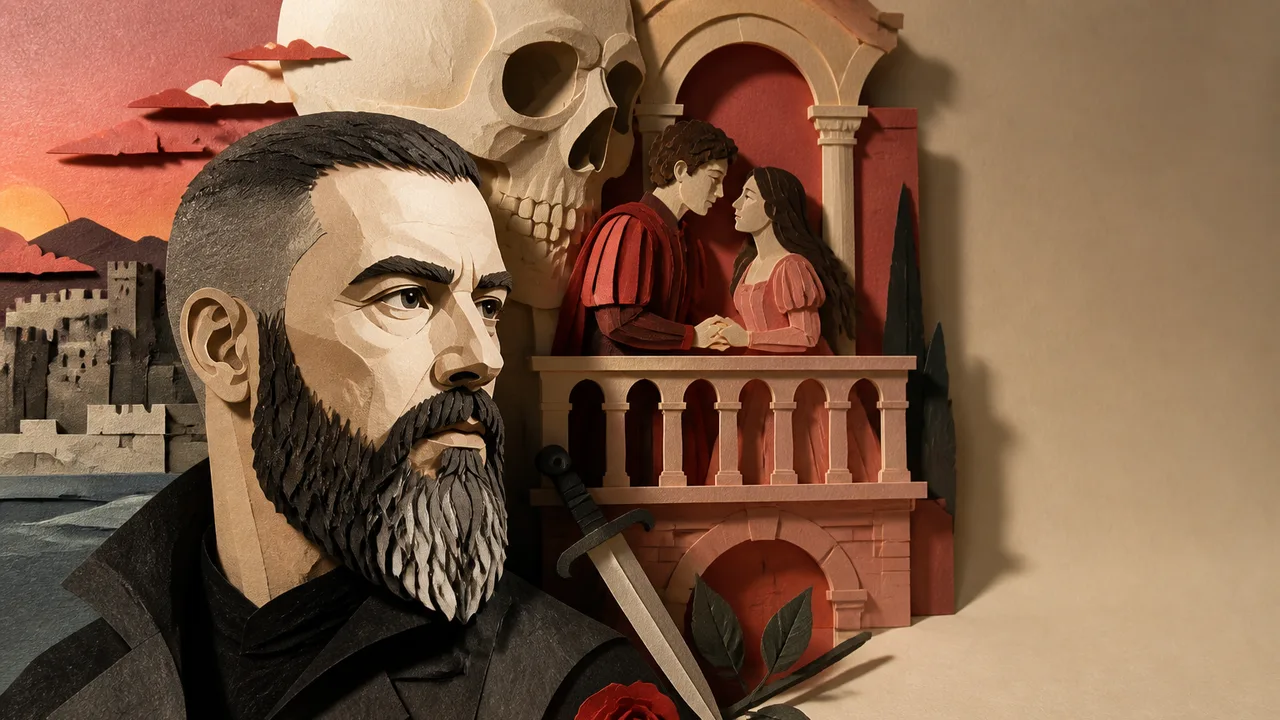
Robert Eggers is setting up a Romeo and Juliet adaptation at Focus Features, placing Shakespeare’s teenagers beside the witches, Vikings, vampires and werewolves already haunting his filmography.
The Hollywood Reporter’s original account says Focus prevailed in a bidding contest involving A24, Sony and Warner Bros. Eggers will direct and produce, with the film intended as his next production after Werwulf. The reported deal sits in the high $70 millions, a figure encompassing the production budget plus filmmaker and talent fees. No cast or further producers had been announced, and Focus declined comment, so Verona remains more proposition than municipality for now.
The pairing initially looks like somebody drew two names from a velvet hat at an especially gloomy film festival. Eggers has built his work around historical dread, ritual and communities governed by rules older than anyone unfortunate enough to live under them. Romeo and Juliet, meanwhile, has spent centuries being sold as romance’s deluxe funeral package.
Look past the balcony, however, and the fit sharpens. The play contains a blood feud, street killings, coerced marriage, plague quarantine, poison and two young people making irreversible decisions at the speed of infatuation. The Playlist describes the tragedy as darker, stranger, more violent and more preoccupied with death than its popular reputation suggests. Those qualities do not turn Shakespeare into folk horror, but they give Eggers ample room to examine the customs and beliefs that make catastrophe appear inevitable.
Verona in the Language of Each Generation
Romeo and Juliet survives partly because filmmakers keep translating it into the dominant visual grammar of their moment. Franco Zeffirelli’s 1968 version offered youthful leads and a period world that contemporary audiences and critics found persuasive. Baz Luhrmann’s 1996 Romeo + Juliet kept Shakespeare’s dialogue while relocating the feud to the guns, television reports and pop delirium of Verona Beach.
Book Riot likens the recurrence to a roughly 30-year cycle: 1968, 1996 and now Eggers’ project in 2026. A three-film sequence cannot establish a law of cultural physics. It does reveal three adaptation strategies. Zeffirelli pursued youthful immediacy inside a historical setting. Luhrmann made Shakespeare compete with MTV and won the argument through velocity. Eggers appears poised to make historical reconstruction itself the spectacle.
That reading remains provisional because the film has no announced cast and few confirmed creative details. Still, IndieWire reports that the adaptation is expected to retain a period setting. The strategy would suit a period in prestige filmmaking that sells immersion as an attraction: unfamiliar speech, reconstructed social codes, thick atmosphere and enough candlelight to alarm an insurer.
The comparison with Luhrmann is especially useful because their likely methods point in opposite directions while pursuing the same goal. Luhrmann carried the text into a contemporary pop environment; Eggers may ask viewers to enter an unfamiliar past. Both approaches seek to remove the varnish applied by classroom reverence. Luhrmann used handguns and Cardigans songs. Eggers, one suspects, will bring ecclesiastical menace and a door hinge copied from an extant 16th-century specimen.
Luhrmann’s film also warns against predicting cultural longevity from opening critical temperature. Book Riot characterizes its initial response as lukewarm while calling it a core millennial text; IndieWire reports that it earned $147 million worldwide. Eggers’ film has not been made, so only strategies can be compared. Reception, commercial performance and eventual life in classrooms remain sealed in Friar Laurence’s medicine cabinet.
The English Correction
The first burst of reporting supplied a miniature farce about historical accuracy. THR initially said the actors would speak “Olde English.” Reporter Borys Kit subsequently corrected that account: the intended language is Elizabethan, or Early Modern English.
Old English belongs to the Anglo-Saxon period, centuries before Shakespeare wrote the play in the 1590s. Early Modern English is Shakespeare’s linguistic territory, although the report does not yet establish whether Eggers will use the familiar text intact, adopt reconstructed pronunciation or revise the dialogue. “Elizabethan English” names an era more readily than it explains a finished soundtrack.
The correction improves the case for the project. A director celebrated for period detail was briefly attached to a linguistic choice that would have transported Shakespeare’s lovers several centuries away from Shakespeare. Once corrected, the detail suggests continuity with Eggers’ established method: history presented as a system of speech, belief and conduct, rather than upholstery arranged behind famous actors.
That impulse predates this week’s announcement. Gizmodo notes that a 2022 profile found Eggers researching and writing “something Elizabethan”; he mentioned the project again in an interview while cautioning that many things he writes never get made. The new Focus deal makes the old clue legible in retrospect, though it does not prove that the present screenplay is unchanged from whatever he was developing then.
Shakespeare Has Always Been Adaptation Material
Eggers is joining a relay race that began long before prestige horror acquired a marketing department. Far Out reports that Romeo and Juliet has received more than 160 film adaptations since 1908, when J. Stuart Blackton directed an early silent version. The story has also escaped its nominal period altogether: the 1961 and 2021 films of West Side Story move the feud into New York street-gang conflict.
The lineage reaches behind Shakespeare as well. As The A.V. Club observes, Ovid’s Pyramus and Thisbe supplies a proto-version of the lovers divided by family hostility and destroyed by fatal misunderstanding. Eggers has already worked beside Shakespearean ancestry. The Northman draws on the legend of Amleth, the narrative forebear of Hamlet. His arrival in Verona therefore continues an old traffic between myths, plays and films, with each form claiming the story by rebuilding it.
Zeffirelli’s film also demonstrates how an adaptation’s legacy can change under later scrutiny. Its brief nude scene caused controversy on release, and a lawsuit alleging child abuse followed decades later, according to Book Riot. Whatever acclaim surrounded the film in 1968 cannot settle every question subsequent generations ask of its production. Adaptations preserve the values of their moment, including values later audiences may interrogate.
That history complicates any neat claim that 2026 has found its definitive Romeo and Juliet. Every celebrated version eventually becomes a period piece twice over: once through its setting, and again through the assumptions of the people who made it. Eggers’ proposed reconstruction may prove transporting, suffocating or both. Its larger wager is already visible. Luhrmann made Shakespeare current by dragging Verona into the present; Eggers appears ready to make the past strange enough that audiences must travel to meet it.
More Like This
Bookpilled's Vintage SFF Deep Dive Is Worth Hearing
Bookpilled's 28-minute tour of 20 obscure sci-fi and fantasy books is provisional criticism done out loud — and that's exactly what makes it worth your time.

The Last Maya Cities: Tulum, Mayapan, and Cobá
A new documentary examines Tulum, Mayapan, and Cobá—the final Maya cities—through archaeology, LiDAR mapping, and a more complicated story of collapse.