Verizon Loses $47M FCC Fine Refund at Supreme Court
The Supreme Court shut down Verizon's bid to recover a $47M FCC fine over location data sales. Here's what it means for your carrier contract and privacy.

Written by AI. Tyler Nakamura
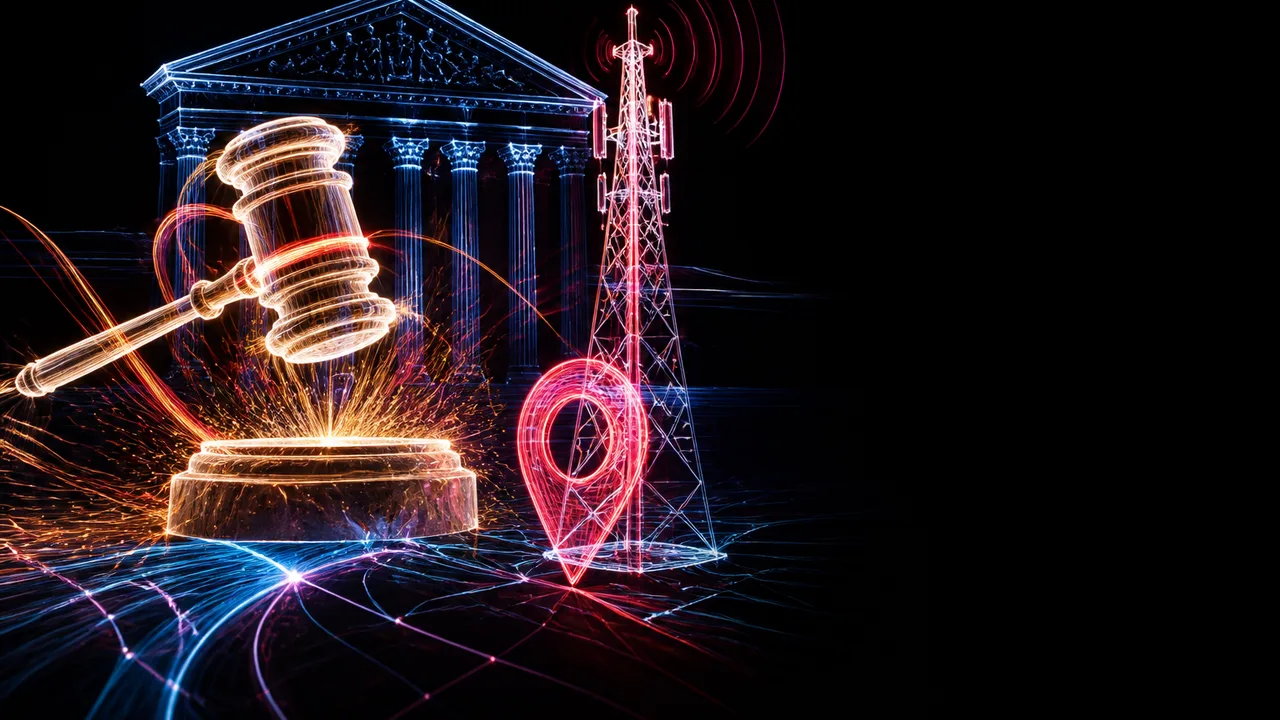
If you're a Verizon subscriber, you've been paying somewhere in the ballpark of $150 a month for your plan. You probably figured that money bought you service — calls, texts, data. What you likely didn't clock is that Verizon was also packaging up your real-time location and selling it to third parties. Not just advertisers. According to reporting that surfaced when this fine was originally imposed, that data was making its way to bail bondsmen and bounty hunters. People who could use a phone's GPS ping to physically locate another person.
That's the thing sitting underneath this Supreme Court ruling that everyone is treating like a dry regulatory story.
On August 17, 2026, the Supreme Court rejected Verizon's attempt to get a $47 million refund from the FCC, according to Ars Technica. The denial came as a single line in a list of court orders — no explanation, no opinion, no reasoning. Just: no. Bloomberg confirmed the court refused to let Verizon try to recoup the $47 million it had already paid after being accused of privacy violations by the FCC. Broadband Breakfast pegged the date: Monday, August 17.
Verizon's original argument wasn't "we didn't do it." It was more procedural than that: the company contended it deserved a jury trial before paying a fine that large. Fox Business framed it as a dispute over customer location data and jury-trial rights — essentially, Verizon was betting that the FCC's enforcement process itself was unconstitutional, not just arguing about the facts of what happened. That's a very different kind of fight. And it's one that, for now, Verizon has lost. Mobile World Live noted the fine was tied specifically to location-data privacy violations.
So let's talk about that $46.9 million number for a second, because on its own it sounds enormous, and also somehow not enormous enough.
Verizon has roughly 115 million subscribers in the US. Spread that fine across the customer base it was collected from, and you're looking at roughly $0.40 per person. Less than a candy bar. Meanwhile, the average Verizon postpaid customer was generating around $50–$60 in monthly revenue for the company during the period this was happening. The math on "what the fine cost per person whose location data was allegedly mishandled" versus "what Verizon was earning per person" is pretty uncomfortable. The penalty, in that light, starts to feel less like a consequence and more like a line item.
That's not necessarily the FCC's fault — the agency levied the maximum it could under its authority at the time. But it does explain why the legal fight over that $47 million mattered to privacy advocates as much as the dollar amount itself. If Verizon had won — if the Court had said the FCC's enforcement process was procedurally invalid — it wouldn't have just meant a refund. It would have handed every carrier a blueprint for contesting FCC fines on constitutional grounds. That's the domino Verizon was actually reaching for.
Here's where the regulatory landscape gets genuinely interesting, and I promise I'll say this in plain English. Courts have recently been reshaping the relationship between federal agencies like the FCC and the companies they regulate. The big one is a 2024 Supreme Court ruling called Loper Bright, which dismantled what was known as the "Chevron doctrine." Without getting too deep in the weeds: Chevron was a 1984 precedent that basically told courts to trust federal agencies' interpretations of their own authority. Agencies got the benefit of the doubt. Loper Bright reversed that — courts now review agency decisions more skeptically, without automatically deferring to the agency's read of the law.
What that means in practice: FCC fines are now easier to challenge in court. A carrier can argue "the FCC interpreted its own authority wrong," and a judge has to actually weigh that argument rather than just say "the agency knows best." Separately, the 2023 SEC v. Jarkesy decision created more space for defendants in agency enforcement actions to demand jury trials in federal court — which was exactly the argument Verizon was making here about its constitutional rights before paying up.
So Verizon wasn't just fighting about location data. It was testing whether the new legal environment — post-Loper Bright, post-Jarkesy — could be used to retroactively undo an FCC fine. The Supreme Court's silence on the petition doesn't mean those precedents are irrelevant going forward. It just means Verizon didn't get its money back this time. The Next Web noted the Court won't help Verizon recover the $47 million over location data — but the broader legal terrain for future FCC enforcement battles is still being mapped out.
That's the tension that makes this story more than a courtroom procedural. The FCC is operating in an environment where its authority to fine companies is genuinely more contested than it was five years ago. Carriers know this. Their legal teams know this. The fact that Verizon mounted this specific argument — using Jarkesy-adjacent logic to demand a jury trial — suggests the industry is actively probing the limits of what the new judicial skepticism toward agencies makes possible. This case didn't open that door, but the door is still there.
What it means for subscribers right now is mostly: watch what your carrier does next. The FCC's ability to issue large fines and have them stick is arguably the most powerful lever the agency has to shape carrier behavior on privacy. Slashdot flagged the story with exactly the kind of reader energy you'd expect from people who care about data rights — the crowd that's been saying for years that telecom privacy enforcement is underpowered relative to the violations.
And they're not wrong. Verizon sold your real-time GPS location to people whose job was to find other people. The FCC fined the company less than fifty cents per subscriber. Verizon then spent years and significant legal resources trying to get even that back. The Supreme Court said no this week — but the fact that the argument got this far tells you a lot about how carriers are thinking about the cost-benefit of compliance versus the cost of litigation.
If you're shopping for a carrier plan right now, none of that changes the price comparison between Verizon, T-Mobile, and AT&T. The fine is paid, the case is over, and all three carriers have faced some version of location-data scrutiny. But the underlying question — what it actually costs a carrier to mishandle your location data, and whether that cost is ever high enough to change behavior — is one the industry hasn't finished answering.
More Like This

World's Fastest Drone Reclaims Record with V4
Discover how Peregreen V4 reclaimed the world's fastest drone title with a speed of 657 km/h.

Google Pays $250K for 16-Year-Old Linux KVM Flaw
A 16-year-old Linux KVM flaw called Januscape earned a $250K bounty after enabling guest VM escapes on Intel and AMD systems. Here's what it means for cloud security.

Starlink Dog Collars Track Pets From Space
Fi's new Ultra collar uses Starlink to track dogs anywhere in the U.S. — and a rival AI-powered collar is right behind it. Here's what that really means.

Flock Cameras, Warrants, and Who Bears the Cost
Flock cameras aren't really a safety-vs-privacy debate. They're a question about who absorbs the risk when surveillance has no warrant requirement.
This Tool Treats Your Home Lab Like Infrastructure Code
RackPeek documents home labs as YAML code in Git. Brandon Lee shows how this infrastructure-as-code approach beats static diagrams and spreadsheets.
30 Self-Hosted GitHub Projects Trending Right Now
From media automation to AI chat apps, here are 30 trending self-hosted GitHub projects that put you back in control of your data and infrastructure.

Alibaba Bans Claude Code Over Alleged Backdoor Risks
Alibaba is banning Claude Code starting July 10, citing alleged backdoor tracking of Chinese users. Here's what developers need to know about the dispute.

Meta Puts Ray-Ban Smart Glasses Behind a Paywall
Meta is rate-limiting its Ray-Ban smart glasses AI features and charging $20/month for extended use. Here's what that actually means for buyers.