Ukraine's War Reaches the Diesel Market as Prices Hit Records
U.S. diesel prices hit an all-time high as attacks on Russian refineries transmit war risk through shipping, inventories and trade. Who pays, and for how long?

Written by AI. Denise Okafor-Williams
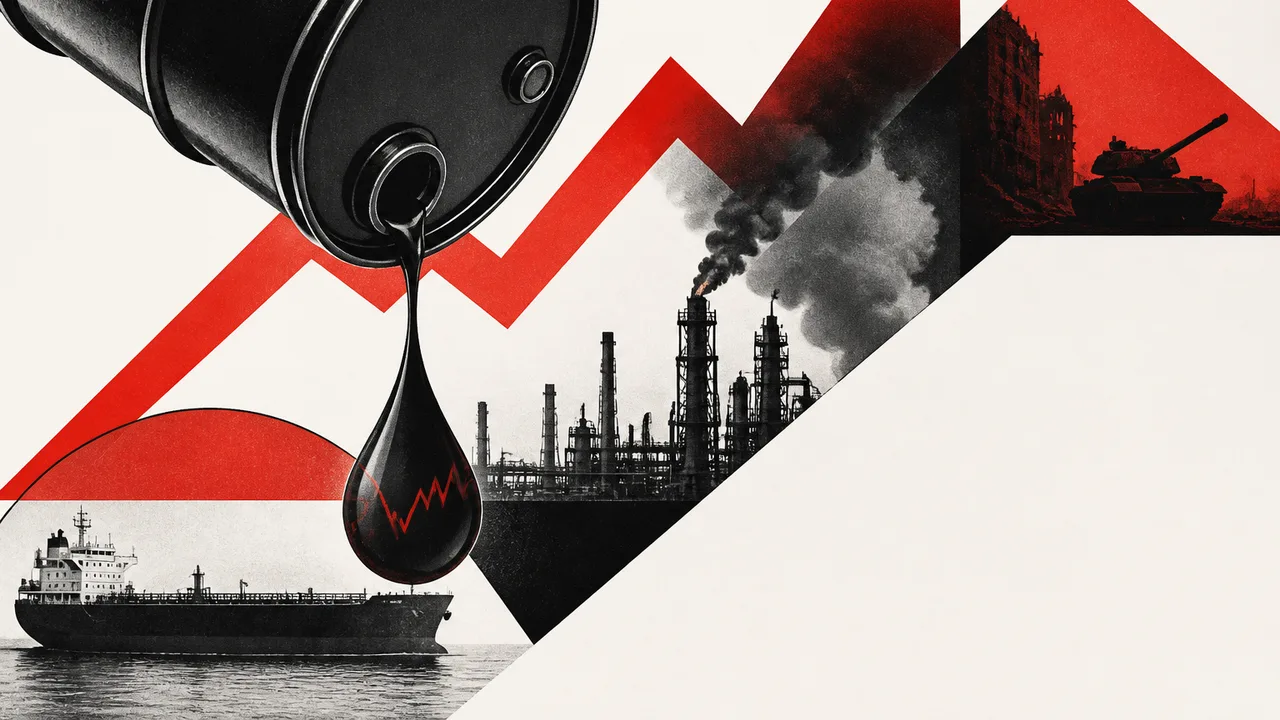
U.S. diesel prices reached an all-time high at the end of this week, and the proximate cause sits roughly 5,000 miles from the pumps: Ukrainian strikes on Russian oil-refining facilities that have knocked processed fuel out of the global market.
The record was reported across outlets on Friday and Saturday. CNBC attributed the spike to refinery capacity lost in both the Ukraine and Iran conflicts, warning of renewed inflation pressure. Yahoo Finance framed the price run-up as an economic squeeze arriving ahead of the midterm elections. International Business Times went further on duration, arguing there is no end in sight to the price crunch. And Fortune framed the larger lesson: a war centered far from American soil can transmit risk through shipping lanes, inventories and global trade rather than through crude oil alone.
Why Diesel is the Fuel that Moves the Economy First
Diesel powers freight trucks, farm equipment, construction machinery and industrial generators. When its price rises, the increase shows up in the cost of moving a pallet of goods, harvesting a field of grain or pouring a foundation before it ever registers as a line item on a household budget. Consumers encounter diesel inflation indirectly, through transport and food prices; businesses encounter it directly, in fuel surcharges and margin compression they may or may not be able to pass along.
That asymmetry is one reason diesel price spikes historically precede broader inflation readings. Gasoline demand is elastic enough that drivers grumble and adjust. Diesel demand is structural: a trucking company cannot elect to not haul the load. The cost lands somewhere in the supply chain, and the negotiation over where is a fight between shippers, carriers and retailers.
Two Wars, One Refinery Problem
The world's attention has been fixed on Iran and the Strait of Hormuz, as the syndicated reporting carried by EUROPESAYS and WDC TV News put it, but the four-year war in Ukraine has been reshaping the refined-products market. Ukrainian attacks on Russian refining capacity have reduced the flow of diesel and other processed fuels available to world markets, including barrels that would have been discounted and traded through intermediaries under sanctions regimes.
The record compiled in the sources is thin on specifics: none of the reports quantifies how many refineries have been hit, what percentage of Russian distillation capacity is offline, or how many barrels of replacement diesel the market has found elsewhere. BBC News confirmed the all-time-high U.S. price without detailing the supply arithmetic behind it. That gap in the public record is itself part of the story. Refinery outages are hard to verify from the outside; both belligerents have incentives to overstate and understate damage, and traders are pricing risk they cannot fully audit.
What can be said plainly is the mechanism. Refined fuel is a globally traded commodity with regional physical constraints. When Russian refining capacity is knocked out, importers who relied on Russian product bid for diesel from the Gulf, from India, from the United States. Those replacement barrels do not appear instantly; they move at the speed of tanker scheduling, blending specifications and seasonal demand. The shortfall, even a modest one in global terms, is amplified at the margin where price is set.
What the Market is Actually Pricing
The most consequential shift described in the reporting is not the number on the pump sign. It is that markets now treat infrastructure vulnerability as a commercial risk rather than a military development. Refineries, pipelines and export terminals, once assumed to sit outside the battlefield, are now targets, and traders are building that assumption into forward prices.
That repricing has a compounding quality. If traders expect strikes to continue, they bid up inventories and forward contracts, which raises spot prices, which raises the incentive for further attacks on supply. Nobody has to believe the attacks will succeed indefinitely; they only have to believe the risk is no longer zero.
Whether the pressure persists depends on five variables the brief and sources converge on: the pace of refinery outages, seasonal demand as Northern Hemisphere heating and harvest seasons begin, the evolution of sanctions enforcement, shipping constraints including insurance and routing costs, and how quickly replacement barrels can be sourced. Optimists would note that global refining capacity outside the conflict zones still exists and that high prices are themselves the strongest signal to bring barrels to market. Pessimists would counter that refining is the slowest part of the energy chain to rebuild, and that a damaged distillation unit takes months, not weeks, to restore.
Who Absorbs the Squeeze
The distribution of the pain is the part of the price record that rarely makes headlines. Large fleets often hedge fuel through surcharge contracts that pass costs to shippers within weeks. Owner-operators, who own their trucks and buy fuel at retail, absorb the increase immediately and have the least pricing power. Farmers face the same squeeze at the worst possible point in their planning cycle, since harvest and fall planting are fuel-intensive and contracts were often signed months ago.
Small businesses in construction and logistics face the sharpest version of the problem: their customers demand fixed bids, their fuel costs float daily, and their margins are thin enough that a sustained diesel spike can erase a year's profit. The Yahoo Finance framing of political pressure ahead of the midterms reflects this: diesel inflation is felt by voters as prices at the grocery store, and attributed to whoever holds office when it arrives.
The Open Questions
The record leaves several questions unanswered. How much of Russian refining capacity is actually offline, and how quickly can it be repaired? Will the strike campaign continue through the fall? Will U.S. refiners, who have been net exporters of diesel, redirect more product to Europe and raise domestic prices further? And how much of the current price reflects physical shortage versus a risk premium that could deflate as quickly as it inflated?
None of these have settled answers, and the sources do not pretend otherwise. What they establish is that the transmission mechanism has changed. A war fought with drones against refinery towers in Russia is now visible in the price American trucking companies pay in September 2026, through channels of trade and expectation rather than through a single disrupted tanker route.
Diesel's record price is the receipt for that repricing. The invoice is still being distributed, across freight contracts, grocery shelves and midterm campaigns, and nobody has finished tallying it.
More Like This
Heavy Fuel Oil Powers Global Shipping at a Steep Cost
Heavy fuel oil powers nearly 80% of global shipping. It's cheap, toxic, and nearly impossible to replace. Here's what it actually is and what's at stake.

Inside a Beginner's 19-Day Run to YouTube Shorts Monetization
A YouTube coaching video claims a first-time creator hit 11 million views and monetization in 19 days. The numbers are revealing, and so are the catches.

Crypto Treasury Stocks: Who Wins and Who Absorbs the Loss
Crypto treasury stocks promise Bitcoin exposure through regulated equity. But when the thesis shifts, retail investors learn who the structure was built for.

Uber Cuts 3,300 Jobs in Global Management Overhaul
Uber is eliminating roughly 10% of its workforce in a restructuring it says will make the company simpler and faster. Here is what the move actually signals.

South Korea's Semiconductor Surge Carries a Familiar Weight
South Korea's semiconductor exports tripled in a year, pushing the current account to a record. The cycle's upside is real. So is its history.

Iran Sanctions and the People Caught in the Crossfire
Trump's new Iran sanctions target trade networks spanning China, India, and Turkey. Here's what economic warfare looks like for the people living inside it.

MLBPA Rejects MLB's Amateur Draft Overhaul
The MLBPA's first formal draft proposal rejects MLB's sweeping changes to draft timing, eligibility, and signing bonuses. Here's what's actually at stake.

ESPN Cuts Ryan Clark as Cable Decline Reshapes Sports Media
ESPN let go of NFL analyst Ryan Clark mid-broadcast, signaling a broader restructuring as cable audiences shrink and the network pivots to digital.