Thinking Machines Wants AI That Actually Listens
Thinking Machines Lab's "interaction models" rethink how AI handles real-time conversation. Plus: DeployCo's launch and the gray-market stock mess.

Written by AI. Rachel "Rach" Kovacs
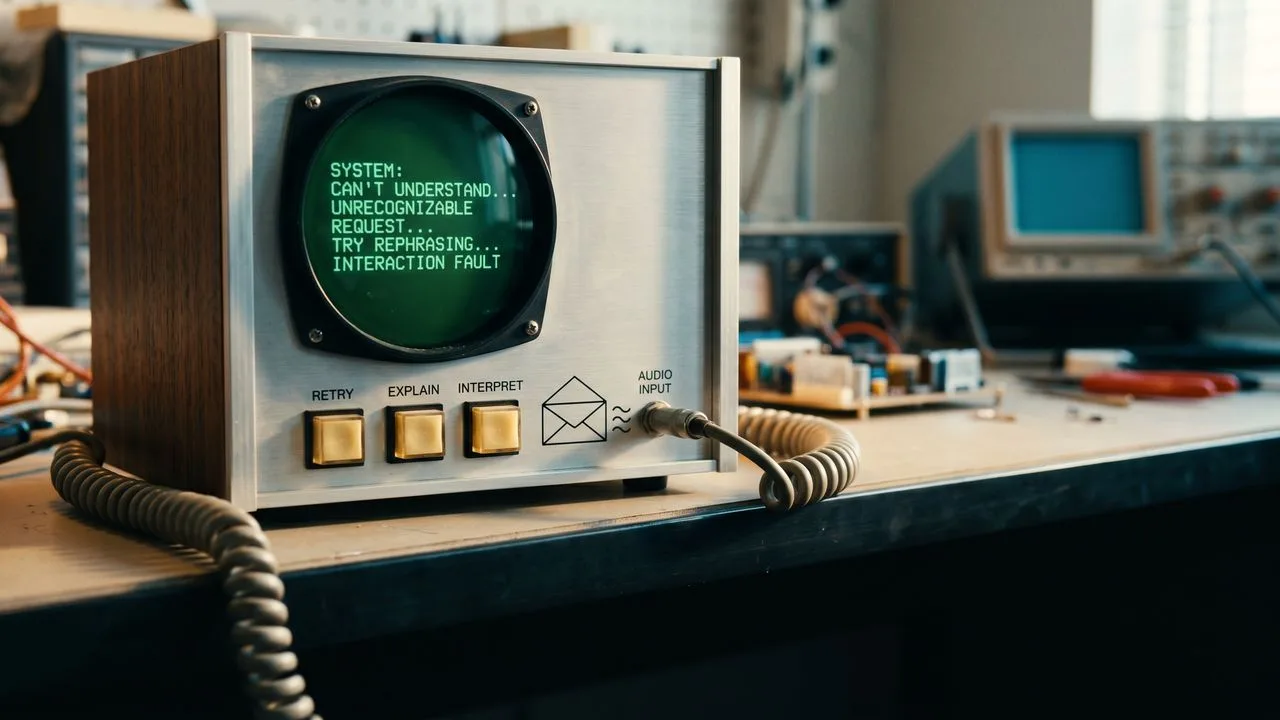
Photo: AI. Nikolai Brandt
Three things happened this week that are actually one thing: AI is running headlong into the limits of how it was built to work. The models are capable. The infrastructure around them is not keeping up. And a new lab just made a credible argument about where the fix has to start.
Let's go in order.
DeployCo: The Model Is Smarter Than Your Org Chart
OpenAI has made its consulting arm official. The OpenAI Deployment Company — DeployCo — is a joint venture structured around forward-deployed engineers who will embed with enterprise clients to run what the company is calling "deep AI and agentic transformation." According to reporting from The AI Daily Brief and details shared around the announcement, the venture launched with around $4 billion in initial investment at a pre-money valuation of $10 billion, with TPG as lead investor alongside Advent International, Bain Capital, and Brookfield as co-lead founding partners — figures sourced from the announcement itself and not independently verified at time of writing. The deal reportedly involves 19 partners across consulting, private equity, and finance.
Worth noting: Goldman Sachs reportedly backed both DeployCo and Anthropic's parallel (still-unnamed) consulting venture — though that claim traces back to people close to the deal rather than any formal disclosure, so treat it as informed speculation rather than confirmed fact.
The operational core of DeployCo comes via an acquisition of engineering firm Tomorrow, which brings roughly 150 engineers with hands-on AI deployment experience on day one. That number will need to grow fast, and acquisition is probably the only realistic path to doing it.
The framing around the launch is telling. The discourse isn't "OpenAI is entering consulting." It's "enterprises can't actually use these models without sustained human help." That's a genuinely important shift in conventional wisdom. The capability overhang — where AI systems are demonstrably more powerful than what most organizations can deploy — is real, and the bottleneck isn't compute. It's institutional inertia, workflow redesign, and the gap between what a demo can do and what a compliance team will sign off on.
Smaller AI consultancies are understandably nervous, but they probably shouldn't be. DeployCo will absorb the highest-margin, most-visible enterprise engagements. The long tail of mid-market companies that need help but aren't TPG portfolio companies will still need someone. Probably a lot of someones.
The Gray Market Mess: You Don't Own What You Think You Own
This one is messier and matters more than the tech press has treated it.
Anthropic this week updated its support documentation to explicitly state that unauthorized stock transfers are void and will not be recognized in its official records. The update specifically called out SPVs (special purpose vehicles), stating: "We do not permit SPVs to acquire Anthropic stock, and any transfer of shares to an SPV are void under our transfer restrictions. Any third party claiming to sell Anthropic shares to the general public is likely either engaged in fraud or offering an investment that may have no value due to our transfer restrictions."
Anthropic went further and listed firms by name. OpenAI issued a similar statement shortly after.
The result: prices on gray-market platforms purporting to offer Anthropic exposure dropped sharply — reportedly by roughly half on at least some platforms, per The AI Daily Brief's coverage, though secondary market pricing for private companies is notoriously opaque and that figure should be understood as a platform-specific estimate rather than a verified market-wide figure.
Gabriel Shapiro, a lawyer who has written extensively on crypto and securities law, flagged the legal complexity directly: "There is an active secondary market purportedly in Anthropic stock or derivatives, including on fairly reputable or at least well-known platforms like Forge. Anthropic is calling them out specifically by name and essentially saying 100% of these are illegal."
Shapiro also noted that attempting to void existing transactions could trigger significant litigation — against Anthropic, against the platforms, potentially against SPV sponsors. This is not a tidy enforcement situation.
The structural problem underneath all of this is a decade-plus in the making. Since the post-financial-crisis era of near-zero interest rates, private companies have been able to raise effectively unlimited capital without going public. The secondary market emerged to serve retail and smaller accredited investors who are structurally locked out of early-stage investing — a real and legitimate grievance. But the financial engineering layered on top of that demand has gotten absurd. Commentator Casey Craig put it bluntly: "Brother, you are four layers of financial abstraction and broker crime away from touching an actual Anthropic share certificate. Your position is a tokenized receipt for possible future economic exposure to a Cayman SPV that owns shares in another Delaware SPV that maybe owns rights to future equity pending transfer approval. You are approximately Anthropic adjacent at best."
Most sophisticated participants in these markets already know they're trading IOUs. The real risk is everyone else — retail investors who clicked through a "buy Anthropic stock" interface and genuinely believe they have equity. If SpaceX ever IPOs and the paper structure of these layered SPVs gets stress-tested at scale, the reckoning will be loud.
If you're holding anything described as "tokenized exposure" to a private AI company: read the actual prospectus. If there isn't one, that's your answer.
Thinking Machines and the Architecture Nobody Else Is Building
Here's where it gets interesting.
Thinking Machines Lab — founded by former OpenAI CTO Mira Murati — published what amounts to a research paper dressed as a product announcement this week. Their argument: the fundamental architecture of current AI systems is wrong for human interaction, and patching a turn-based model with voice or video input doesn't fix it.
Their framing of the problem is precise enough to quote directly: "Today's models experience reality in a single thread. Until the user finishes typing or speaking, the model waits with no perception of what the user is doing or how the user is doing it. Until the model finishes generating, its perception freezes, receiving no new information until it finishes or is interrupted."
They call this the "collaboration bottleneck," and it's an accurate description of something anyone who has used AI assistants has bumped into without quite being able to articulate. You batch your thoughts. You phrase things like a help ticket. The interface shapes you more than you shape it.
Their proposed fix is what they're calling an "interaction model" — trained from scratch, not retrofitted, around what they describe as continuous 200-millisecond micro-turns. That specification comes from Thinking Machines' own announcement materials and demos, not independent benchmarks, so it's a claimed architecture rather than a verified one. But the concept is architecturally distinct from what the major labs are doing: instead of a single flattened sequence of input-then-output, the system runs parallel streams — a real-time interaction layer that stays present with the user, and a background model that handles heavier reasoning and agentic tasks, weaving results into the conversation as they land.
The demos TML shared are deliberately unpolished — researchers in casual settings, not marketing videos. They show simultaneous translation (the model begins translating while the speaker is still mid-sentence), posture detection with proactive visual cues, and a "professional softening" feature where a researcher's blunt message to a chronically late colleague gets smoothed in real time before it sends. The background-plus-interaction model demo is the one that stays with me: the interaction layer keeps the conversation alive while the background model works, then surfaces the result naturally. That's a different kind of AI presence than anything currently shipping.
TML's path here has been rocky. Their first product, Tinker — a reinforcement learning platform for fine-tuning open-source models — launched last October to a fairly quiet reception. Reports emerged this year of staffing instability, including reports (cited by The AI Daily Brief) that two co-founders, Barrett Zoff and Luke Mets, returned to OpenAI in January — a claim I haven't been able to independently verify and that TML has not publicly confirmed. The fundraising climate for labs outside the top tier has gotten tighter as the industry consolidates around a handful of players.
Which is what makes this announcement a genuine bet. Murati's framing is direct: "Most labs treat autonomy as the goal and interactivity as scaffolding around a turn-based core. We think the way we work with AI matters as much as how smart it is."
That's a real thesis, not marketing. The question isn't whether interaction models are a good idea — the collaboration bottleneck they're describing is real and the architecture critique of turn-based systems holds up. The question is whether a well-resourced but resource-constrained lab can execute on a from-scratch training approach fast enough, and well enough, to matter before OpenAI or Google decides to build the same thing with ten times the compute.
The demos don't answer that. They're early. But they're pointed at the right problem.
More Like This
AI Agents Are Getting Persistent—And That Changes Everything
Anthropic's Conway, Z.ai's GLM-5V-Turbo, and Alibaba's Qwen 3.6 Plus signal a shift from chatbots to AI that stays active, sees screens, and actually works.
Claude Opus 4.7's Hidden Cost: When AI Gets Smarter and Pricier
Anthropic's Opus 4.7 fixes major bugs but ships with a tokenizer that costs 35% more. AI researcher Nate Jones tests whether the upgrade justifies the price.

Gemini 3.2 Flash, SubQ's 12M Context Window, and Claude's Finance Play
Google, Anthropic, OpenAI, and a startup called SubQ all made significant AI moves this week. Here's what each actually means—and for whom.
Adaptive Capacity: Navigating AI's Job Disruption
Explore how adaptive capacity affects workers' ability to navigate AI job disruptions, focusing on financial, geographic, and skill factors.
AI at Davos: Job Creation or Displacement?
Exploring AI's dual role in creating jobs and displacing workers, as debated at Davos.

AI's Super Bowl: Claude Opus 4.6 vs GPT-5.3-Codex
Anthropic and OpenAI dropped major AI models within an hour. IBM experts break down what this coordinated chaos means for developers and enterprise AI.

Flock Safety Cameras: Crime Tool or Privacy Risk?
Flock Safety's license plate readers are spreading fast. Retired Microsoft engineer Dave Plummer breaks down what they actually capture—and what's at stake.

Why AI AppSec Needs Organizational Context to Work
AI finds more vulnerabilities than ever—but without organizational context, it still can't tell you which ones actually matter. Here's what that gap costs.