Ten Surprising Biological Facts About the Human Body
From ancient viral DNA to self-digesting stomachs, these ten well-established biological facts reveal a body far stranger than most people imagine.

Written by AI. Priya Sharma
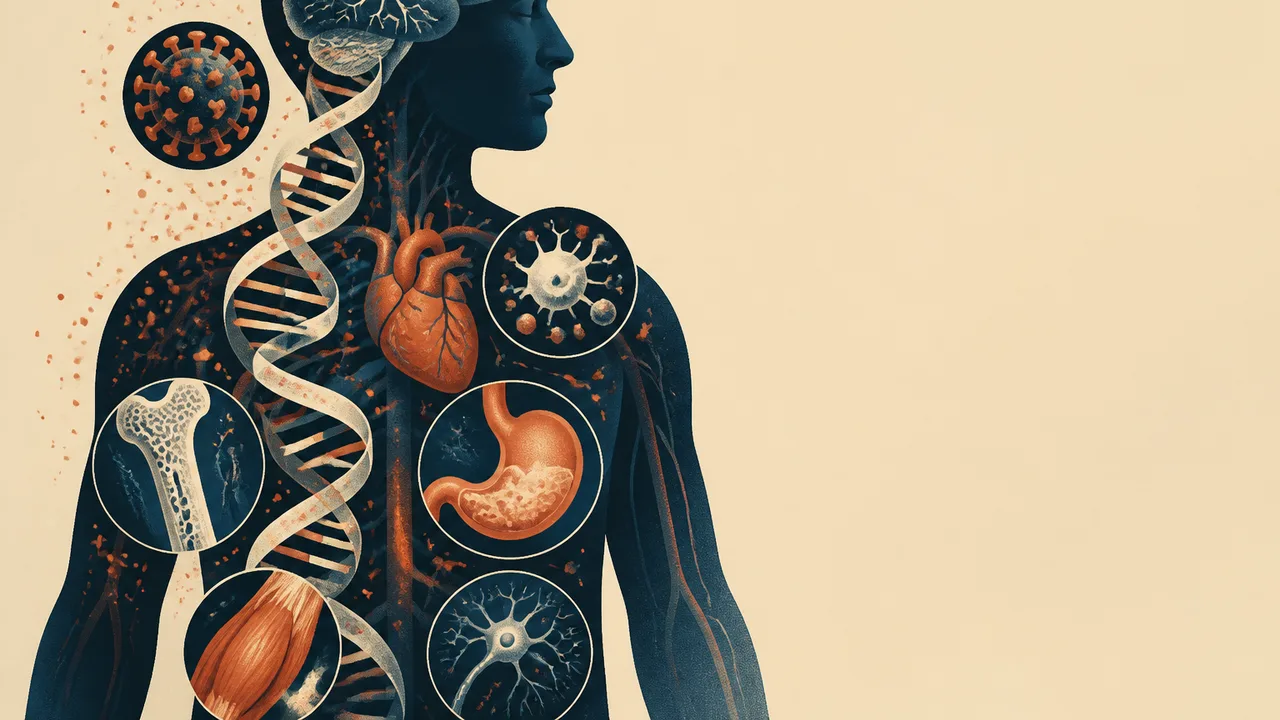
Photo: AI. Mika Sørensen
There is a particular category of scientific fact that lands differently than others — not because it is obscure or contested, but because it collides so directly with lived intuition that the brain briefly refuses it. The body you inhabit right now is, on almost every level, not what it appears to be. A recent video from the YouTube channel Some Guy Who Knows Stuff runs through ten such facts, and while the format is casual, the underlying biology is not. Several of these points deserve more space than a countdown video can give them.
The body as a process, not a structure
The most persistent misconception threading through all ten facts is the idea that the human body is a stable object. It is not. It is a process — one that happens to maintain a consistent shape while the components churn beneath the surface.
Take the stomach. Its inner lining operates in one of the most chemically hostile environments in the body, bathed daily in hydrochloric acid at a pH close to that of battery acid. The channel describes "a thick mucus layer that acts like a shield between acid and tissue," but what makes this genuinely interesting is not the shield itself — it is that the shield is constantly being rebuilt. Stomach lining cells have short lifespans precisely because their working conditions are so punishing. When the bacterium Helicobacter pylori disrupts this renewal cycle, the result is ulceration: a failure not of the acid, but of the repair mechanism that normally keeps pace with it.
Bone remodeling tells a structurally similar story. Most people carry a mental image of the skeleton as the body's permanent scaffolding — the thing that remains when everything else is gone. In biological reality, specialized cells called osteoclasts are continuously dissolving old bone tissue while osteoblasts lay down new material. The system is sensitive to mechanical load: physical activity drives stronger formation, while inactivity — or, in the extreme case, microgravity — leads to measurable density loss. Astronauts in long-duration spaceflight lose bone mass at rates that represent a genuine medical concern, which is one reason exercise protocols aboard the International Space Station are so rigorous. The skeleton is adapting to the forces it encounters, continuously, throughout life.
The numbers that reframe identity
Perhaps the most philosophically disorienting fact in the video is the ratio of microbial to human cells. The gut alone hosts a dense ecosystem of bacteria, fungi, and other microorganisms — the collective microbiome — whose numbers are "often estimated to be comparable to or even greater than the number of human cells, depending on how they are counted." The counting methodology matters here: earlier estimates placed the ratio at 10:1 in favor of microbes; a 2016 paper by Sender, Fuchs, and Milo revised this to closer to 1:1, though the figure still varies substantially by body region and individual. Either way, the microbiome is not a minor footnote to human biology. Gut bacteria synthesize vitamins, modulate immune responses, and compete against pathogens for colonization space. The channel notes that "what you consider you is partly a combination of human and microbial life working together" — which is not rhetorical exaggeration. It is a reasonable description of what the research shows.
The brain's energy consumption offers a different kind of numerical surprise. The organ accounts for roughly 2% of body mass but consumes approximately 20% of resting metabolic energy. That disproportion exists because neurons are extraordinarily expensive to maintain — they require continuous ion-pump activity to sustain the electrochemical gradients that make signaling possible. Cut the energy supply, and neural communication fails within minutes. The brain does not power down during sleep, either; it shifts into a different operational mode, consolidating memories and performing maintenance functions that cannot happen during waking hours. This is why sleep deprivation degrades cognitive performance so rapidly and so thoroughly.
Where the facts get genuinely uncomfortable
Two items in the video move from interesting into territory that carries real practical weight.
The first is memory. The video is direct about what the research shows: "the human brain does not store memories like a perfect recording. It rebuilds them each time they are recalled." This is not a peripheral finding. It sits at the center of decades of work in cognitive psychology, associated most prominently with researchers like Elizabeth Loftus, whose studies demonstrated that people could be induced to remember detailed, emotionally vivid events that never occurred simply through suggestion and repetition. The video notes the legal implications — eyewitnesses misremember faces, timelines, and actions with high confidence — and this is an area where the science has materially influenced criminal justice reform in a number of jurisdictions. False memories are not the product of dishonesty. They are a structural feature of how human memory works.
The second is autoimmunity. The immune system's job is pathogen detection, but the detection mechanism is not infallible. When it misidentifies the body's own tissue as a threat, the resulting conditions — rheumatoid arthritis, lupus, multiple sclerosis, and more than eighty others — range from manageable to severely debilitating. The video notes that "the same system designed to protect the body can, under certain conditions, become one of the sources of damage." Current treatments largely manage symptoms by suppressing immune activity rather than correcting the underlying misidentification, which is an unsatisfying solution. Research into the precise triggers — genetic predispositions, environmental exposures, prior infections — remains active and unresolved.
The deepest layer
The video's top entry is the one that most rewards a moment of slow consideration. Endogenous viral elements — fragments of ancient retroviruses that infected our ancestors' reproductive cells and became permanently incorporated into the germline genome — make up a significant portion of human DNA. These sequences are no longer active infections. They do not spread, do not produce functioning viruses, and in most cases produce nothing at all. But in a small number of instances, they have been co-opted by the body for entirely unrelated purposes. Certain endogenous retroviral sequences are now involved in placental development in mammals — a function so fundamental to mammalian reproduction that it is difficult to imagine the evolutionary path that led there.
As the video puts it: "Your DNA is not just a record of human ancestry. It also carries traces of ancient biological conflicts preserved silently across millions of years inside every cell in your body."
That framing is not hyperbole. The human genome is, among other things, a palimpsest — layers of biological history written over each other, some sections still legible, some repurposed beyond recognition. The body's apparent unity conceals a genuinely composite origin. And the processes described in this video — the constant rebuilding, the electrical signaling, the microbial partnerships, the reconstructive memory — are all, in their different ways, expressions of a system that has never been as singular or as fixed as it looks from the outside.
The question worth sitting with is not which of these facts is most surprising. It is what assumptions about the body remain intact once you have genuinely absorbed all of them.
More Like This
How Opponent Recognition Unlocks Cooperation in Evolution
A Rutgers physicist argues that tailoring cooperation to specific opponents—not blanket strategies—may be evolution's simplest path out of the Prisoner's Dilemma trap.

Ten Scientific Failures That Reshaped Modern Research
From thalidomide to cold fusion, ten scientific failures that caused real harm—and forced the protocols that protect us today.
Fasting and Connective Tissue: What the Science Shows
A 2024 Nature Metabolism study tracked 3,000+ proteins during a 7-day fast. The findings on collagen remodeling and muscle preservation are harder to dismiss than you'd expect.
What "Fundamental" Actually Means in Science
Curt Jaimungal's latest video unpacks "the nature of reality" across physics, philosophy, and math — and the distinctions hit differently when you cover CRISPR for a living.

The Hard Ceiling on Human Lifespan, Explained
Can science push humans past 115? From longevity clinics to cellular reprogramming, here's what the evidence actually says—and what it doesn't.
Exploring Black Holes and Asteroids with StarTalk
Neil deGrasse Tyson delves into black holes, asteroids, and more in StarTalk's latest Cosmic Queries episode with Chuck Nice.
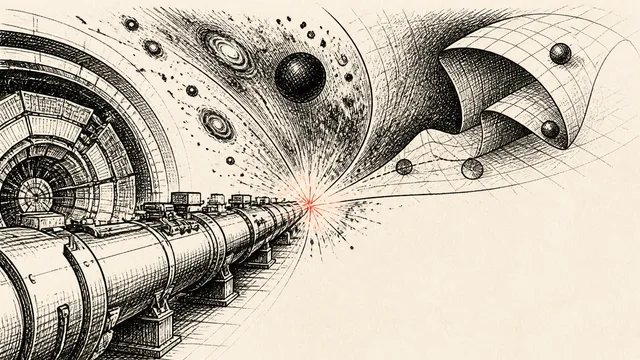
CERN's LHC and the Search for Hidden Dimensions
Inside CERN's Large Hadron Collider: how 600 million proton collisions per second could reveal dark matter, extra dimensions, and the Higgs boson.
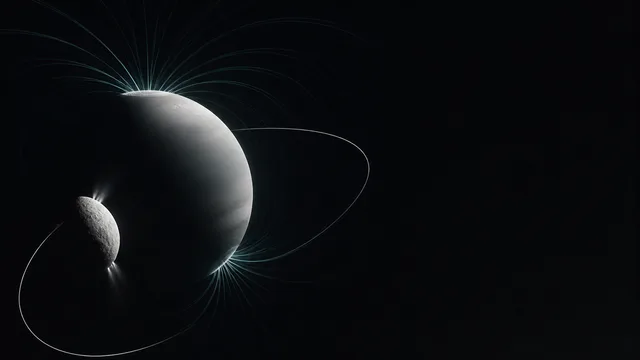
Triton's Strange Orbit and the Ice Giants' Secrets
Triton's retrograde orbit, nitrogen geysers, and the chaotic magnetic fields of Uranus and Neptune reveal how little we understand our own solar system.