Task Queues vs. Chat: The AI Interface Showdown
Explore why task queues might beat chat interfaces in AI work, reshaping productivity tools for the modern age.

Written by AI. Mike Sullivan
It’s 2026 and instead of asking your AI assistant to chat about your schedule, you might just leave it a to-do list. If that sounds like a sci-fi twist on your morning routine, welcome to the new frontier of AI interfaces, where task queues are muscling in on the territory once dominated by chatbots.
The Claude Cowork Conundrum
In the latest episode of "AI News & Strategy Daily," Nate B Jones dives into the rapid evolution of Claude Cowork, a tool that Anthropic whipped up faster than you could say "dot-com bubble." The tool, originally a coder's companion, now promises to be the Swiss Army knife of AI agents, handling everything from organizing your expense receipts to planning your day. But is this really a game-changer, or just another round of "new tech, same old problems"?
Jones highlights a key shift: "The AI race is no longer just about models. It's about who can observe user behavior, recognize what's actually working, and rapidly ship responses before competitors jump in." That sounds an awful lot like the 90s browser wars. Remember those? When Netscape and Internet Explorer were duking it out for dominance? This time, though, it's your desktop's file system that's the battleground.
From Chat to Queues: A New User Experience
So, why are task queues gaining traction over chat interfaces? For one, task queues mimic a more traditional workflow—think less "Clippy," more "Outlook Task Manager," if you will. With Claude Cowork, instead of coaxing your AI through a conversational labyrinth, you set it tasks and let it get on with them. It's like leaving sticky notes for your AI buddy—if your sticky notes could execute multi-step workflows autonomously.
Anthropic has taken a bold step by operating at the file system level, sidestepping the adversarial nature of the web. "Browser agents will always be a little bit brittle for high-stakes tasks because the web fights back," Jones notes. And he's got a point. Anyone who's ever tried to navigate a website with pop-ups and CAPTCHA will understand the appeal of working in a more controlled environment.
The Anti-Slop Architecture
One of the most fascinating aspects of Claude Cowork is its so-called "anti-slop" architecture. This isn't about cleaning up after a rogue AI—it's about producing polished outputs that don't require a follow-up human touch-up. Picture a world where your AI-generated spreadsheet doesn't just dump data but comes with working VLOOKUPs and conditional formatting. It's as if Excel suddenly became self-aware and decided to do its job properly.
Jones explains, "Unlike a chat, the core output of this tool is an artifact, not a text blob." This shift means less time spent cleaning up after your digital assistant and more time doing... well, anything else. It's a nod to the productivity ethos of the early 2000s when efficiency was the watchword of the day.
The Pragmatic Future
While this all sounds promising, it's worth remembering that every tech revolution comes with a learning curve and a hype cycle. If you think back to the rise of personal computers in the 80s, or smartphones in the late 2000s, you'll recall that each came with its own set of teething problems and overzealous predictions.
So, will task queues replace chat interfaces entirely? Perhaps not. There's still something to be said for the immediacy of a chat interface, particularly for tasks that require nuanced interaction. But as we watch this new paradigm unfold, it's clear that Claude Cowork—and tools like it—are setting the stage for a more streamlined, less chatty future.
In the end, whether you're a nostalgic Gen Xer or a tech-hungry millennial, it's always wise to take a page from history. As they say, the more things change, the more they stay the same. Task queues may be the flavor of the month, but like any good sequel, it'll take more than a splashy debut to make them a classic.
More Like This
The Calculator Moment Returns: Why Kids Need Both AI and Pencils
AI tutors are doubling learning outcomes while students lose the ability to read chapters. The answer isn't choosing sides—it's remembering what we learned in 1975.
Becoming a Claude Code Power User
Master Claude Code updates with custom tools and stay ahead.
Master SEO with Claude AI: A Practical Guide
Learn how to rank #1 using Claude AI SEO strategies for free.
Claude Canvas: Transforming Your Terminal Experience
Explore Claude Canvas, the TUI toolkit revolutionizing terminal productivity for AI enthusiasts.
Claude Code 2.1: Practical Upgrades for Developers
Discover Claude Code 2.1 updates: streamlined skills, context forking, and enhanced stability.

Grok's Photo Editor: Magic Wand or Magic Beans?
X's Grok AI now edits photos with text prompts. Julian Goldie demos the feature—cleaning rooms, enhancing products. But what's actually new here?
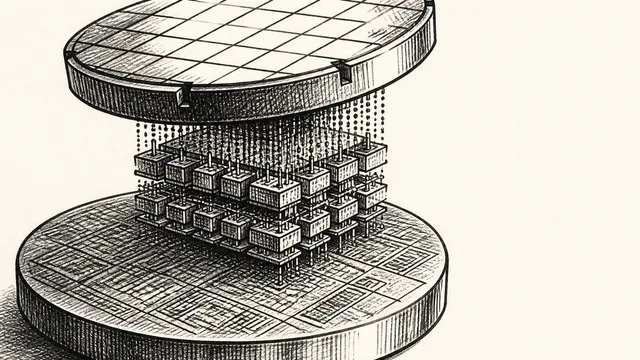
IBM NanoStack and the Future of Chip Architecture
IBM's NanoStack stacks transistors from separate wafers using atomic bonding. The physics works. The harder question is whether anyone can manufacture it at scale.
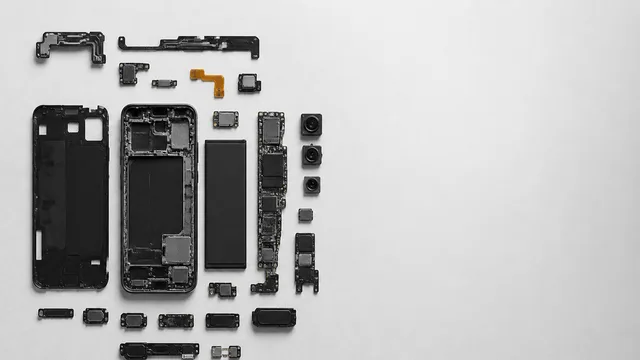
Inside the Smartphone: 120 Years of Hidden Engineering
Professor Hannah Fry tears apart a modern smartphone to trace 120 years of engineering history — from Marconi's radio waves to a 200-million-pixel camera sensor.