Starlink Mini 2 Adds a Swappable Battery to the Dish
Starlink Mini 2 adds a removable battery and USB-C power. See what changes from the first Mini, how launch pricing works, and where its runtime claim needs caution.

Written by AI. Tyler Nakamura
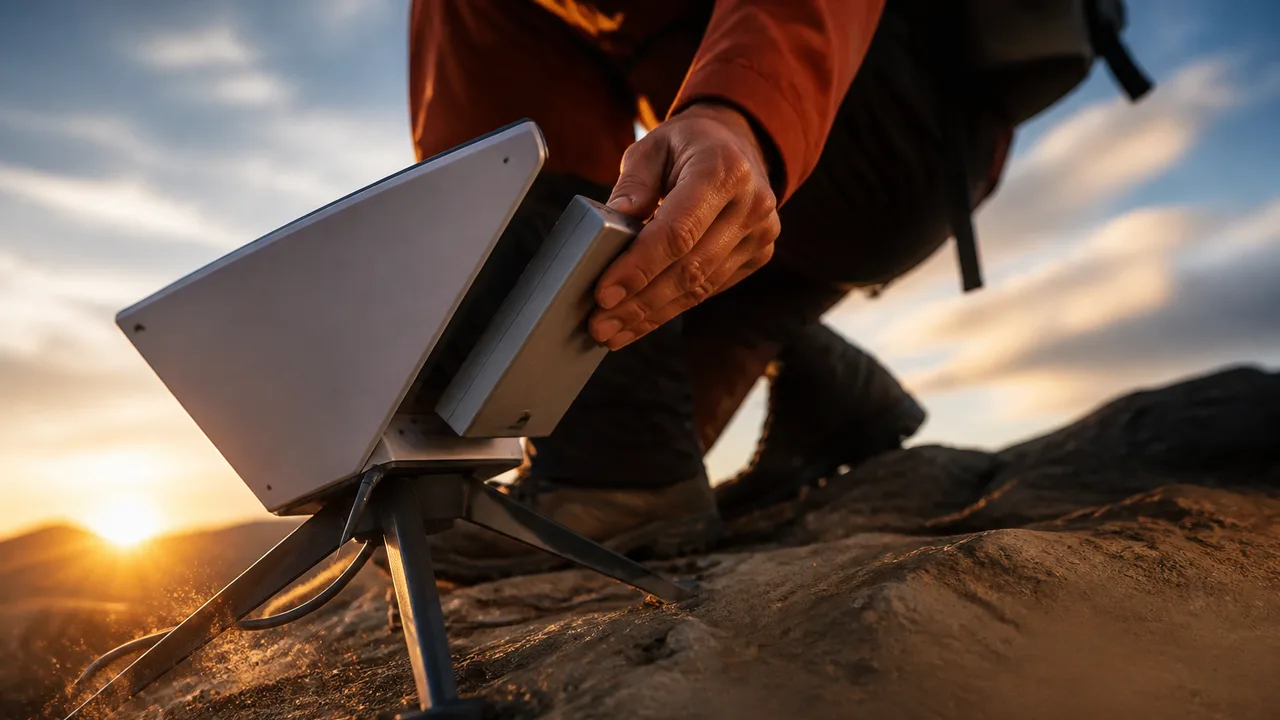
SpaceX announced the Starlink Mini 2 on November 10 with a battery that clips onto the back of its portable satellite dish. For someone who needs internet away from a wall outlet, that changes the packing list: the dish can run without a separate power bank or power station. SpaceX rates the removable 71Wh battery for up to 4.5 hours of connectivity. Preorders are open to selected US customers, so this is a decision about whether to register interest or keep using another setup, rather than a straightforward add-to-cart purchase for everyone.
The battery is the upgrade to examine before the Wi-Fi badge or the slimmer profile. A short stop outdoors and a full workday away from power ask very different things of a dish. Mini 2 puts the first session within reach using its own pack. For the second, you would need another charged battery or a USB-C power source. That is a choice about what to carry, not a promise that one battery will cover every outing.
Why the First Mini Needed a Power Plan
The original Starlink Mini made the satellite dish portable, but it had no onboard battery. Taking it beyond an outlet meant arranging external power and the right cable. That could work perfectly well from a vehicle or a power station you already owned. It was a less tidy answer if the point of buying a small dish was to leave extra gear behind.
Accessory makers pursued another route: batteries shaped to fit the original Mini. Odin Hardware lists a rear-slot battery pack for $180, with a stated 129.5Wh capacity and up to five hours of runtime. Its listing says the pack can power the Mini without a larger power station, though it also recommends a separate charger and says its USB-C port is for output, not charging the pack. This is a seller’s description of one option, not a measured comparison of battery life. The listing does not say when that product went on sale or how many Mini owners use fitted packs.
That history sharpens what SpaceX changed. The Mini 2 brings a fitted, quick-release battery into the dish’s own design. Its 71Wh pack weighs 490g, has charge-indicator LEDs and can be removed without tools. The dish also accepts 60W USB-C power, replacing the original Mini’s proprietary power connection. If you are moving between a vehicle, a desk and a spot with no outlet, you can use the attached pack for one stop and plug in at another. You still have to bring the appropriate power supply and cable when you plan to plug in.
Odin’s pack and SpaceX’s pack therefore solve a similar carrying problem in different ways. Both put portable power close to the dish; the Mini 2 makes swapping its own battery part of the product design. The capacity numbers alone cannot rank their real-world endurance. They power different hardware, and each runtime figure is an advertised maximum. For an existing Mini owner, a fitted accessory or the external supply already in the kit may be a cheaper answer than replacing a working dish.
The Hours, the Hardware and the Bill
Plan a longer outing around a spare or an external power source instead of treating the maximum as a guaranteed finish time. The quick-swap mechanism makes a spare practical in principle; its value as a buying argument will depend on what spare batteries cost and how readily customers can get them. Third-party Mini battery kits already exist, but they are not interchangeable with the new dish’s battery simply because both products are called Mini.
There are other changes, although they should compete for your attention rather than win it by having bigger numbers. The Mini 2 moves from Wi-Fi 5 to Wi-Fi 6 and measures 23.1mm thick, versus 38.5mm for the first Mini. With its battery and kickstand attached, the new dish weighs 1.6kg. A thinner dish that includes its power source could simplify a bag; the quoted weight still belongs on your packing list. Wi-Fi coverage figures describe the connection between your devices and the dish, so they should not decide whether your intended spot has a useful satellite connection. A clear view of the sky remains part of setting up Starlink outdoors.
Price makes the upgrade harder to judge than the battery latch. Selected US customers have been offered an invitation-only $999 package including a year of Roam Unlimited service. That is a hardware-and-service offer, not a published standalone retail price for the Mini 2. The original Mini is listed as starting at $149 in the US, but comparing that figure directly with the $999 package would mix a dish price with a year-long bundle. SpaceX has not announced standard Mini 2 retail pricing or a date for wider availability. Reported figures found in website backend code for a cheaper kit and spare battery are not confirmed checkout prices.
If you already have a Mini, start with the power arrangement you actually use. An outlet, vehicle supply or existing power station may make the battery upgrade unnecessary. A fitted third-party pack is another option to examine, with its charger requirements, warranty coverage and seller claims checked before paying. Odin says its listed pack comes from a third party and is not covered by Odin Hardware’s warranty. That detail belongs beside the price tag, especially for gear you intend to rely on away from home.
For a first-time buyer, the comparison runs the other way: a dish with its own battery removes an accessory decision at the start, while the launch bundle asks for a larger upfront commitment and limits who can order. Decide how long you need the connection, where the next charging opportunity will be and whether the included service matches your plans. The Mini 2 can leave a separate power bank at home for a short session. The length of that session, and the final price of making it longer, are still the numbers to watch.
More Like This

Enough Phone Tests the Trade-Offs of a Small Smartphone
Enough Phone pairs a compact screen with a replaceable battery. Its Kickstarter campaign tests a particular set of compromises, with production still ahead.

SpaceX's Spectrum Deal Tests the Cost of a Mobile Rival
SpaceX's 800 MHz deal rattled telecom stocks. Its path to a nationwide mobile network runs through FCC approval, ground infrastructure and dependable service.

SpaceX Launches 27 Starlink Satellites After 11-Day Gap
SpaceX sent 27 Starlink satellites up from California on Oct. 23. An 11-day gap highlights questions about launch pace and traffic in low Earth orbit.

Xbox Nano Controller Brings Pocket Play to More Screens
The $49.99 Xbox Nano Controller pairs pocket size with Xbox Wireless and Bluetooth. Its TV and Quest plans raise a practical question: who needs both connections?

States Can Now Regulate Prediction Markets as Gambling
A federal appeals court ruled states can regulate prediction markets as gambling. Here's what Kalshi users need to know right now, and what to watch next.
Google Sets Android RAM Limits as AI Strains Memory Supply
Google is enforcing new Android app memory limits by February 2027, driven by an AI-fueled chip shortage. Here's what it means for developers and everyday users.