Space Stations Beyond the ISS: A Forgotten History
From a Cold War spy base to a Soviet ice rescue to China's chicken-wing oven in orbit — the real history of space stations is wilder than you think.

Written by AI. Mei Zhang
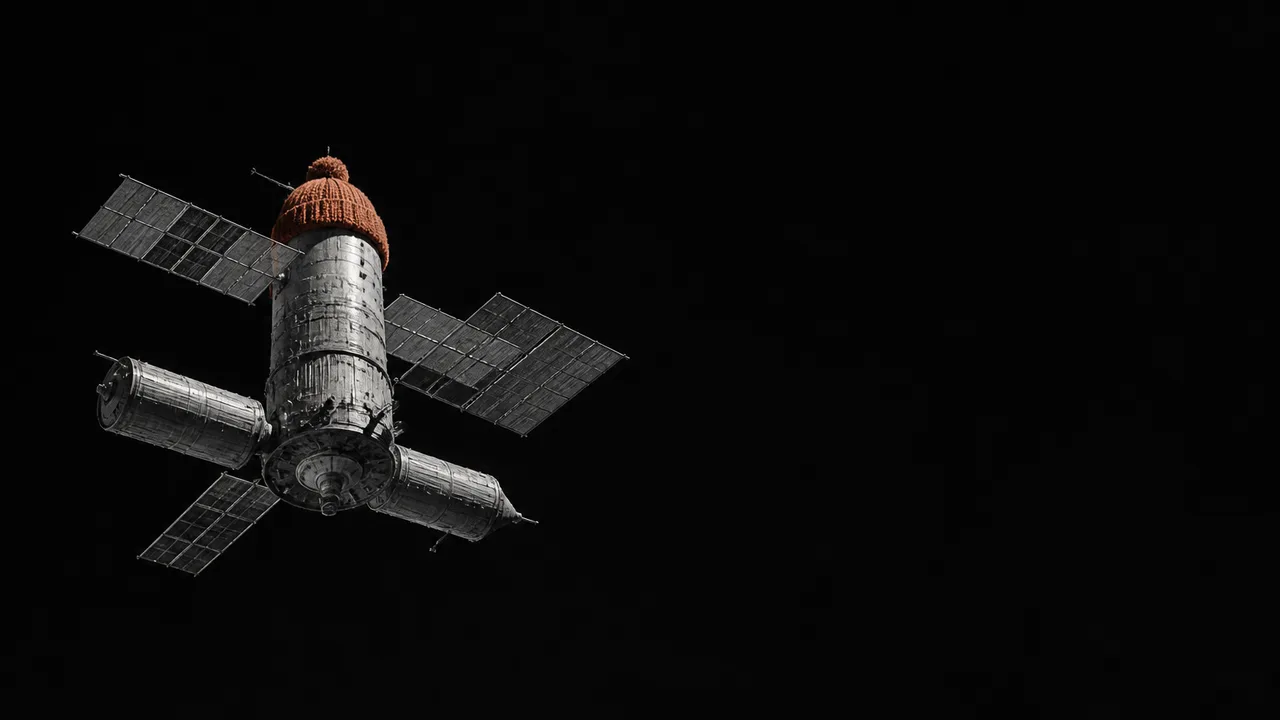
Photo: AI. Tomoko Hayashi
Everyone knows the ISS. It's the one that gets the livestreams, the astronaut social media posts, the breathless coverage every time a Soyuz docks. If you were born after October 31st, 2000, there has been a human being aboard it every single day of your life. Hard to compete with that.
But the ISS didn't arrive in a vacuum. Humans have been building, launching, breaking, rescuing, and occasionally dying on space stations since the 1960s — and the stories sitting just outside the ISS's gravitational pull of public attention are, frankly, more dramatic. A recent SciShow episode hosted by Deboki Chakravarti walks through five of them, and it's the kind of history lesson that makes you wonder why these aren't already blockbuster films. 🧬
The Spy Station That Never Was
Start with the one that barely existed at all. The Manned Orbiting Laboratory — MOL, or "mole," which is either a great or a terrible acronym depending on your feelings about burrowing rodents — was the United States Air Force's attempt at a space station, run jointly with the National Reconnaissance Office. The mission was straightforward: send two-man crews up in modified Gemini capsules, have them stay about a month, and photograph the Soviets.
In November 1966, MOL launched its first uncrewed test craft, OPS-0855. It spent about two months in orbit before re-entering the atmosphere. Three years later, the whole program was cancelled — cost overruns, and the uncomfortable realization that robotic spy satellites could do the same job without the whole "keeping humans alive in space" overhead.
According to NASA Astronaut Group 7 records on Wikipedia, seventeen military pilots were selected for MOL's own astronaut corps in total. Six of them eventually transferred to NASA and flew on the Space Shuttle. As SciShow puts it, "presumably, they did a lot less espionage than they originally trained for." The unflown OPS-0855 capsule now lives at the Cape Canaveral Space Force Museum, which feels like the right ending for a spy program that never quite got to spy on anyone.
Salyut: Glory, Tragedy, and Wool Hats
While MOL was being quietly cancelled, the Soviets were actually doing it. Salyut 1 launched in April 1971 — the first occupied space station in history — but the road there was rough. The first crew arrived four days after launch and couldn't get the docking mechanism to work. They went home. Two months and one emergency redesign later, the second crew got in. They watered plants. Someone celebrated a birthday. Then came the electrical fire — which they pushed through — and then, on the way home, all three cosmonauts died when a faulty pressure relief valve vented the atmosphere from their Soyuz capsule. At the time, pressurized suits weren't required for transit. They had no backup. They were gone within minutes.
It's one of those facts that lands differently once you sit with it: the first people to live on a space station were also the first people to die in space.
The USSR learned from it — suits became mandatory — and kept building. Salyut 6 arrived in 1977 and hosted 17 different Soyuz missions across four years. Then came Salyut 7, the crown jewel, which according to Wikipedia's Salyut 7 entry accepted crewed missions from 1982 through 1986 before its final evacuation.
The peak drama of that run came in 1985. The station had been unoccupied for months. It lost power. Its backup radio transmitter went dark. Ground control couldn't reach it. Two cosmonauts spent four months training for a rescue mission, then launched.
The first problem: Salyut 7 had begun to spin. The automated docking systems were useless. They had to match the station's rotation manually and latch on. They managed it. Then they opened the hatch and found what one of them described as kolotun — which SciShow translates, economically, as "freaking cold."
They came prepared. Wool hats, winter coats. One of their first moves was using their Soyuz spacecraft's thrusters to reorient Salyut's solar panels toward the sun to start recharging the batteries. The water in the tanks had frozen, so the water heater was useless; they improvised by heating fluids with a floodlight designed for TV filming. Ten days later, they had the station back. It served as an operational base for another six years after that.
There's something worth sitting with there. Not just the ingenuity — though the floodlight trick is genuinely spectacular — but the institutional confidence required to train two people for four months and send them to manually dock with a spinning, silent, frozen station on the assumption that they could figure it out once they got there.
Skylab: The Umbrella That Saved a Space Station
NASA's first space station launched in May 1973 and almost immediately became a problem. During launch, the micrometeorite shield deployed too early and got ripped off the station entirely, which meant the station started to heat up with no one aboard. According to ScienceABC, unshielded sunlight can drive the exterior temperature of a spacecraft to extremes — engineers were genuinely worried that Skylab's plastic components would melt and release toxic gases before anyone could get inside.
The first crewed mission, Skylab 2, arrived eleven days after launch. One astronaut attempted to free a jammed solar panel by poking it with a ten-foot pole while a crewmate held his legs. It sort of worked, but not enough. The crew eventually docked — it took eight attempts because the electrical systems weren't cooperating — and then solved the overheating problem by pushing what amounted to a large umbrella through a scientific airlock and expanding it to shade the station from direct sunlight.
That's the real Skylab drama: not the widely repeated "astronaut strike" story (the third crew complained about overworking, negotiated a lighter schedule, and it was characterized by one astronaut as "the first sensitivity session in space" — which is its own kind of milestone) but the genuine engineering crisis that greeted the very first crew.
The through-line connecting Salyut 7 and Skylab is the same: space stations break in ways no one anticipated, and the people sent to fix them have to improvise with whatever's on hand. Flood lights. Umbrellas. Ten-foot poles. Space is less high-tech and more MacGyver than the glossy renderings suggest.
Mir and the Cross-Station Moving Day
By 1986, the USSR had a new station: Mir. But Salyut 7 was still up there, sitting on equipment that could be reused. So the crew of Soyuz T-15 spent a few weeks aboard Mir getting their space legs, then packed back into their Soyuz, flew over to Salyut 7, grabbed as much instrumentation as they could carry, and brought it back to Mir.
SciShow's framing of this lands perfectly: "To anyone who's had to slowly move apartments with just a car, this mission might sound like a minor annoyance at best, but this is outer space, so it was an absolute feat of orbital mechanics. Docking with something traveling nearly 30,000 km an hour once is hard. Doing it three times between two different space stations is ridiculous."
Mir survived fifteen years, more than a hundred visitors, a serious mold infestation, a fire, and the collapse of the Soviet Union, before being de-orbited in 2001. The ISS was already on its second crew by then.
Tiangong: Chicken Wings and Cracked Windows
The part of this story that tends to get the least Western coverage is the one still actively unfolding. China's Tiangong program launched its first station in 2011 — a brief, largely unoccupied test platform that burned up on reentry in 2018 after losing contact with the ground. Tiangong-2 followed in 2016, another test run, occupied for roughly a month before it too was deorbited. Both were stepping stones, not destinations: China confirming, methodically, that its systems worked before committing to something permanent.
That permanent something is Tiangong-3, which launched in 2021 and is still operational. It has a real oven. It can cook chicken wings. Its livable volume — around 110 cubic meters — is smaller than the ISS's 388, but there are expansion plans underway to grow it from three modules to six.
And yes, it's had its own crises. In November 2025, a new crew arrived aboard Shenzhou 21, and it came time for the outgoing Shenzhou 20 crew to head home — until someone noticed cracks in one of Shenzhou 20's windows, likely from debris impact. The outgoing crew borrowed their replacements' spacecraft and made it home about a week late. The newly arrived Shenzhou 21 crew was then stranded without a viable escape vehicle for eleven days while China launched an uncrewed Shenzhou 22 — packed with supplies and a purpose-made window patch. Two taikonauts spacewalked to inspect the damage; the patch was applied from inside. The repaired, unoccupied Shenzhou 20 returned to Earth on January 19th, 2026, for further analysis.
The Shenzhou 21 crew, as of when SciShow wrote the episode, were still aboard waiting for their own ride home.
What's striking, looking across all five of these programs, is how consistent the pattern is: space stations are launched optimistically, something immediately goes wrong, and humans improvise their way through it. The technology changes. The wool hats and floodlights give way to purpose-engineered window patches. The improvisations get more sophisticated.
But the fundamental situation — people in a metal tube very far from help, working through problems nobody fully planned for — hasn't changed at all. The ISS gets most of the attention. The rest of this history suggests it's earned every bit of that drama too.
More Like This
How the Asteroid Impact Ended the Dinosaur Era
Explore the catastrophic asteroid impact that ended the dinosaurs, its immediate aftermath, and the long-term environmental changes.
Anil Menon Reaches the ISS on His First Spaceflight
NASA astronaut Anil Menon launched to the ISS on July 14 aboard Soyuz MS-29. His eight-month mission raises questions about what space cooperation looks like next.
Artemis 2 Carried America's 250th Birthday to the Moon
NASA's Artemis 2 mission carried "America 250" markings to lunar orbit, blending national celebration with the next chapter of deep space exploration.

Shungite: Ancient Rock with Modern Potential
Explore the ancient origins and modern applications of Shungite, a unique carbon-rich rock with potential in tech and construction.
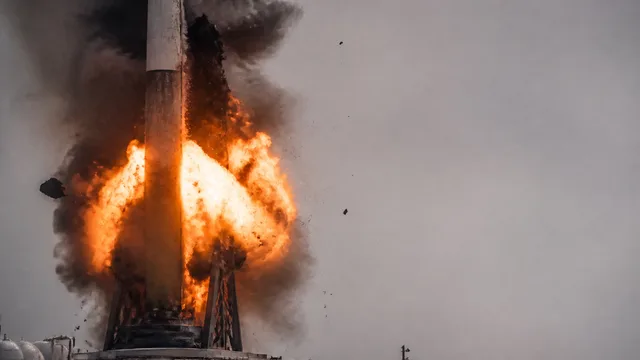
Blue Origin New Glenn Explodes in Florida Test
Blue Origin's New Glenn rocket exploded during a static fire test at Kennedy Space Center. Here's what we know—and what's still an open question.

Black Hole Paradox: Are Reference Frames the Key?
Exploring how reference frames might resolve the black hole information paradox.
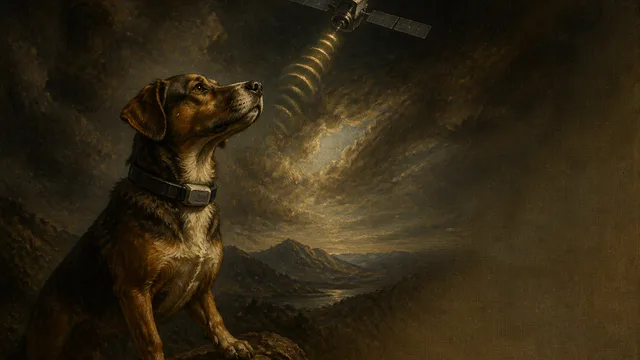
Starlink Dog Collars Track Pets From Space
Fi's new Ultra collar uses Starlink to track dogs anywhere in the U.S. — and a rival AI-powered collar is right behind it. Here's what that really means.

Human Behaviors Science Still Cannot Fully Explain
From yawning to déjà vu, the human body runs on mechanisms science can measure but not fully explain. Here's what researchers actually know—and don't.