Could Space be the Future for AI Deployment?
Elon Musk predicts AI deployment in space within 36 months, but is this vision realistic?

Written by AI. Vanessa Torres
Elon Musk recently shared a vision that, within the next 36 months, space will become the most cost-effective location for deploying AI. This bold claim, discussed in a lengthy conversation on the Dwarkesh Patel channel, raises eyebrows not just for its ambition but for the logistical and practical challenges it implies.
The Energy Dilemma
Musk argues that the true bottleneck for AI deployment isn't the technology itself but the energy required to power data centers. On Earth, energy growth is largely stagnant, especially outside China. "How are you going to turn them chips on?" Musk asks, pointing to the flat trajectory of electricity output compared to the exponential growth of chip production.
The energy crisis on Earth isn't just about supply; it's about regulation. "Try getting permits for that," Musk quips, addressing the challenges of scaling energy production on the ground. In contrast, space, with its regulatory vacuum and the constant presence of solar energy, offers an appealing alternative.
Solar Panels and Space: A Match Made in the Cosmos?
Musk claims that solar panels in space can generate up to five times more power than those on Earth, thanks to the absence of atmospheric interference. While this theory has scientific backing, it's crucial to note that the logistics of placing solar panels in orbit are still a mammoth task.
This isn't just a technological challenge; it's a cultural one. For a generation that has been conditioned to think in terms of Earth-bound solutions, the idea of looking to space for resources feels almost like a sci-fi plot. Yet, Musk insists: "It's always sunny in space," and by bypassing the need for batteries, space-based solar power could indeed become more viable.
The Logistics of Launches
One of the most audacious aspects of Musk's vision involves the sheer number of Starship launches required to make this space-based AI infrastructure a reality. We're talking about potentially 10,000 launches a year—an ambitious figure that dwarfs current aerospace activity.
For those of us who grew up with the Challenger disaster etched into our memories, the idea of frequent space travel is both thrilling and terrifying. It's not just about the technical feasibility; it's about the human cost and whether our current systems can safely support such an endeavor.
Gen X Skepticism Meets Millennial Optimism
As someone who straddles the line between Gen X skepticism and millennial optimism, I find Musk's vision both inspiring and overwhelming. On one hand, it aligns with the anti-hustle culture that many of us advocate for—why keep grinding away on Earth when space offers a cleaner, potentially easier alternative? On the other hand, the scale of this undertaking feels like the ultimate hustle, requiring relentless innovation and unprecedented levels of risk.
Musk's predictions, like many of his ventures, are not without their critics. The reliability of GPUs in space, the potential for orbital collisions, and the environmental impact of constant launches are all valid concerns that warrant further exploration.
In the end, whether Musk's vision becomes reality or remains a starry-eyed dream, it challenges us to rethink our relationship with energy, technology, and the planet itself. As we stand on the brink of what could be a new era of space exploration, perhaps the real question isn't whether AI will thrive in space, but whether we're ready to follow Musk's lead.
More Like This
Animating Movie Posters with Fusion: A Gen X Perspective
Explore how Gen X can animate static images using Fusion, blending creativity with practicality.

Selling Through Content: A Genuine Approach
Learn how to sell effectively through content without being pushy. Discover practical, real-world strategies.
AI vs. Human Brain: What’s Missing in the Machine?
Explore the gap between AI and human brain. Can neuroscience bridge it?
Why Real Spies Aren't James Bond
Unpacking the myth: Why real espionage thrives on anonymity over allure.
How Roman Virtues Sparked a Renaissance Revolution
Explore how resuscitating Roman virtues in Renaissance Italy led to cultural shifts and the scientific revolution.
SpaceXAI's Proposed SpaceXSI Name Tests What SI Means
Elon Musk plans to rename SpaceXAI after a federal shift to “Super Intelligence.” The label covers existing AI, while the company name proves no new capability.
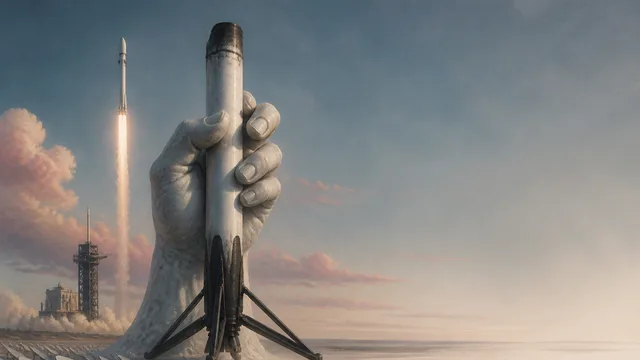
SpaceX Hits 600 Falcon 9 Booster Reuses
SpaceX reached 600 flight-proven Falcon 9 booster launches on July 13-14, 2026. Here's what that number actually means for spaceflight economics.

Freelance Consulting vs. Employment: How the Money Works
Freelance consultants earn significantly more than employees—but not for the reason most people think. Here's how the money actually moves, and what it costs you.