Sony's MDR-3R Revives the Walkman Look for USB-C Audio
Sony's MDR-3R brings back the foam pads and slim profile of its 1979 Walkman headphones. Its USB-C plug shows where the retro design meets a different device era.

Written by AI. Leo Santana
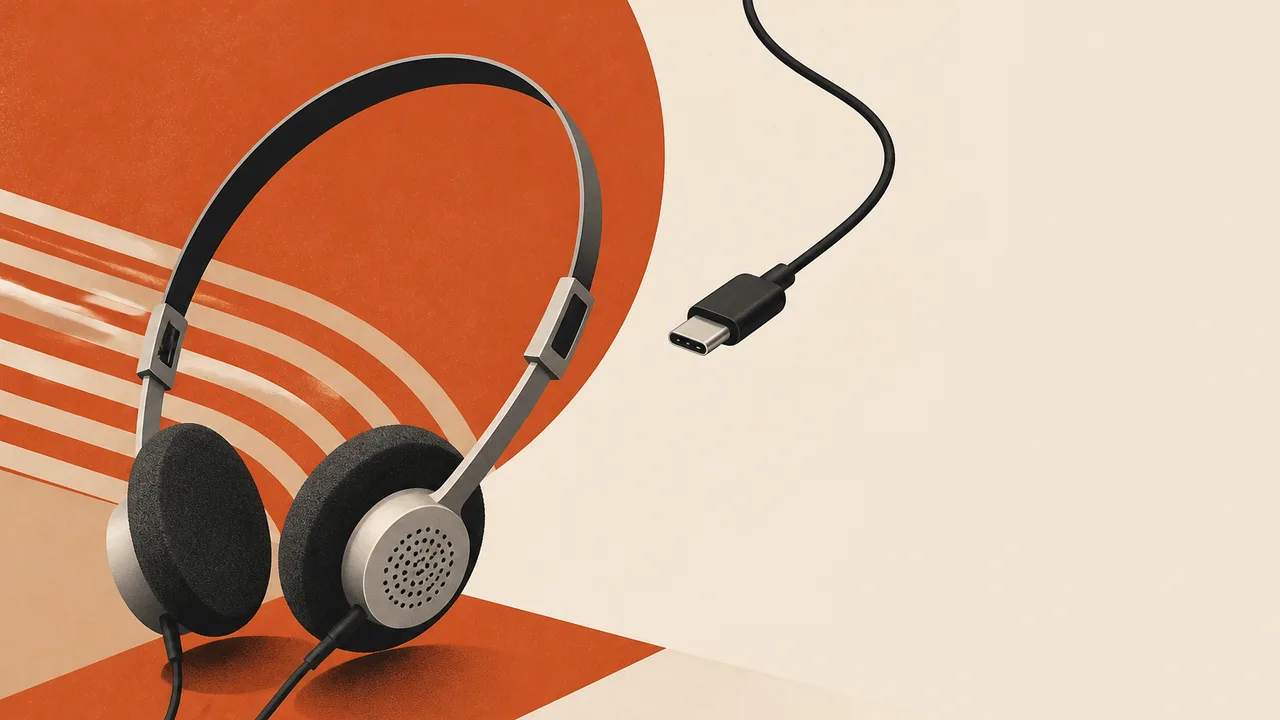
Sony’s new MDR-3R headphones have the slim headband and bright foam ear pads of the pair associated with its first Walkman. The wire still hangs from the headphones. Follow it to the other end, though, and the design arrives in 2026: the plug is USB-C. Sony has revived a familiar shape for $59.99, while changing the connection that once made the headphones and cassette player a set.
The MDR-3R draws on the MDR-3 family, which accompanied the Walkman TPS-L2 in 1979. The MDR-3L2 was the model bundled with that first portable cassette player. The new headphones retain the narrow profile and blue and orange foam pads. Sony has even echoed the older packaging and instruction manual. These choices make the reference legible before anyone presses play: the pads supply the color, and the spare-looking frame leaves little to compete with them.
That history explains why the plug deserves as much attention as the pads. In 1979, the headphones were one part of a portable listening system. Their appearance belonged to a working relationship with the cassette player. The MDR-3R can resemble that accessory across a room, but its USB-C plug cannot connect directly to the original Walkman. The visual pairing survives; the original plug-in pairing does not.
The Old Silhouette, a New Destination
Sony has kept the MDR-3R wired rather than wireless. A cable avoids charging the headphones or pairing them over Bluetooth, both practical advantages for someone who wants to plug in and listen. USB-C points that simplicity toward contemporary phones, tablets and laptops with a compatible port. It also gives the cable work the 1979 version never had to do: the new model includes a microphone for calls and an in-line control for music.
The comparison with the original is unusually precise. Sony has redesigned the MDR-3R’s 23mm drivers, matching the size of the older pair’s drivers, and says it has worked toward a sound close to the original. A driver is the component inside an earcup that produces sound; matching its diameter does not, by itself, tell a listener that two headphones sound alike. The shared measurement and the changed connection show two approaches to continuity in the same object. Sony can preserve a dimension associated with the older headphones while making the cable serve a different set of devices.
The Walkman name offers no shortcut around that connection. The USB-C MDR-3R cannot plug straight into the TPS-L2’s headphone jack, and Sony does not recommend using the new headphones with a Walkman. For a reader considering the headphones as an accessory for a Walkman they own, the sensible question is about that player’s connection, rather than the logo on its case.
Sony’s own product variations make the role of recognition clearer. Alongside the standard blue-and-orange pair, it has introduced a Stranger Things edition with red and black pads, a logo on the headband and custom packaging. The standard pair costs $59.99 in the US; the themed version costs $79.99 and is offered for preorder. The altered pads and packaging give the same headphone design a second visual reference. They change what a buyer recognizes, while the wired USB-C connection remains the practical question.
Neither reference requires a buyer to own a cassette. That is the useful feature of retro styling for Sony: a person can recognize the Walkman outline or the television tie-in and then use the headphones with a current device. It is also where a buyer could misunderstand the revival. The silhouette recalls a complete older setup, while the connector asks them to assemble a new one. That is an interpretation of the design choices, rather than a claim about what Sony intended every buyer to feel.
What the Foam Pads Let In
The ear pads carry a functional consequence as well as a color scheme. The MDR-3R sit on the ears without forming the seal associated with many larger over-ear headphones. In a hands-on review of the MDR-3R, Gizmodo’s Adriano Contreras found that the open fit let surrounding sounds through on the subway. That can help someone hear an announcement; it works against someone trying to shut out the carriage. Sony has kept a visually recognizable part of the older form, and the listener still has to decide whether that openness suits where they listen.
Contreras liked the sound, describing clear mids and highs and audible, though less forceful, bass. The reviewer also found that the in-line microphone picked up room noise during a call, and described the build as flimsy-feeling. Those are observations from one reviewer’s use, not a durability test or a comparison with a working 1979 pair. They do, however, put everyday tasks beside the nostalgia: hearing music, taking a call and staying aware of a noisy place do not all ask the same thing of a headphone.
The absence of a battery may be a stronger reason to buy the MDR-3R than the promise of a remembered sound. A wire keeps one small device off the charging list. The lightweight, open design can suit someone who wants music without shutting out their surroundings. Someone who needs isolation on a commute or a microphone that excludes a busy room has a different set of priorities. The headphones’ appealing restraint in one situation becomes a limitation in another.
The original MDR-3L2 made sense beside the player it came with. The MDR-3R makes its case beside a compatible USB-C device, carrying forward the pads, profile and uncomplicated act of plugging in. Its most revealing design detail is the end of the cable: that is where Sony’s 1979 reference meets the device a buyer actually uses.
More Like This

How Japan Engineers Its Cities to Survive Disaster
From underground flood cathedrals to maglev delays, Japan's megaprojects reveal what it costs—and what it means—to build against annihilation.
Canvas UI Renders HTML Inside Canvas Elements
Canvas UI, built on Chrome's new HTML-in-Canvas API, lets developers render interactive HTML inside canvas—water ripples, 3D objects, and all.