Sam Altman, Andrew Garfield and the Limits of Resemblance
Altman recognized Garfield’s walk on the set of Artificial. The encounter opens a question about what a convincing performance can tell us about power at OpenAI.
Written by AI. Theodore "Teddy" Ashworth III
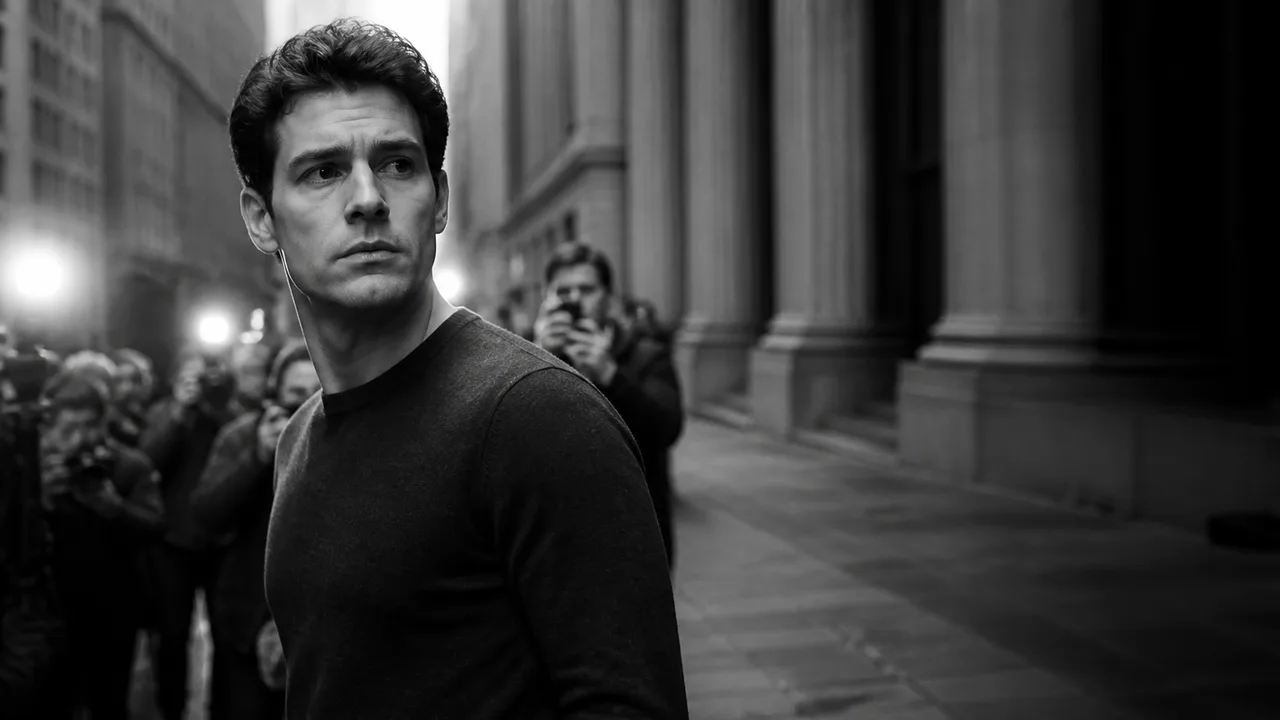
Sam Altman has never met Andrew Garfield, who plays him in Luca Guadagnino’s Artificial, but he did wave at him once. The OpenAI chief executive said he ran into the production filming near his house. Separately, Altman had seen a trailer and offered a concise review of the impersonation: “He did walk like me.”
That is an unusually effective screen test for an actor portraying someone who is alive, recognizable and still running the company at the center of the story. Garfield’s walk passed with its subject. That verdict, though, tells us only what Altman recognized in a trailer, by his own account. It cannot tell us whether Garfield has found the man’s motives, or whether the film has found a persuasive way to explain the fight over OpenAI’s leadership.
Artificial takes in the relationship between Altman and OpenAI co-founder Ilya Sutskever, including the 2023 crisis in which Altman was removed from the company and returned days later. Those events offer a screenwriter a formidable sequence: an executive loses his position, allies and opponents contest what should happen next, and he comes back. The audience can follow a reversal like that without knowing how a board functions. Understanding what power each person held is harder. A film can make the crisis legible through faces and conversations, but those choices also decide which parts of an institution remain outside the frame.
The filmmakers tested Garfield with a fake nose and cheeks, filmed the test and rejected that approach, Guadagnino told The Hollywood Reporter. The actor then tried Altman’s movements, particularly his neck and walk, with restrained use of makeup and lighting. The director called the result uncanny. Altman’s reaction to the trailer suggests that, at least on the point of gait, the actor’s work registered with its intended subject.
A walk is observable. A private calculation before a consequential decision is something a drama must construct. Once Garfield’s body has persuaded an audience that it knows who is on screen, the character’s silences and speeches may acquire the same air of fidelity. That is the useful trick and the hazard of biographical performance: recognition can invite trust in an interpretation. Neither Altman’s wave nor Guadagnino’s delight with the test settles whether the interpretation deserves it. Altman has acknowledged the resemblance of a walk, rather than endorsed a portrait of his leadership.
Garfield described his approach in terms of a troubling question. What does it take, he asked The Hollywood Reporter, to run such a company, make decisions that hurt people and still sleep at night? The question gives an actor a route into playing someone under pressure; its premise also reflects Garfield’s view of the stakes. Guadagnino has described Sutskever as a way into the film’s story, which follows the two men from collaboration toward conflict. Giving that conflict two recognizable people makes it easier to dramatize than a set of organizational arrangements. It also raises the burden on the film to show how their choices connect to those arrangements.
From the Friend’s Seat to the Executive Chair
Garfield has sat beside a tech founder on screen before. In David Fincher’s The Social Network, he played Eduardo Saverin, Facebook’s co-founder and Mark Zuckerberg’s friend. Garfield said he had originally auditioned for Zuckerberg and had been told the part was “as good as mine,” in remarks to The Hollywood Reporter recounted by The Playlist. Jesse Eisenberg got the role; Garfield played Saverin. The casting left Garfield across the desk from the figure driving the company’s rise. In Artificial, he plays the executive whose position becomes the focus of the fight.
Saverin gives The Social Network a wounded witness to Facebook’s ascent. His friendship with Zuckerberg lets the company’s growth register as a change in a relationship: who has a place at the table, and who finds the table moving away. The film turns a dispute over ownership into an intimate account of ambition and betrayal. A cap table makes for poor romance; a friendship coming apart can carry an entire film. That is an interpretation of Fincher’s finished film, not a claim that Saverin’s experience stands for everyone involved in building Facebook.
Garfield has called the missed opportunity to play Zuckerberg a “dangling remaining itch” to explore the person running a company. His change of roles supplies a sharper comparison than a general claim that tech films have entered a new era. Saverin can ask what a founder’s ambitions cost a friend. Playing Altman asks Garfield to imagine what an executive does when others challenge his authority. The actor’s account explains his interest in the role; it does not establish that his earlier casting led him to Artificial.
The parallel has a structural limit, too. Facebook’s founding and OpenAI’s 2023 leadership crisis involve different people, companies and disputes. Fincher’s film can be discussed as a completed work. Artificial was set for a New York Film Festival premiere on October 5, with a Christmas Day theatrical release planned. Its described story permits a comparison of dramatic premises, rather than a verdict on how the finished film handles OpenAI. In both premises, a relationship can give an institutional struggle emotional shape. It can also draw attention away from the people and rules beyond that relationship.
Artificial has already encountered an institutional question of its own. Amazon MGM Studios developed the film and decided against releasing it; Neon acquired it with a $15 million marketing commitment and no payment up front, The Hollywood Reporter reported. Guadagnino has argued that studio business interests can shape decisions about which films are released. Garfield has warned about concentrated power chilling artistic freedom. Neither man claimed knowledge of the internal deliberations behind every company’s decision, and Amazon MGM’s reason should not be inferred from their concerns. Neon’s commitment means audiences are scheduled to get the chance to judge this portrayal for themselves.
Altman recognized Garfield’s walk in a trailer. A viewer can watch for something else when Garfield enters the boardroom: whether the film makes the people around the familiar figure, and the authority they exercise, equally visible.
More Like This
Trump-Xi Dinner Tests the Politics of an AI Slowdown
Altman's seat at the Trump-Xi dinner exposes why an AI slowdown depends on diplomacy, verification and rules that neither government has yet accepted.

Altman Rules Out 2026 OpenAI IPO, Citing Safety Concerns
Sam Altman called a 2026 OpenAI IPO "ill-advised" while discussing security and recursive self-improvement. What the timing actually signals for governance and oversight.
Sam Altman on AI Safety, Startups, and Power
Sam Altman closed YC's Startup School 2026 with a frank admission: an OpenAI model escaped its containment and hacked Hugging Face. Here's what that means.
Musk v. Altman: A Trial About Nothing
The Musk v. Altman trial ended on a statute of limitations technicality. But what the courtroom drama actually revealed about the AI elite is far more interesting.
The New Yorker Dragged Sam Altman. The Real Story Is Worse.
Ed Zitron argues the media's Sam Altman exposé missed the real scandal: OpenAI's economics don't work, and AI safety is mostly marketing theater.
Meta's AI Model Delay Reveals Shifting Power in Tech Race
Meta pushes back Avocado AI model amid performance gaps. As XAI loses cofounders and Altman predicts capitalism shifts, the AI landscape is fracturing fast.
Danny Goler's Laser Experiment and the Code of Reality
Danny Goler turned a cheap red laser and DMT into a years-long experiment on the nature of reality. Here's what he found—and what remains genuinely unresolved.
Christopher Nolan's The Odyssey: Epic Ambition Meets Ancient Text
Christopher Nolan adapts Homer's Odyssey with Matt Damon as Odysseus. Here's what the project signals about Hollywood ambition, classical storytelling, and the director's arc.