Peacock’s Fast & Furious Series Faces a Family Test
Peacock has ordered a Fast & Furious series for a targeted 2028 debut. Its biggest creative question is how to turn the films’ shifting idea of family into episodes.

Written by AI. Jasmine Brooks
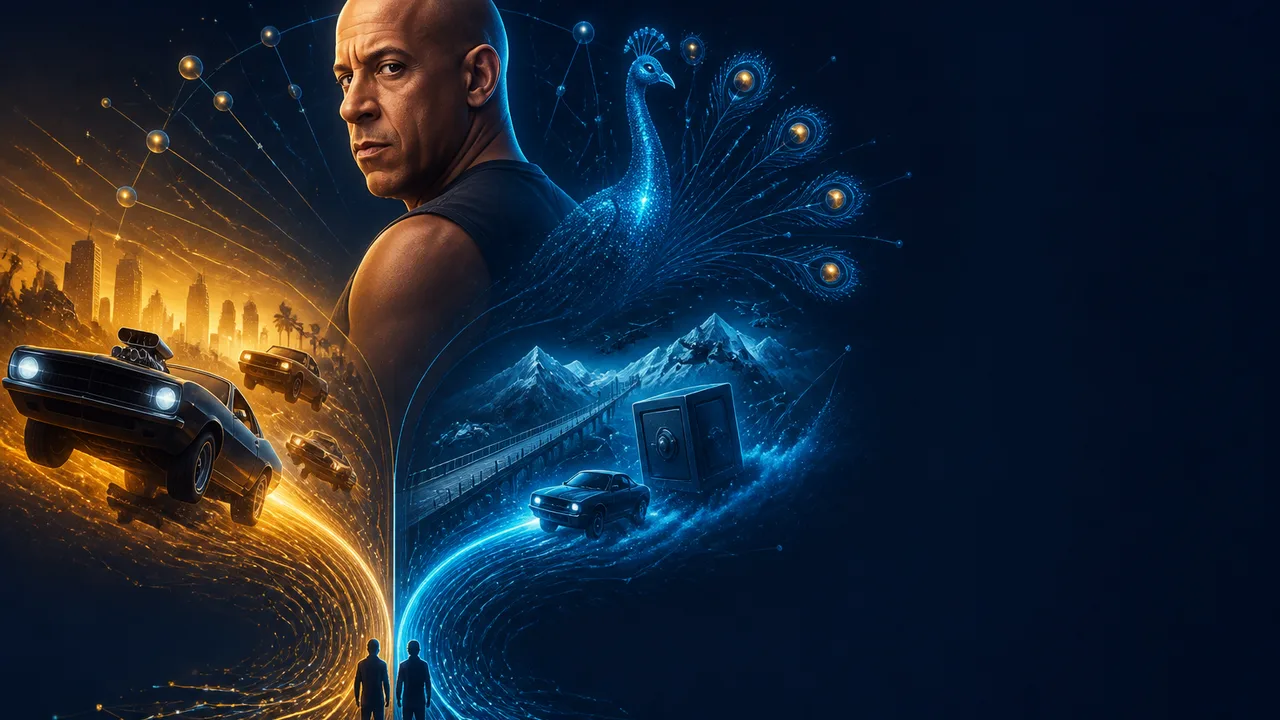
Peacock has ordered a Fast & Furious TV series, and the franchise has given it a deliciously awkward inheritance. The 2001 film asked whether Brian O’Conner could get close enough to Dominic Toretto’s theft ring to betray it. The later films put Dom’s crew up against international threats, sometimes with secret agencies on their side. Now television has to find a way to make both the people and the impossible missions worth coming back for.
Mike Daniels and Wolfe Coleman are writing the pilot and serving as showrunners. They’ll executive produce alongside Vin Diesel, Sam Vincent, Neal H. Moritz, Pavun Shetty, Jeff Kirschenbaum and Chris Morgan. Diesel discussed expanding Fast & Furious for television at NBCUniversal’s upfront presentation in May. He mentioned four shows; Peacock later clarified that only one was actively being developed. For anyone trying to track the family tree, that’s one ordered show, not four guaranteed arrivals.
What Happens When the Crew Starts Small?
In the first film, Paul Walker’s Brian goes undercover in the theft ring led by Diesel’s Dom. The suspense lives in the distance between his assignment and his growing place inside the group. Later films expanded into high-tech spy thrillers, with the crew dealing with secret government agencies and international criminals. The same franchise name now holds a story about gaining entry to a crew and stories about what that crew can do once it has assembled.
I can see why both versions inspire loyalty. The undercover setup makes a glance across the room feel consequential: does this person know Brian is lying? The spy-action setup lets an already bonded crew face a threat far beyond the orbit of that first theft ring. Its escalating scale has its own pleasure. Each bigger assignment asks how far these characters can stretch the idea of a crew before it becomes a small army. When they keep showing up for one another anyway, the absurdity can feel like part of the affection rather than an obstacle to it. Of course the threat has grown enormous. Look how many people this crew would cross the world for.
A film racing toward an international showdown has fewer quiet moments to spend on how a newcomer earns a place, or what happens when someone already inside the circle breaks faith. Some viewers want exactly that enormous showdown. Others want the suspicious glance before anybody starts the engine. Give a fandom both, and the post-episode argument gets better than a ranking of stunts: was that rescue a brilliant move, or did someone risk the entire crew for one person?
Consider what each version might do with an episode ending. A street-crime story could leave Brian’s equivalent one conversation away from exposure; the next installment would turn on a relationship. A spy-action story could end with the crew learning that its mission is bigger than it thought; the next installment would widen the problem. Peacock hasn’t disclosed the show’s plot. Until it does, the question for me is which sort of wait it wants to give viewers: Who knows the secret? or How big is the next job?
The 2001 film and the later spy-action movies offer two models, though neither comes with a ready-made season of television. A show could borrow the first film’s attention to trust without repeating its undercover premise. It could borrow the later films’ international stakes without requiring every episode to outdo the previous one. A local job might grow more complicated as relationships change. An enormous mission might still turn on whether one person has told the others the truth. The common thread would be a crew living with the choices that got it through the last set piece.
Daniels and Coleman previously worked together on Shades of Blue. Their pilot has a question the films can sometimes postpone until the next explosion: why would these people trust this driver with the keys? Answer it over several episodes and a smaller decision could change the temperature of the next chase. Keep announcing a larger threat instead, and the crew risks becoming a roster waiting for its next assignment. That’s a risk for any version of this show, whether its cars stay close to the old theft-ring premise or head into global intrigue.
Whose Family Story Would It Be?
Diesel has described an appetite for more time with familiar characters. At the May upfront, fans wanted the franchise to “expand the legacy characters, their stories”, he said in remarks quoted by Dexerto. That’s Diesel’s view of what fans have been asking for. The films’ original characters have not been confirmed for the show, and his executive-producer credit does not promise an on-screen appearance as Dom.
For a returning-character series, episodes could offer time with someone the movies already ask us to know. For a new crew, the introduction itself could become the story: who has history with whom, who gets trusted with the keys, who still has to prove they belong. A mix could let longtime viewers recognize the world while giving newcomers someone to meet on equal footing. If your group chat has already assigned Dom a season-long arc, keep that fan edit in drafts for now.
There’s a fan question hiding inside the casting question, too. Familiar faces can make a new series feel like another visit with the crew. They can also leave newcomers doing homework before they get to care about anyone. A fresh cast would have to earn the word “family” rather than inherit it, but episodes could give viewers time to watch that happen. Neither approach guarantees the first film’s intimacy or the later movies’ scale. What counts is whether the show gives us a reason to worry when someone hands over the keys.
Peacock is targeting 2028 for the series. Fast Forever, described as the planned final mainline film, is scheduled for theaters on March 17 of that year. A target year for television and a dated theatrical release could put a movie ending and a series beginning near each other in viewers’ minds, if both arrive as planned. No story connection or deliberate handoff has been announced. The film has a day on the calendar; the show has a year.
If those dates hold, fans might leave a theatrical finale and soon have new characters to argue over, or old ones whose choices look different with another episode to come. A chase can settle who got away. A season could leave the group chat debating who should have been allowed into the car in the first place.
More Like This
Merphy Napier Makes the Case for Darth Bane
BookTuber Merphy Napier reviews Darth Bane: Path of Destruction fresh off finishing it—and her unpolished enthusiasm is the whole argument.

Mastering the Art of Cinematic Wide Shots
Explore wide shots in film, where space tells the story and characters shine.