Outdoor Mindfulness Starts With a Few Minutes of Noticing
A short outdoor mindfulness practice can fit on a balcony or park bench. Learn what to notice, how to adapt it, and where a few minutes of attention has limits.

Written by AI. Marcus Obi
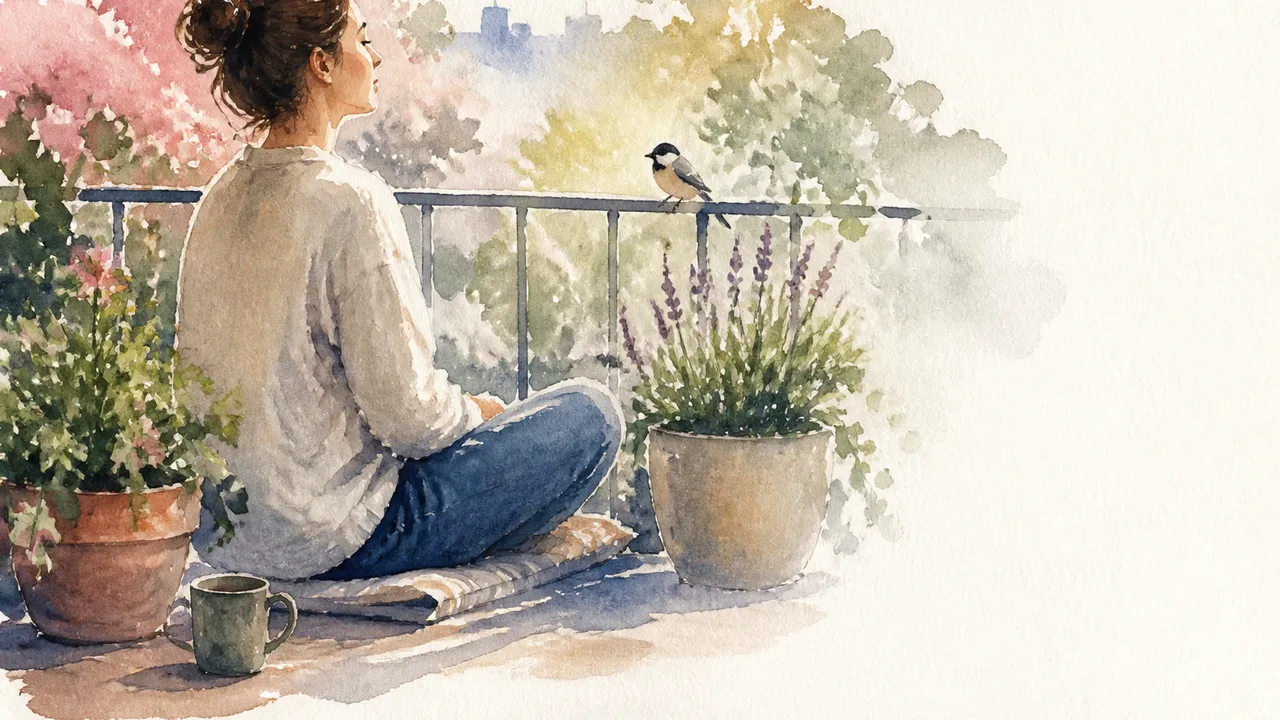
Five minutes on a balcony can be an outdoor mindfulness practice, if that is the outdoor space you can reach today. You pause, notice something in front of you, and stay with it for a little while. No garden required. No instruction to become a person who owns linen trousers.
The outdoor practice described by Mindful.org invites attention to plants, changing light, sounds and the feel of the air. It leaves room for a bench or balcony rather than making a garden the price of entry. The useful idea is small: choose a place, notice what is there, and return your attention when it runs off to the next task.
That sounds almost suspiciously manageable. Most advice aimed at busy people eventually asks them to buy equipment, reorganize a morning or locate an uninterrupted hour somewhere between work and dinner. This asks for a pause. Whether that pause feels restful depends on the person and the place, but you can try the exercise without first improving your surroundings.
Give Your Attention One Job
Start with something you can see or feel where you are. A leaf moving in the wind will do. So will a shift in sunlight across a wall, or the air against your hands. For a few minutes, pay attention to that detail and to what changes. If your mind moves to groceries, messages or a conversation you wish you had handled differently, notice the detour and look again.
You need not clear your mind to do this. Thoughts will arrive, including the practical ones that keep a household running. The exercise gives you somewhere to return when they do. A phone offers a competing destination, so putting it away for the pause may make the choice simpler. If you need it handy for a call from school or a caregiver, keep it handy.
A single object can be enough. An outdoor observation exercise from Calm suggests spending a few minutes with a tree, body of water or rock. Each gives your eyes somewhere to settle without requiring you to name the species or produce a profound thought. A rock is allowed to remain a rock.
Other approaches make movement part of the practice. If you already water plants, paying attention to each action can turn an ordinary garden task into a chance to notice. You might feel the weight of the watering can or watch water darken the soil. Someone who keeps plants can also look for new buds, opening leaves or changing colors. Those are options for people who have plants and want to spend time with them. Nobody needs to acquire a shrub for this assignment.
The still and moving versions share a practical feature: each gives attention a place to land. Walking slowly, sitting or watering plants may suit different bodies, schedules and surroundings. The choice can also change from day to day. If you get four minutes alone on Tuesday and a walk with a child on Wednesday, both can accommodate a moment of noticing.
What if Outside is Loud?
Some outdoor mindfulness guidance begins with a quiet spot, a comfortable seat and closed eyes. Listening for birdsong, breeze or rustling leaves sounds appealing if those are the sounds nearby. A parent near a road, a person waiting for a bus or someone keeping track of a child has good reasons to leave their eyes open.
Quiet can help, but requiring it would exclude plenty of ordinary outdoor life. A bench beside traffic may still have light, air or a tree within view. If it has none of those, you can notice the temperature or the pattern of sounds without pretending the traffic is soothing. You can also decide that a noisy corner is a poor place to pause and try somewhere else when you can. Mindfulness does not require you to enjoy exhaust fumes.
Access is uneven, too. A private garden lets someone step outside without planning a trip; a balcony may offer only a sliver of sky. A park can take time to reach, and an outdoor place may be uncomfortable or unsuitable for someone on a given day. Adapting the exercise to a doorway, a bench or whatever outdoor setting you use preserves its low barrier. It does not give everyone the same options.
That is one reason I would be wary of turning this into homework for an exhausted parent. A few minutes outside might fit while a child plays nearby, or it might be the first quiet interval someone has had all day. Neither situation needs a scorecard. The task is to notice what is present, including your own wish to leave after two minutes.
A Pause Has a Modest Job
Outdoor meditation advice often includes words such as calm, gratitude and awe. Those experiences are welcome if they turn up. They are poor requirements. You can notice a plant and still be annoyed about the appointment you need to rearrange. You can sit outside and spend most of the time hearing a neighbor's leaf blower. The exercise remains an exercise in attention, even when it fails to produce a lovely mood.
For someone dealing with anxiety or another health condition, a brief outdoor pause should not stand in for care or treatment. It may offer a manageable break in the day; it cannot carry the responsibility of fixing what needs more support. Treating every pause as a cure adds pressure to an activity that works best when it asks very little.
There is also a practical question behind the advice: when does the pause happen? Waiting for the perfect free moment could take a while. You might attach it to a trip you already make, such as the walk from a building to a bus stop, or sit for a few minutes when you reach a bench. If you miss a day, nothing has broken. You have missed a few minutes of noticing, not a contract.
The next time you are outside, pick one detail and stay with it briefly. The light may move. Your attention certainly will. You can bring it back, then go on with your day. The park bench will have done its job without becoming another item on your to-do list.
More Like This

Lower Your Expectations, Not Your Standards
Dr. K's framework for separating expectations from standards is sharp—and as a stay-at-home dad, I found it uncomfortably close to home.
Obsession, Discipline, and the Parent Who Has Neither
Chris Williamson's framework on obsession vs. discipline is sharp — but what does it mean when you have twins, a mortgage, and zero uninterrupted hours?

Are You Actually Calm, or Just Really Good at Hiding?
Are calm people emotionally healthy—or just great at suppressing? Psych2Go's breakdown of "Zen masters" vs. "swans" hits closer to home than you'd expect.

Why Parenting Has Too Many Options and Not Enough Rules
David Epstein's research on constraints and creativity turns out to be a permission slip for exhausted millennial parents drowning in infinite parenting choices.

Public Trust in Science Is Fragile and Complicated
Trust in science is eroding—but the data is more complicated than the panic suggests. Here's what's actually happening, and why it matters.

Animal Empathy: What Science and Instinct Both Get Right
Do some people genuinely connect with animals in extraordinary ways? Marcus Obi explores the science of animal empathy, what research actually supports, and what it means for the rest of us.