OpenAI Shut Down Sora to Build Robot Brains Instead
OpenAI killed its consumer video app Sora to focus on world simulation for robotics. What does this pivot mean for AI's future?

Written by AI. Tyler Nakamura
OpenAI just pulled the plug on Sora, its AI video generation platform that let you create wild, AI-powered video clips of yourself or anyone else doing pretty much whatever you wanted. And honestly? The internet is not taking it well.
But here's the thing—this isn't just about OpenAI abandoning a cool consumer toy. It's about where the company thinks the real future of AI actually lives. Spoiler: it's not in making your friends look like they're hosting a cooking show or recreating Counter-Strike levels.
What Sora Actually Was (RIP)
For those who didn't get to play with it, Sora was OpenAI's entry into AI video generation. Think of it as the video equivalent of what DALL-E did for images—you could generate surprisingly coherent clips of people, places, and scenarios that never actually happened. The results ranged from impressive to deeply weird, which is exactly what you want from experimental AI tech.
Wes Roth, who covered Sora's shutdown on his YouTube channel, showcased some of the platform's better moments before it went dark. AI-generated Bob Ross painting on someone's face? Check. Simulated World of Warcraft zones narrated like a travel vlog? Absolutely. Someone's pet trying to steal chess pieces mid-game? Why not.
The creative possibilities were legitimately fun. But apparently, fun doesn't pay the bills when you're trying to build AGI.
The Actual Reason OpenAI Killed It
Bill Peebles, who led the Sora team at OpenAI, explained the pivot in terms that make the strategy pretty clear. The new mission, according to Peebles, is "building systems that deeply understand the world by learning to simulate arbitrary environments at high fidelity."
That's not consumer-facing language. That's robotics talk.
Sam Altman confirmed it: the team will now focus on world simulation research, especially as it relates to robots. Not making viral videos. Not giving content creators a new toy. Building the underlying physics engines that will teach robots how to interact with the real world.
As Roth puts it, OpenAI is "canceling all the side quests" to focus on the main storyline. And that main storyline increasingly involves automating chunks of the economy, which OpenAI has started talking about more explicitly.
Why This Actually Makes Sense
Here's where it gets interesting: Sora and robot simulation aren't unrelated technologies. Both require an AI system to understand how the physical world works—gravity, lighting, object permanence, cause and effect. The difference is the end goal.
With Sora, you're generating plausible-looking video for human entertainment. With robotics simulation, you're creating training environments where AI can learn to manipulate objects, navigate spaces, and perform tasks without destroying expensive hardware in the process.
One is a product. The other is infrastructure.
OpenAI clearly decided the infrastructure play is more valuable. You can debate whether that's the right call—there's definitely a consumer market for AI video tools, as evidenced by the success of platforms like Runway and Pika. But OpenAI seems to be betting that the real money (and competitive moat) is in building foundational models that power robotics and automation, not in competing for consumer attention with every other AI video startup.
The Robotics Angle No One's Talking About
What's wild is how little attention the robotics angle gets compared to flashier AI applications. We're all obsessed with chatbots and image generators, but the companies building AGI are increasingly focused on embodied AI—systems that can interact with the physical world.
Simulation is crucial here because you can't just throw expensive robots at real-world scenarios until they figure it out. You need virtual environments where an AI can fail a million times, learn from those failures, and then transfer that knowledge to actual hardware. That's what high-fidelity world simulation enables.
OpenAI isn't alone in this. Google's DeepMind has been working on robotics for years. Figure AI just raised hundreds of millions. Tesla's entire Optimus project is predicated on this technology.
The question is whether OpenAI's Sora team—which was really good at making convincing fake worlds—can build systems that understand real ones well enough to train useful robots.
What We're Losing (And Gaining)
Look, I get why people are bummed. Sora was genuinely fun, and the creative community was just starting to figure out what it could do. The videos Roth showed ranged from goofy (AI-generated parrots demanding crackers) to surprisingly cinematic (that Counter-Strike walkthrough actually looked pretty good).
But let's be real: consumer AI video tools aren't going anywhere. If OpenAI doesn't do it, someone else will. The technology is already out there. What's harder to replicate is the kind of world-modeling capability that could actually advance robotics.
The trade-off is between giving people a cool app today versus building infrastructure that might power automation across entire industries tomorrow. OpenAI clearly made its choice.
Altman has been increasingly explicit about OpenAI's goals extending beyond chatbots and image generators. The company wants to build systems that can "automate a lot of the economy," in his words. That's not hyperbole—it's the actual roadmap. And you don't automate the economy with video generation tools. You do it with robots that understand how to interact with physical environments.
Where This Leaves Everyone Else
For creators who were using Sora, this sucks in the immediate term. For OpenAI's competitors in the consumer AI space, this is an opportunity—one less well-funded player to worry about.
For the robotics industry, this is potentially huge. If OpenAI can actually deliver on high-fidelity world simulation, it could accelerate progress across the entire field. Training robots in simulation is already a thing, but it's limited by how realistic those simulations are. Better simulations mean faster learning, which means more capable robots, which means... well, we'll see.
The bigger question is whether OpenAI is overextending itself. The company is simultaneously trying to advance language models, maintain ChatGPT as a consumer product, build AGI, and now pivot a major team toward robotics infrastructure. That's a lot of plates to keep spinning.
But maybe that's the point. If you believe AGI requires understanding multiple modalities—language, vision, physics, embodiment—then you kind of have to work on all of it at once. Shutting down Sora the consumer app doesn't mean abandoning video understanding. It just means channeling that capability toward a different end goal.
The era of making AI-generated cooking tutorials with your face on Bob Ross is over. The era of AI systems that can actually cook, guided by simulation-trained robots, might be starting. Whether that's a good trade depends entirely on what you think AI should be for.
More Like This
OpenAI Kills Sora to Focus on Work AI, Ending an Era
OpenAI shutters its Sora video app and reorganizes leadership to focus entirely on work automation and coding AI as compute constraints force hard choices.
30 Self-Hosted GitHub Projects Trending Right Now
From media automation to AI chat apps, here are 30 trending self-hosted GitHub projects that put you back in control of your data and infrastructure.
Yann LeCun Says Humanoid Robot Demos Are Precomputed Lies
Turing Award winner Yann LeCun claims humanoid robot companies are faking intelligence with choreographed demos. Here's what the robotics industry isn't telling you.
ByteDance's Seaweed 2.0 Rewrites AI Video Generation Rules
ByteDance's Seaweed 2.0 video model generates frighteningly realistic clips—and highlights how different regulatory approaches shape AI capabilities.
This Guy Fit 17TB of Enterprise Storage Into a Mini Rack
A home lab builder packed 17TB of NVMe storage into five mini PCs, ditching VMware for Proxmox and Ceph. Here's what actually worked—and what didn't.
Sam Altman Says AGI Arrives in 2 Years. Here's the Data.
OpenAI's Sam Altman just compressed the AGI timeline to 2028. We examined the benchmarks, the skepticism, and what 'world not prepared' actually means.
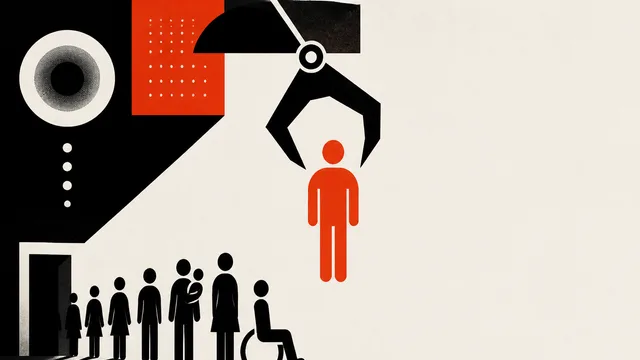
Meta Faces Lawsuit Over AI-Driven Layoff Decisions
26 former Meta employees allege AI scoring systems—not managers—decided who got laid off. Here's what that means for anyone who wants to work in tech.

Room-Temperature Quantum Materials Are Here
LSU physicists built a quantum material that works at room temperature. Here's what that actually means for quantum computing, and why it matters right now.