OpenAI Proposes Data Centers That Ease Grid Stress
OpenAI says future data centers could cut electricity use during grid emergencies. The proposal hinges on measurable curtailment and reliable AI service.

Written by AI. Yuki Okonkwo
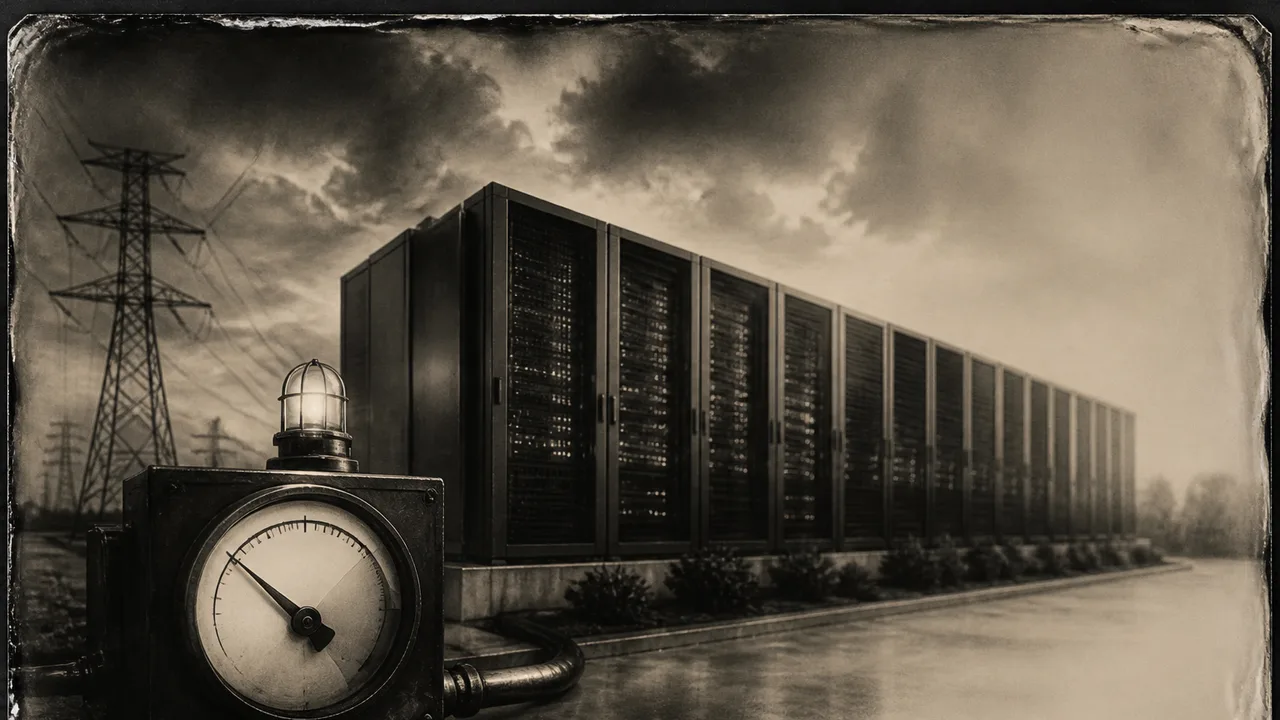
OpenAI says future data centers could cut their electricity demand during grid emergencies. That is a proposal for future facilities, not a capability demonstrated across its operations. Still, it points to a practical question for the AI industry: when the grid needs power back, can a data center give some up?
The idea is called demand response. A large electricity user agrees to reduce consumption when the grid is under strain, often under terms set with a utility or grid operator. For an AI facility, that might mean delaying work that can wait, slowing work that can tolerate it, or turning down equipment. Each option comes with a different effect on the people using the systems.
OpenAI also appears to be adopting the term “compute campuses” for data centers. The name suggests a broader role for these sites, but the grid still sees electricity demand. A promise to make that demand flexible becomes useful when an operator can count on a particular reduction at a particular time.
What Can Actually Wait?
AI computing is a mix of jobs with different deadlines. Training a model can involve long runs across many machines. Some parts of that work may be scheduled around periods of grid stress, or paused if the software can save its progress and resume reliably. A batch job processing documents overnight has more room to move than a chatbot answering someone right now.
Serving a model to users, often called inference, is trickier. A slower response may be tolerable in one application and a failure in another. The same underlying model could help draft a casual message or power a time-sensitive tool. A curtailment plan would have to identify which requests can wait, which can move elsewhere, and which need capacity reserved.
Moving work to another data center is an option only if that site has room, the application can use it, and the move does not create a problem on another grid. Sending the electricity demand on a road trip is still sending electricity demand somewhere. Likewise, postponing a job can relieve pressure during an emergency while increasing consumption later. The timing could be valuable even if total energy use stays similar, but those are different benefits and should be described separately.
There are physical limits, too. A facility uses power for cooling, networking and other equipment alongside its chips. Turning down computation would not necessarily turn down the whole site by the same amount. How much electricity a facility could shed depends on its workload and design, not just the number of servers inside it.
Why a Grid Operator Would Care
Electric grids have to balance supply and demand continuously. When conditions get tight, a predictable reduction from a large customer can help an operator manage the immediate squeeze. Think of a restaurant that can move some prep work out of the dinner rush: the kitchen still does the work, but it stops competing for the same scarce burners at the worst moment.
That strongest case for flexible computing deserves a fair hearing. AI facilities already need power, and some computing tasks have movable schedules. If a facility can reliably reduce its draw on command, the grid operator gains another tool. The operator could also plan around a customer whose emergency behavior is defined in advance rather than guessed at when conditions deteriorate.
But location and timing govern how useful that tool is. A reduction on one part of a grid may do little for a constraint elsewhere. A facility that can cut power after hours of notice offers something different from one that can respond in minutes. A short reduction is different from one that lasts through a prolonged emergency. Grid planning needs those details; “we can be flexible” is not an operating instruction.
The other question is the starting point. If a facility adds a large new load and then promises to curtail a portion of it during emergencies, the grid must still serve it the rest of the time. The promise may ease peak stress without erasing the need for routine generation, wires or other infrastructure. Those costs affect the conversation for utilities, other customers and communities considering new facilities.
Who Gets Interrupted, and Who Gets Paid?
A useful agreement would specify the maximum reduction the facility commits to deliver, how quickly it must act, how long it must stay curtailed and how often the grid operator can call on it. It would also need a way to measure the reduction against the power the site otherwise would have used. Without that baseline, a quiet afternoon could look like heroic grid assistance.
Money matters here because curtailment has a cost. Paused training can delay a project. Reduced capacity can affect a service provider’s commitments to customers. Facilities may require payment or other incentives to reserve that flexibility, while grid operators and utilities need confidence they are paying for a reduction they can use. The distribution of those costs deserves scrutiny: customers could pay through service changes, or electricity customers could pay through whatever arrangement supports the program.
Priority rules would make the trade-offs visible. If demand must fall quickly, does the operator pause training first? Does it slow nonurgent requests? Are some applications exempt? These are operational choices with consequences for users who never see the data center, and for organizations that depend on the service staying up. A system that sheds power by unexpectedly dropping essential requests would be a poor bargain, however neat its electricity chart looked.
Backup power introduces another question for any future plan. A facility could reduce what it takes from the grid while continuing to run some equipment on another power source. That might help the grid at a critical moment, but an assessment of the plan would also need to consider the consequences of that substitution. “Less grid demand” tells you what happened at the connection point, not everything that happened to keep the machines on.
The Test is a Contract, Then a Performance Record
The language around compute campuses may shape how people picture AI infrastructure. The more revealing vocabulary will appear in operating agreements: megawatts of committed reduction, response times, duration, measurement rules and consequences for missing a call. A facility able to deliver those terms would offer a grid operator something concrete to plan around.
Performance would supply the next test. Did the facility reduce its draw when asked? For how long? Did delayed work create a later surge? What happened to users? Those answers would show whether flexible computing can reduce grid pressure without shifting an unacceptable cost onto someone else.
OpenAI’s proposal raises a promising possibility because computing jobs do not all run on the same clock. The question for a future compute campus is how much of its power use can follow the grid’s clock when an emergency arrives.
More Like This
AI Agents Are Getting Persistent—And That Changes Everything
Anthropic's Conway, Z.ai's GLM-5V-Turbo, and Alibaba's Qwen 3.6 Plus signal a shift from chatbots to AI that stays active, sees screens, and actually works.

VEED's AI Video Platform Reviewed: One Tool or Five?
VEED promises to replace your entire AI video stack with one platform. We break down what it actually does, what it doesn't, and who it's really built for.

GPT-6 Astra Leaks, Opus 5.1 Signals, and HY4
GPT-6 Astra demo leaks show one-shot game generation. Anthropic quietly tests Opus 5.1 while angering users with a rate limit cut disguised as a raise.
Salesforce's AI Layoff Gamble: A Cautionary Tale
Examining Salesforce's 4,000 layoffs for AI, and the lessons learned from their tech missteps.

Rural America's Revolt Against AI Data Centers
Bipartisan opposition to AI data centers is reshaping local politics across America. From Utah to Georgia, communities are fighting back over water, power, and broken promises.

AI Agents Still Can't Do Open-Ended Research
New case studies find frontier AI agents struggle with open-ended research tasks—even with 6 days and $3,000 in API budget. Here's what that means.

MiniMax Agent: Real Utility or Overhyped AI Tool?
MiniMax Agent promises to replace prompting with delegation. But its own engineering docs reveal a catch. Here's what the hands-on testing actually shows.