Open-Source AI Models Are Closing the Gap—and Cutting Prices
DeepSeek V4 and other open models now rival top AI systems at fraction of the cost. The implications for the industry are just starting to emerge.
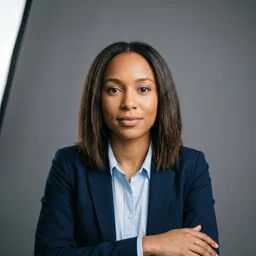
Written by AI. Marcus Chen-Ramirez

Photo: AI. Kai Hargrove
The conversation around AI used to center on a simple hierarchy: proprietary frontier models from OpenAI, Anthropic, and Google at the top, and everything else somewhere below. That hierarchy is collapsing faster than anyone predicted.
DeepSeek's V4 model, released last Friday, benchmarks within striking distance of GPT-4 and Claude Opus 3.7—last generation's flagship models—while costing roughly one-third as much to use. At $1.74 per million input tokens and $3.48 per million output tokens, it undercuts GPT-4.5 ($5/$30) and Claude Opus 3.7 ($5/$25) by margins that make enterprise procurement teams pay attention. The model also ships with a 1 million token context window and open weights, meaning companies can theoretically run it on their own infrastructure.
This isn't just about one release. In the same week, NVIDIA dropped Nemotron 3 Nano Omni, an open multimodal model designed for AI agents. Poolside AI released two foundation models, including an open-weights 33 billion parameter version. Mistral unveiled a new model optimized for remote agents. The pattern is consistent: capable models, open access, aggressive pricing.
"A few years ago when we were talking about all these latest models coming out from Anthropic and Google and OpenAI, the general consensus was these open-source models, these open-weight models are pretty much never going to catch up," tech YouTuber Matt Wolfe noted in his weekly AI roundup. "But I feel like we're getting to a point where they're getting really, really dang close."
The close-enough threshold matters because most enterprise use cases don't require bleeding-edge capabilities. Document summarization, data pattern recognition, customer support agents—these workloads run fine on models that score 85% as well as the frontier leaders, especially when those models cost a fraction as much and can run behind corporate firewalls.
DeepSeek's approach reveals something about the global AI race that U.S. policymakers probably didn't anticipate when they implemented export restrictions on high-end GPUs to China. Denied access to the latest NVIDIA chips, Chinese labs developed training techniques that squeeze comparable performance from less powerful hardware. They're publishing the results as open weights and undercutting American pricing.
Every time this pattern repeats, U.S. tech stocks take a small hit as investors recalibrate their assumptions about moats and margins. The logic is straightforward: if similarly capable models become available for less money—or free, if you host them yourself—then the premium pricing commanded by closed models becomes harder to justify.
When Ethics Becomes Selective
The same week brought less encouraging developments in how AI companies navigate principles versus practicality.
Anthropic has positioned itself as the ethics-first AI lab, the company that draws hard lines around military applications and prioritizes safety over growth. That branding took damage this week when users discovered the company was scanning their code repositories for mentions of competing AI agent frameworks like OpenClaw and Hermes, then either blocking access or charging extra fees.
Developer Theo Browne surfaced the issue: "Fun fact, if you have a recent commit that mentions OpenClaw in a JSON blob, Claude Code will either refuse your request or bill you extra money." Another user on the $200/month Claude Max plan saw $200.98 in overage charges despite his dashboard showing 86% of his subscription untouched. The trigger? The string "HERMES.md" in a git commit message.
After the complaints went viral—Browne's post got a million views—Anthropic called it a bug in "third-party harness detection," issued refunds, and threw in credit. But the underlying system reveals something: Anthropic built infrastructure to detect and penalize use of competing tools, which sits uncomfortably next to their self-presentation as the good guys.
The irony didn't escape users. As one reply noted: "It's a good thing Anthropic tells us how ethical they are, or we might worry about their morality."
The Pentagon's Shopping Spree
Google, meanwhile, navigated its own ethical minefield by signing a classified AI deal with the Pentagon—after more than 600 employees signed a letter begging leadership not to.
The agreement permits Pentagon use of Google's AI for "any lawful government purpose." Google added language saying the company opposes domestic mass surveillance and autonomous weapons without human oversight, but those are recommendations, not restrictions. The Pentagon can legally ignore them.
This creates tension with promises Google made a decade ago. When the company acquired DeepMind in 2014, DeepMind's founders secured a commitment that their AI would never be used for military or surveillance purposes. That was framed as a core condition of the deal.
Google's position is genuinely difficult. Refuse the Pentagon and risk regulatory retaliation plus a reputation as unreliable for government work—see what happened to Anthropic, recently deemed a "supply chain risk" after declining military contracts. Accept the Pentagon and break old promises while angering employees and appearing opportunistic after OpenAI drew praise for initially holding the line.
Both choices carry costs. Google chose the path that keeps regulators happy.
The Musk-Altman Circus Continues
The Elon Musk versus Sam Altman trial started this week, with Musk claiming Altman tricked him into funding OpenAI under false nonprofit pretenses before pivoting to profit-seeking. OpenAI argues Musk is just trying to kneecap a competitor to his own xAI.
Early courtroom reports suggest Musk's testimony isn't helping his case. A Verge reporter covering the trial wrote: "After about 5 hours into Elon Musk's testimony, I typed the following sentence: I have never been more sympathetic to Sam Altman in my life."
Musk reportedly refused to answer yes-or-no questions with yes or no, argued with attorneys, and forgot things he'd testified to earlier the same day. Jury members were observed glancing at each other. One woman rubbed her head during a particularly testy exchange.
Whatever the legal outcome, the spectacle underscores how much of AI governance happens through personality-driven conflicts rather than coherent policy frameworks.
What the Pricing War Means
The technical releases matter most. DeepSeek V4 and the wave of capable open models aren't just incremental improvements—they represent a structural shift in how AI capabilities distribute across the industry.
When state-of-the-art performance required closed models from a handful of labs, those labs controlled pricing and access. As open alternatives approach similar capabilities, that control weakens. Enterprise customers can credibly threaten to switch. Startups can build on open foundations instead of paying API fees. Developers can run models locally instead of sending data to cloud providers.
The U.S. AI industry spent the last two years operating on the assumption that computational advantage would translate to durable market position. That assumption is being tested by labs that found ways to do more with less, then gave the results away.
How that test resolves will shape which companies still matter in three years.
More Like This
The Hidden Architecture Making AI Agents Actually Work
Building AI agents isn't about choosing build vs. buy—it's about orchestration. Here's what IBM's engineers say makes multi-agent systems coherent.
Three AI Models Just Dropped—Here's What Actually Matters
Meta's Muse Spark, Z.ai's GLM 5.1, and Anthropic's Managed Agents all launched this week. Here's what they're good at—and what they're not.

34 Open-Source Tools Rewriting How Developers Work With AI
From AI agents that run in isolated VMs to databases that forget like humans, these 34 projects represent a different kind of AI tooling—paranoid, practical, weird.
Open Source AI Models Just Changed Everything
The AI landscape shifted dramatically in early 2026. Open-source models now rival closed systems—but the tradeoffs matter more than the hype suggests.
The AI Race Nobody's Winning: 15 Models in 8 Weeks
Google, OpenAI, and Anthropic release 15 AI models in two months. The real question isn't who's ahead—it's whether anyone can keep up.

AI Companies Are Running Out of Compute—and Money
As AI agents consume tokens at unprecedented rates, companies like Anthropic and GitHub are abandoning flat-fee pricing. The subsidy era is over.

Hugging Face ML Intern Automates AI Development
Hugging Face's ml-intern is an open-source agent that automates the full ML research loop. Here's what it does, what it can't, and what it signals.

Small Language Models Are Reshaping Agentic AI
Small language models are outperforming larger rivals on key AI agent benchmarks. Here's what the efficiency shift means for how AI gets built and deployed.