Omacon 2026: Linux as Love Language
At Omacon 2026, DHH made the case that Linux tinkering is craft, not productivity. Is this a genuine movement—or a very aesthetic hobby?

Written by AI. Dev Kapoor
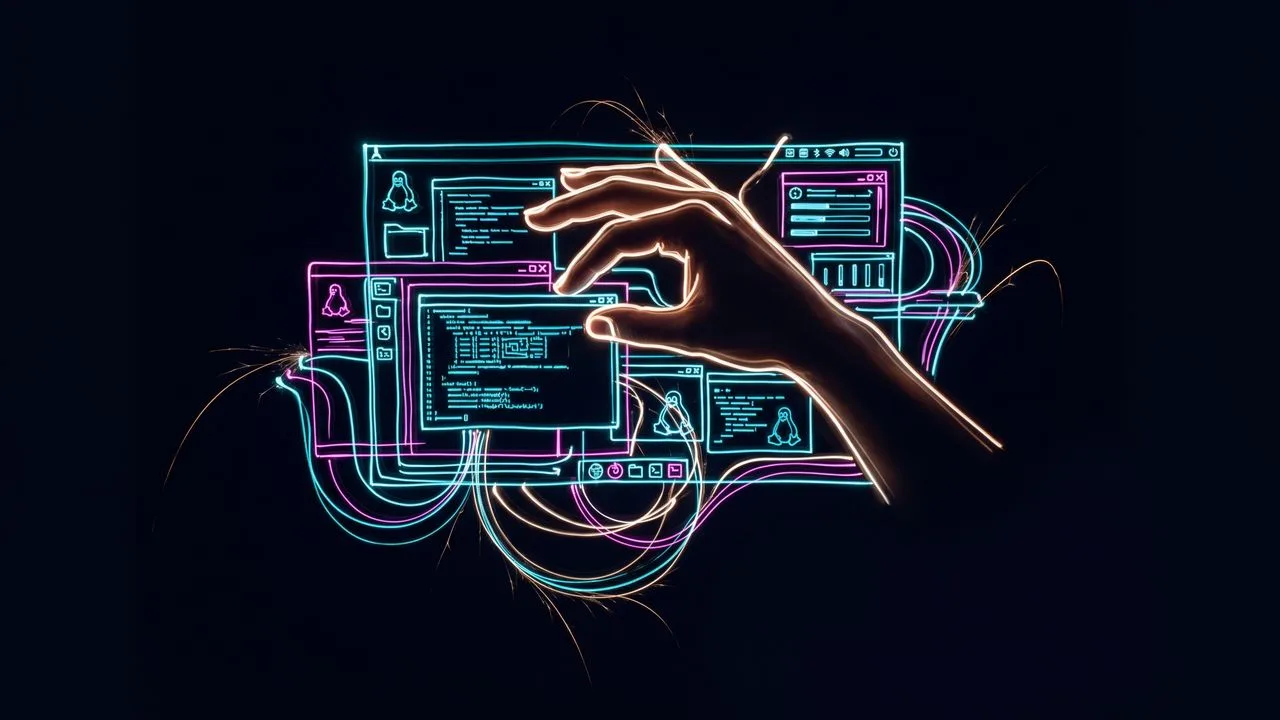
Photo: AI. Phaedra Lin
There's a certain kind of conference talk that opens with a Rolex analogy and somehow doesn't lose the room. At Omacon 2026—a single-track gathering hosted at Shopify's offices and organized around the Omakub Linux distribution—David Heinemeier Hansson did exactly that, and from the transcript at least, people applauded.
The event is the brainchild of DHH, the Ruby on Rails creator and Basecamp co-founder who, about two and a half years ago, rage-quit Apple and embarked on what he calls his "Linux pilgrimage." The result of that pilgrimage was Omakub: an opinionated, batteries-included Ubuntu-based setup that configures a full tiling window manager environment out of the box. Omacon is the conference that Omakub accidentally spawned—born from a throwaway tweet, renamed by a stranger called Sammy, and now apparently real enough to fill a room at one of tech's most recognizable companies.
What DHH was selling at Omacon isn't really a distro. It's a posture toward technology.
The Craft Argument
The centerpiece of his opening talk was what you might call the craft argument: that computers, like Rolex Daytonas and Leica rangefinder cameras and a Lexus he liked enough to buy twice, are beautiful objects worthy of appreciation beyond their utility. The $20 Casio tells the time. The Daytona also tells the time. But the Daytona has 300 parts, and that matters to some people, and those people are not wrong.
"Part of the fun of playing with computers in the way that we do," he told the room, "is that we get to take the case back off. We get to tinker with 300 little balance wheels and springs and escapements and feel like we're part of the clockwork. We're not just consumers of it."
This is a coherent aesthetic philosophy, and it maps cleanly onto what Linux ricing communities have been doing for years on r/unixporn—the subreddit DHH explicitly credits as a source of inspiration, and which he acknowledges would look alarming to anyone unfamiliar with the terminology. The demo scene parallel he draws is apt: people on that subreddit are making things for the same reason Commodore 64 coders made demos in 1989. Because they could. Because it was beautiful. Because there was a community watching and appreciating.
What's worth sitting with is whether this framing—computers as craft objects, Linux ricing as watchmaking—does justice to the full picture of what open source communities actually involve. The beauty of a bespoke Hyprland setup is real. The labor that produced the underlying tools—the maintainers of Hyprland, of Neovim, of the dozens of auxiliary projects that make a tiling WM environment actually work—is also real, and considerably less romantic.
DHH doesn't really go there. This is a celebration, not a reckoning. That's fine for a conference opening talk. It's worth noting as a reader.
The Omakub Numbers
Where things get concretely interesting is in the adoption data. DHH reports roughly 50,000 ISO downloads per month, nearly half a million total, and approximately five petabytes of data served—via Cloudflare, which he singles out as an obvious modernization the Linux distro world had been leaving on the table while people were still hunting for university basement mirrors.
"Are you kidding me? Like, we're still finding people who can fit a little server in their university's basement—and that's how we're going to distribute all the software. Why? We've had these content distribution networks for about 25 years."
That's a fair point, and it gestures at something real: the Linux desktop ecosystem has historically had a talent for solving hard problems and an indifference toward solving annoying ones. Omakub's pitch is essentially that the annoying problems—hardware detection, sane defaults, a coherent first-hour experience—are worth solving explicitly, as a design goal, not as an afterthought.
The audience breakdown DHH cites is the other striking data point: roughly equal thirds coming from Windows, existing Linux, and macOS. If accurate, that's not a distro for the already-converted. That's something genuinely pulling people in from outside the scene.
The Community Question
The talk leans heavily on community as both justification and goal. DHH invokes CS Lewis's The Four Loves to describe the friendship at the heart of Omacon—"Do you see the same truth?"—and traces a lineage from LAN parties in the late '90s through BBS culture through the demo scene to this room in a Shopify office. It's sentimental in a way that might read as earnest or overwrought depending on your threshold.
What I find genuinely interesting is the origin story he tells about YouTube's role. Two people in particular shaped Omakub's design before it existed: Chris Power of the Typecraft channel, who provided the Hyprland deep-dive DHH consumed in a French hotel room during Le Mans downtime, and Prime (ThePrimeagen), whose years-old setup video introduced DHH to the idea of single-keystroke program access. Both were eventually invited to speak at the event they unknowingly helped create.
That's a nice loop. It's also a useful illustration of how contemporary open source communities actually propagate. Not through documentation or mailing lists—through YouTube videos watched by one person in a hotel room who happened to have enough platform to turn their enthusiasm into a conference.
The question worth asking: what happens to the communities that don't have a DHH watching their videos? The Hyprland maintainer, the Neovim core team, the people building the actual tools that make these beautiful setups run—they're doing real labor, often without the infrastructure, the Discord army, or the Cloudflare deal. The craft argument celebrates the artifact. The labor analysis has to account for who's making the tools.
Year of the Linux Desktop, Actually?
DHH closes with something that, coming from someone credible, lands differently than it usually does: a serious claim that the "year of the Linux desktop" prophecy—mocked since roughly 1998—might actually be arriving.
"Linux is on an incredible run right now. A run it has not seen on the client side in all the time that I've been watching."
He's not wrong that the conditions look different. Steam's Proton layer has made gaming on Linux genuinely viable. The EU's regulatory pressure on platform lock-in is reshaping how people think about alternatives. Apple Silicon briefly pulled some power users back to macOS, but DHH's own defection—and the community that formed around it—suggests the pull isn't universal.
Whether Omakub specifically is a driver of this or a beneficiary of it is genuinely unclear. Thirty-five years in computing and two years in Linux doesn't make DHH a Linux expert. It makes him an enthusiastic newcomer with extraordinary reach. That combination can do real things for adoption numbers. It doesn't automatically produce good technical stewardship.
"I don't stand here as a 20-year expert on Linux, on ricing, on Neovim, on any of the wonderful tools that now consume such a huge part of what I enjoy about computers. I literally discovered all of those things two years ago."
That self-awareness is disarming, and it's probably why the talk works. The claim isn't expertise. It's contagious enthusiasm, paired with a genuine question about whether the Linux desktop ecosystem wants to be accessible to people like him—people who love computers enough to invest $40,000 worth of time into a setup, but who expect the Ethernet adapter to just work.
Whether that's what the Linux community needs, or what it will cost the community to provide it, is a conversation that presumably happened in the hallways at Omacon. It's also one the broader ecosystem is going to have to keep having, whether it wants to or not.
More Like This

The macOS TCP Bug That Detonates at 49 Days
A uint32 cast in macOS's TCP clock code means any Mac left running past 49 days hits a networking wall. Here's exactly how it breaks—and why it matters.
FFmpeg's Twitter Drama Was Actually Good for Open Source
The FFmpeg account's X drama raised donations and awareness for grassroots open source. But is performative conflict a sustainable outreach strategy?
The Fall of Stack Overflow: A Cautionary Tale
Exploring Stack Overflow's decline and the lessons from its community dynamics.
Why ChatGPT Won't Teach You Linux (And What Will)
A DevOps engineer with 10+ years experience argues that AI tools are failing Linux learners—and explains what actually works for mastering the command line.
Unveiling Agent Skills in VS Code: A New Era in Workflow
Explore how Agent Skills in VS Code enhance productivity by enabling tailored workflows and automation.
How Cloudflare Uses Lava Lamps to Encrypt the Internet
Cloudflare's San Francisco office has a wall of 100 lava lamps generating entropy for SSL/TLS encryption. Here's why computers can't be truly random.

Thinking Machines Launches Inkling, Its First Open-Weight AI Model
Mira Murati's Thinking Machines has released Inkling, an open-weight multimodal AI model built on DeepSeek's architecture—and the implications go well beyond benchmarks.

35 GitHub Projects Mapping the AI Agent Trust Gap
This week's GitHub trending list is less a catalog of tools and more a collective argument: developers don't fully trust AI agents yet—and they're building accordingly.