Minisforum M1 Pro 285H: A Mini Powerhouse
Explore the Minisforum M1 Pro 285H's potential in tech trends and its market impact.

Written by AI. Bob Reynolds
The quest for smaller, more efficient computing devices has been a constant theme since the early days of mainframes. The Minisforum M1 Pro 285H is the latest in this lineage, offering a glimpse into the future of compact computing. But does it live up to the promises of performance and utility without being overshadowed by its larger counterparts?
When Wendell from Level1Techs reviews a product, you pay attention. In a recent video, he dissected the M1 Pro 285H, a mini PC boasting a Core Ultra 285H processor. It claims to be the smallest of its kind, though verifying this claim requires some digging given the rapid pace of hardware evolution.
A Nod to Upgradeability
The M1 Pro 285H is not just small; it’s adaptable. With upgradeable DDR5 memory and storage options, this device caters to users who need flexibility without the bulk. "It features upgradeable memory and storage, making it a flexible option for users needing more power," Wendell notes. But the real question is how it fits into the broader trends of modular computing.
Historically, compact PCs have struggled with heat dissipation and performance throttling, but the M1 Pro 285H seems to have cracked the thermal code. It operates quietly, maintaining cool temperatures even under load. The reviewer points out its effective cooling system: "It breathes from the bottom and the sides."
Performance Metrics Under the Microscope
Performance is always the litmus test for any computing device. The M1 Pro 285H delivers respectable numbers, with 700,000 IOPS on Crystal Disk Mark—a figure that demands verification but positions it as a compelling choice for productivity tasks. Yet, it’s not without its limitations. Wendell candidly states, "For gaming, it’s got ARC graphics. It’s not an end-of-life GPU, but also not a gaming powerhouse."
The push for compact computing solutions without significant capability compromises is evident here. Yet, the allure of mini PCs extends beyond raw performance. It's about integration and the potential for these devices to serve as nodes in a larger computing network—a concept Wendell hints at with his experimental cluster project.
The Market Landscape and Future Implications
The mini PC market is a competitive arena, with players like AMD offering alternatives that excel in GPU performance. However, the M1 Pro 285H carves its niche by focusing on CPU prowess and efficiency. This approach mirrors broader trends where computing tasks increasingly lean on cloud services and distributed networks, reducing the onus on individual device power.
Wendell's vision of using these mini PCs as part of a PCIe-interconnected cluster could redefine how we perceive personal computing. It's not just about what a single device can do, but how they can work in concert to achieve greater performance. This concept, while still niche, could influence future product development and consumer expectations.
In the end, the M1 Pro 285H isn’t just another mini PC—it’s a testament to the ongoing evolution of computing technology. As these devices become more sophisticated, their role in both personal and enterprise environments could expand dramatically. The real challenge lies in balancing performance, size, and cost—a classic trifecta in tech development.
As we look to the future, one can't help but wonder: Will the M1 Pro 285H be remembered as a stepping stone toward even more integrated computing solutions, or just another stop on the road to miniaturization? If history teaches us anything, it’s that today’s niche innovations often become tomorrow’s norms.
More Like This
Anthropic's Three Tools That Work While You Sleep
Anthropic's scheduled tasks, Dispatch, and Computer Use create the first practical always-on AI agent infrastructure. Here's what actually matters.

Dokploy Promises Vercel Features at VPS Prices
A new tool claims to deliver platform-as-a-service convenience on cheap VPS infrastructure. Better Stack demonstrates what works and what doesn't.
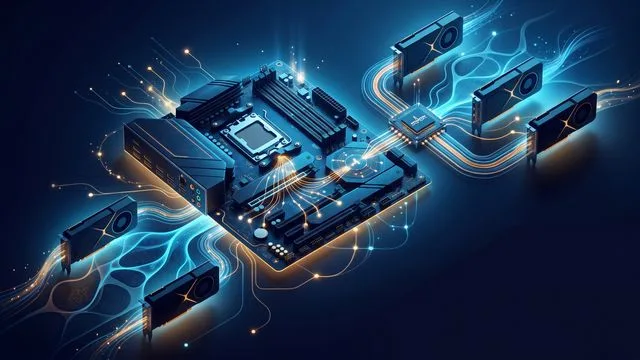
How One Engineer Created the AM5 Motherboard AMD Won't Build
A Level1Techs engineer bypassed AM5's PCIe lane limitations using a $1,200 Broadcom bridge to run four GPUs on consumer hardware—revealing what's possible.

The Console Killer Problem Nobody's Talking About
Mini PCs could replace gaming consoles, but GPU form factors are the real bottleneck. Why the industry needs new standards before the next component shortage.

When Walmart Sells Last-Gen GPUs Cheaper Than Amazon
A PC build experiment reveals an uncomfortable truth about 2026 hardware markets: sometimes the discount bin beats the cutting edge.

When Server Prices Triple, AMD's AM5 Looks Reasonable
Server hardware costs have multiplied 2-3x in a year. Level1Techs demonstrates why AMD's consumer AM5 platform might be the practical alternative.

Claude Honeycomb Leak: What the Opus 5 Rumors Mean
A mystery model called Honeycomb appeared briefly in Cursor on July 8th, then vanished. Here's what the leak actually shows — and what it doesn't.

Claude Code and AI-Driven SEO for Shopify Stores
A live walkthrough of using Claude Code, SEMrush MCP, and Shopify to build AI-optimized pages raises real questions about where SEO is heading.