Meta Faces Lawsuit Over AI-Driven Layoff Decisions
26 former Meta employees allege AI scoring systems—not managers—decided who got laid off. Here's what that means for anyone who wants to work in tech.

Written by AI. Tyler Nakamura
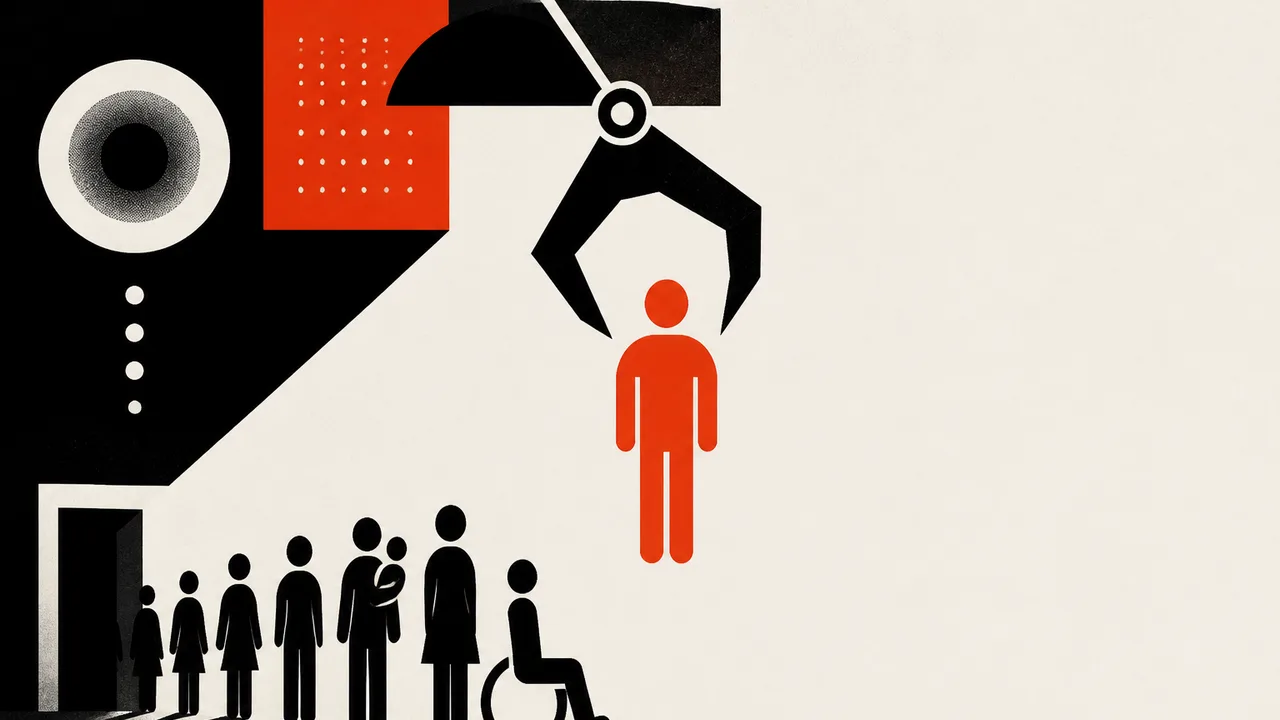
If you're reading this because you're studying computer science, grinding LeetCode, or just dreaming about landing a job at a major tech company someday — this one's for you specifically. Not in a scary, clickbait way. In a you should probably know this is happening way.
Twenty-six former Meta employees have filed a lawsuit alleging that AI-driven scoring systems, not their actual human managers, determined who got cut in Meta's recent wave of layoffs targeting roughly 8,000 workers. According to Fortune, the plaintiffs — who include workers on medical, parental, and family leave — allege the AI tools flagged them for termination and that Meta offered no accommodation for at least one plaintiff's disability. The lawsuit, as reported by Ars Technica, claims those tools draw on performance data "whose output is reduced by a disability."
Meta's response has been consistent across every outlet covering this: a spokesperson told The Guardian that "these claims lack merit and are not based on facts," and that "workforce management and organizational decisions were and are made by people, not AI." The company has repeated nearly identical language to CNBC, Mercury News, and Slashdot.
Worth noting: Slashdot reports the layoffs are not yet finalized — meaning this is all playing out while the decisions are still technically in motion.
What the lawsuit is actually claiming
The plaintiffs aren't just saying Meta used AI to help sort data. They're saying the AI made the call — that a scoring system assessed employee output and productivity metrics, and people on protected leave ended up disproportionately tagged for termination because taking leave, almost by definition, reduces measurable output.
Think about what goes into a performance score at a company like Meta: code commits, project completions, peer review ratings, Slack activity, meeting participation, delivery against quarterly goals. Now think about what happens to all of those numbers when someone takes 12 weeks of medical leave, or a few months of parental leave, or extended time off to care for a family member. The numbers drop — not because the employee got worse at their job, but because they weren't at their desk doing the job. The lawsuit argues, according to Ars Technica, that the tools evaluated output in ways that are structurally penalizing for employees whose output is reduced by a disability.
If you're planning to work somewhere like this — and a lot of you reading this are — that's worth sitting with for a second. Your Slack activity is a data point. Your commit cadence is a data point. Your review scores are a data point. These things already feed into how companies understand your performance. The question this lawsuit is asking is: what happens when a system optimizing for those signals doesn't know how to distinguish "this person underperformed" from "this person was recovering from surgery"?
Meta says humans made the calls. Okay — but what did the humans use?
Here's where it gets genuinely complicated, and I think this is the most interesting tension in the whole case.
Meta's denial is carefully worded every single time: people made the workforce decisions, not AI. And that might be technically true. A manager might have clicked "approve" on a list. An HR executive might have signed off on headcount reductions. Humans could have had final authority at every formal checkpoint.
But that framing sidesteps the actual allegation, which isn't about who clicked the button — it's about who, or what, generated the list in the first place. If an AI system surfaces a ranked set of employees flagged for low performance, and a manager works through that list without meaningfully interrogating how it was built, then "humans made the decision" is doing a lot of rhetorical heavy lifting for what is functionally an algorithmic outcome with a human rubber stamp on top.
This isn't me speculating about what happened at Meta — I don't have visibility into their internal processes, and neither does anyone outside the litigation. But it is the exact question the lawsuit is designed to force into the open. And courts are not great at moving fast on this stuff. Look, this case might not go anywhere — complaints get dismissed, discovery takes years, settlements happen quietly. But the reason I'm still paying attention is that the question it's asking doesn't need a court victory to matter. The question is already live at companies your LinkedIn connections work at right now.
Why protected leave is the crux
Employment law in the US has specific protections around medical leave (under FMLA), disability (under the ADA), and pregnancy/parental status. These protections exist precisely because employers have historically penalized employees for taking time they're legally entitled to take.
The lawsuit's theory — and I'm reading the legal theory here, not predicting how courts will rule — is that an AI system optimizing for productivity metrics can discriminate in ways that are invisible in the org chart but very visible in the outcome data. You don't need a manager to say "fire everyone who took maternity leave." You just need a scoring model that doesn't account for why someone's output numbers look the way they do during a specific quarter.
According to Fortune, the lawsuit specifically alleges that one plaintiff's disability went unaccommodated in how their performance was evaluated. That's not a gray area under ADA law — accommodation in performance evaluation is something employers are supposed to provide. The allegation is that the AI-mediated process made that accommodation structurally impossible, or at least never prompted anyone to apply it.
What this means if you're trying to build a career in tech
I cover consumer tech — phones, laptops, the stuff you buy with your own money — but the "product" this lawsuit is really about is the system that decides whether you get hired, promoted, or cut at the companies building all that stuff. And for anyone who's just starting out or planning to enter this industry in the next few years, the picture this lawsuit paints is genuinely worth understanding.
Performance review systems have always had bias baked in. Managers have always had favorites. Calibration meetings have always been political. None of that is new. What is new is the scale and opacity of AI-mediated evaluation: a system can process thousands of employees simultaneously, rank them in ways that feel objective because they're numerical, and produce a list that managers inherit rather than build. When you inherit a list, you're less likely to question the logic behind it. The bias doesn't disappear — it just gets harder to see and harder to challenge.
For employees, that means the traditional recourse of "talk to your manager, document everything, escalate to HR" assumes a human somewhere in the chain who made a judgment call you can push back on. What do you do when the judgment call was embedded in a scoring model that nobody outside the engineering team can fully explain?
That's not a rhetorical flourish. It's the practical problem this case is putting in front of a court for what may be the first time at this scale.
Where this goes
Honestly? Unclear. Employment discrimination cases are slow, and corporate defendants have deep pockets and long timelines. Meta has denied the claims clearly and repeatedly. The facts in dispute — specifically, how much autonomy the AI tools had versus how much meaningful human review actually happened — will be contested through discovery, if the case gets that far.
What's less unclear is that this is not an isolated filing. Other tech companies use similar productivity-tracking and performance-scoring infrastructure. The legal theory the plaintiffs are advancing — that an AI tool can discriminate even when no human intended to — is one that employment lawyers have been watching for years, waiting for a case with enough facts to test it.
If you're graduating in the next two years and planning to work at a company that runs this kind of infrastructure on its workforce: you probably won't know what metrics it's tracking or how they're weighted. You'll get a performance review, and somewhere behind that review there will be a system you never consented to and can't audit.
At some point, the question of whether you're allowed to know that — and challenge it — is going to need an answer that isn't just "trust us, a human made the call."
More Like This

World's Fastest Drone Reclaims Record with V4
Discover how Peregreen V4 reclaimed the world's fastest drone title with a speed of 657 km/h.
What Companies Learn When They Fire All Their Managers
Three companies tried eliminating management layers with AI. The experiment revealed what you actually lose when you flatten the org chart.

Google Pays $250K for 16-Year-Old Linux KVM Flaw
A 16-year-old Linux KVM flaw called Januscape earned a $250K bounty after enabling guest VM escapes on Intel and AMD systems. Here's what it means for cloud security.

Musk v. Altman: A Trial About Nothing
The Musk v. Altman trial ended on a statute of limitations technicality. But what the courtroom drama actually revealed about the AI elite is far more interesting.
This Tool Treats Your Home Lab Like Infrastructure Code
RackPeek documents home labs as YAML code in Git. Brandon Lee shows how this infrastructure-as-code approach beats static diagrams and spreadsheets.
30 Self-Hosted GitHub Projects Trending Right Now
From media automation to AI chat apps, here are 30 trending self-hosted GitHub projects that put you back in control of your data and infrastructure.

Room-Temperature Quantum Materials Are Here
LSU physicists built a quantum material that works at room temperature. Here's what that actually means for quantum computing, and why it matters right now.

EU Tells Meta to Fix Addictive Instagram Features
The EU is threatening Meta with fines up to 6% of global revenue over infinite scroll and autoplay. Here's what that actually means for your Instagram experience.