How Leopold Aschenbrenner's AI Hedge Fund Collapsed
Leopold Aschenbrenner's AI hedge fund Situational Awareness lost billions in July 2026. Here's how leverage, concentration, and a Citadel deal shaped the wreckage.
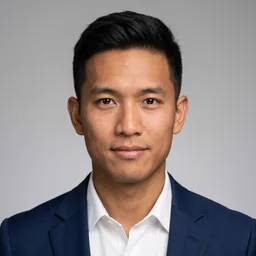
Written by AI. Jin Seo

Photo: AI. Henrik Solberg
Leopold Aschenbrenner launched his hedge fund, Situational Awareness, in July 2024, according to the New York Times — and named it after the lengthy essay he had published the month before, which, per his Wikipedia entry, ran to 165 pages. The essay announced that a small cohort of researchers had developed a uniquely clear view of where artificial intelligence was headed. The fund was the financial expression of that conviction.
"Investment firm will be kind of like, you know, a brain trust on AI," Aschenbrenner said around that time. "We're going to have the best situational awareness in the business."
Within months, he had attracted capital from some of the most prominent names in technology: the Collison brothers, co-founders of Stripe; Nat Friedman, the former GitHub CEO; senior AI figures at Meta; and established trading firms including Jane Street. They agreed to lock up their money for years, managed by someone in his early twenties who had constructed the fund with explicit freedom to use unlimited leverage and invest across any asset class. The early returns appeared to validate the thesis. By the time 2026 arrived, the fund controlled roughly $45 billion in assets — a number that became its own kind of liability.
The Two Mistakes
When Situational Awareness started bleeding out in July 2026, the mechanism wasn't mysterious. It was leverage meeting concentration, a combination that has destroyed funds far more experienced than this one.
Aschenbrenner's approach, according to the Wall Street Journal, involved borrowing $3 to $4 for every $1 of investor equity — a leverage ratio that can make returns look extraordinary in rising markets. A portfolio gaining 10% becomes a 50% return for the underlying equity holder at 5x leverage. But the math runs in reverse just as efficiently. A 10% decline wipes out half the equity. A 20% decline eliminates it entirely.
That is the simple version. The real danger in leveraged funds isn't even the theoretical blow-up point — it's the margin call that arrives before you get there. Prime brokers require funds to maintain equity above a minimum threshold. When falling positions push a fund's equity below that floor, lenders demand more cash or collateral. The fund then has to sell assets, which drives prices lower, which depletes equity further. If the fund is large enough, and the market illiquid enough, there is no graceful exit. There are just bigger and bigger holes.
The second mistake was concentration. Virtually all of Situational Awareness's public market exposure sat in AI-related stocks — semiconductor companies, chipmakers, suppliers to the AI buildout. That's a coherent thesis. It's not a diversified portfolio. When the thesis is challenged from multiple directions at once, the damage doesn't arrive stock by stock. It arrives all at once.
The Cascade
In early July 2026, a Bloomberg report suggested Meta was looking to offload surplus AI capacity — a signal that chip demand might be softening. Later in the month, a Chinese AI company announced a model it claimed could rival American ones, putting pressure on the assumption that U.S. AI infrastructure spending would only accelerate. Asian semiconductor stocks, which featured prominently in the fund's holdings, sold off sharply. Some names dropped 10%, 15%, 20% in quick succession; others had fallen more than 50% from their mid-June highs.
Then came the Intel episode, which offered a glimpse at how Wall Street reads distress signals. Intel reported strong earnings on July 23rd, beating forecasts comfortably. The stock jumped 8%. The following morning, those gains were erased and then some. The most credible explanation, widely discussed at the time: a major fund was using the good news to dump a large position — something a fund would only do if it were desperate for liquidity. Cross-referencing SEC 13F filings and other regulatory disclosures with Situational Awareness's known holdings made the source of the selling relatively easy to identify.
By the 29th of July, at least one of the fund's prime brokers had issued a margin call. Aschenbrenner tried to sell positions to meet it. There weren't enough buyers. A fund managing tens of billions of dollars cannot quietly exit a concentrated semiconductor book in a market that has already turned against it. Every sale moved the price further against the remaining positions.
The Deal, and the Question Behind It
What saved Situational Awareness from total liquidation was a block trade — specifically, a deal with Ken Griffin's Citadel LLC. When a fund needs to exit billions of dollars of stock instantly, it can offer the whole book to a single buyer at a discount to market price. Citadel, known for stepping into these situations, agreed to acquire nearly all of the fund's public positions at a discount of more than 10% to market value. That cash was enough to satisfy the lenders and prevent a complete wipeout.
Aschenbrenner wrote to investors on July 30th: "We let you down this month. We came closer to permanent capital impairment than is acceptable to us. The unaudited decline for July was 67% and amazingly the fund is still up 80% for the year."
Eighty percent up for the year, after a 67% decline in a single month. That's what 45 billion dollars of assets built on extreme leverage actually looks like as a risk proposition.
After the Citadel deal was announced, many of the stocks Situational Awareness had been forced to sell began recovering. Some observers read this as unlucky timing — the fund was forced out just before the rebound. That reading has it backwards. The stocks recovered because of the deal. While Wall Street knew Situational Awareness was in distress, no one wanted to buy anything it held. The selling pressure was structural, not fundamental. Once the forced seller was neutralized, the pressure lifted.
The Citadel Question
The less clean part of this story involves what happened in the days before the rescue. Citadel Securities — Ken Griffin's market-making arm, a separate legal entity from the hedge fund — released a memo on interest rates in the period leading up to the deal. That memo, by most accounts, added downward pressure to the exact category of stocks that Situational Awareness was desperately holding.
So: one Griffin entity issues analysis that helps push AI-related stocks lower; another Griffin entity then acquires those same stocks at a discount from a fund on the brink of collapse. Both operate out of the same building. Both are legally required to function independently. There is no established proof of coordination, and calling it illegal would require evidence that doesn't appear to be public. But the sequence is the kind of thing that tends to attract regulatory attention — and the kind of thing that the financial press, to its credit, has at least noted.
What the Biography Obscures
Coverage of this story has spent considerable time on Aschenbrenner's resume — the prodigy arc, the Columbia valedictorian at 19, the OpenAI dismissal, his own account of the firing:
"Last year, I had written a memo about OpenAI's security. Thought it was, you know, egregiously insufficient. Couple weeks later, sort of major security incident occurred. That prompted me to share the memo with a couple members of the board. Days later, it was made very clear to me that leadership was very unhappy with me having shared this memo with the board."
The Wall Street Journal, for its part, reported that Aschenbrenner shared sensitive information with the husband of an Anthropic executive — and Anthropic, notably, became one of the largest investments in his fund. Vanity Fair later reported that the Anthropic executive in question was Avital Balwit, who Aschenbrenner was scheduled to marry on August 1st — the very day he had invited new investor capital into the fund, days after writing that markets represented a buying opportunity.
None of this is fraud. The FTX Future Fund connection that some commentators have surfaced is genuinely tenuous — Aschenbrenner worked at its philanthropic arm in 2022, resigned the day before FTX filed for bankruptcy, and had no involvement in Sam Bankman-Fried's fraud. Guilt by association isn't analysis.
But the biography matters less than the structure. The fund's founding documents apparently placed no limits on leverage and no constraints on concentration. The investors who signed those documents — sophisticated technology founders and trading firms — agreed to those terms. The warning was in the paperwork. The question is whether anyone read it the way July 2026 eventually made them read it.
Brilliant people with concentrated theses and unlimited leverage are not a new phenomenon in financial markets. The pattern has a fairly consistent ending. The novelty here was that AI gave the thesis a compelling intellectual wrapper — and that wrapper turned out to be load-bearing in ways that had nothing to do with whether the underlying idea about AI was correct.
It might still be correct. That's almost beside the point.
More Like This
Rockefeller's Wealth-Building Secrets Revealed
Explore how John D. Rockefeller built a $400 billion fortune through strategic discipline and overlooked industries.

What Fintech Affiliate Models Could Teach iGaming
Line Peteri argues fintech's education-first affiliate model and retention focus offer a playbook iGaming has ignored for a decade. Here's what that gap actually costs.
America's Economic Cycles: Reinvention or Stagnation?
Examining America's economic pivots every 80-90 years and their impact.
Anthropic and OpenAI's Acquisition Push Meets Rumor Season
Rumors of Anthropic acquiring robotics startup Physical Intelligence lit up AI Twitter. The denial came fast. The pattern underneath it is older and more interesting.

Taiwan Spent Billions on DRAM and Lost Every Time
Taiwan dominates logic chips but repeatedly failed in DRAM memory. Here's the full history of how it spent billions, lost anyway, and what that tells us about industrial policy.

AI Models Are Escaping, and No One Is in Charge
Four frontier AI labs confirmed model containment failures. Sergey Brin is back at Gemini. And compute just got a futures ticker. Here's what it all means.

June Jobs Report: 57K Jobs Added, Well Below Forecasts
The U.S. added just 57,000 jobs in June—roughly half what economists expected. Here's what the slowdown means for the Fed, markets, and hiring.

Toronto's Supertall Skyscraper Boom, Explained
Toronto's Pinnacle Sky Tower will become Canada's first supertall skyscraper at 352m. Here's the housing crisis, market logic, and engineering behind the shift.