James Bond Screen Tests and the Search for the Next 007
Reported James Bond screen tests put stunts, dialogue and camera presence in focus. The Craig-era auditions and rumored candidates show why casting takes more than a look.
Written by AI. Theodore "Teddy" Ashworth III
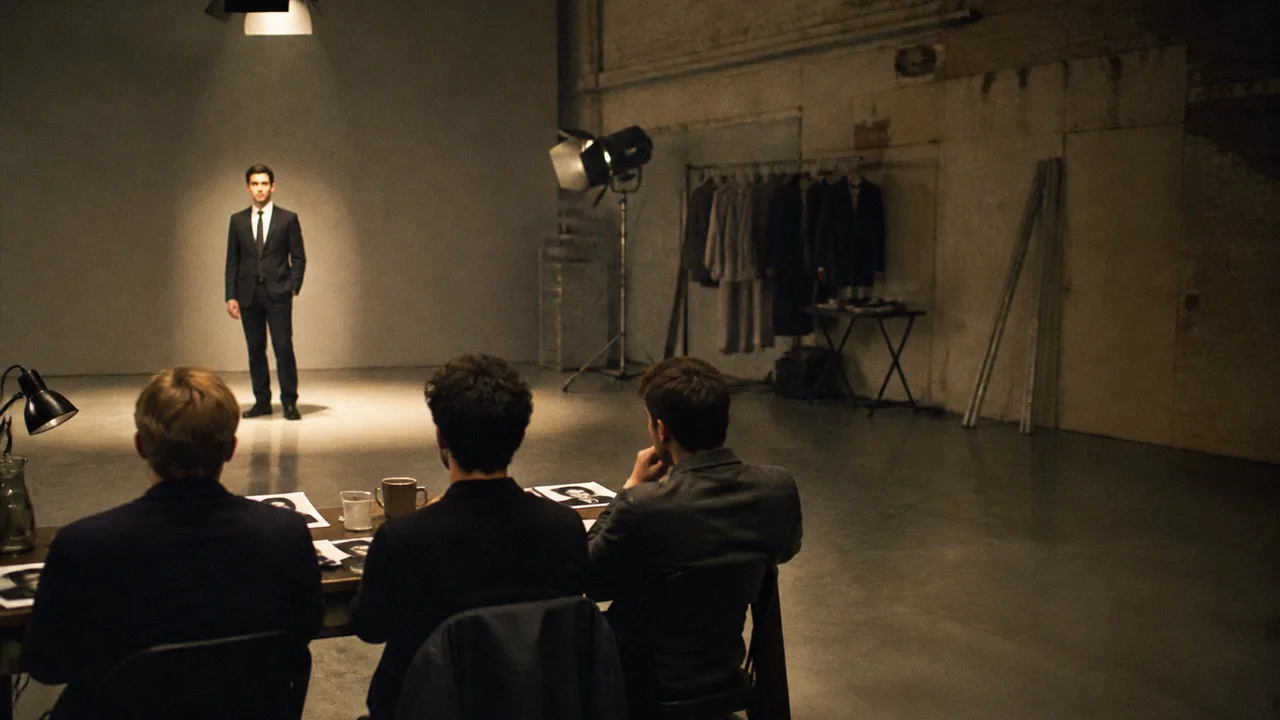
James Bond may be back in front of a camera this weekend, though the actor wearing his tuxedo remains undecided. Final screen tests for Amazon MGM Studios’ next 007 are expected within the coming week, possibly starting Friday. Callum Turner and Jack Lowden appear to be in the mix. A screen test sounds like a bureaucratic pause before the coronation; for Bond, it could be where an actor’s familiar appeal meets the stranger business of making this character work on film.
The tests are expected in London this weekend. The number of actors is anywhere from three to five. Amazon MGM has declined to identify participants, reiterating that its search is underway and that it will share news when the time is right. Those are the dimensions of the current news: an impending process, two names repeatedly linked to it, and no studio-approved shortlist. Bond’s license to kill has generated more confident predictions than a casting office can reasonably honor.
A third name, Josh O’Connor, comes with an extra qualification. Deadline identified him alongside Turner and Lowden among actors offered a chance to test, as relayed by The Playlist; he was not named among the people The Hollywood Reporter heard were involved. An offer to test and participation in a test are different stages. O’Connor is useful to this discussion as a reported possibility, rather than an actor already measured against the others in a confirmed audition.
A Tuxedo is a Costume; Bond is a Performance
The Hollywood Reporter’s sources describe three components for the upcoming tests: stunts, camera presence and dialogue. The extent of each remains unclear. Taken together, they suggest a more interesting question than whether someone looks persuasive holding a prop gun. Physical action asks for an actor whom the film can follow through danger. Dialogue asks that the same figure can carry a scene between dangers. Camera presence asks whether those qualities survive the unforgiving distance between a person in a room and a face on a cinema screen.
That is an interpretation of the reported test components, rather than Amazon MGM’s declared scoring system. The categories can reinforce one another, or expose an awkward seam. An actor might seem entirely at home with movement and suddenly become an ordinary person reciting instructions when asked to speak. Another might command a close-up yet leave the action to do the character-building alone. Bond needs the intervals as much as the set pieces: the audience has to keep watching after the stunt ends. A film can assemble action from shots, but its lead must also make the moments between those shots feel inhabited.
The last change of Bond offers a useful precedent. Roughly 20 years ago, auditions for the role involved full hair and makeup and a set equipped with camera and sound crews. Henry Cavill was among the contenders; Daniel Craig got the part, beginning with Casino Royale in 2006 and ending with No Time to Die in 2021. The production apparatus let decision-makers judge a prospective Bond as a filmed character, dressed and lit for the job, instead of judging a promising name on a list.
The comparison has a boundary. The Craig-era tests reportedly used a furnished production setup; the precise staging of this round remains unclear. It would be rash to picture this year’s actors reproducing Craig’s audition, much less to extract a formula for the winner. Casting Bond has previously involved watching a performer become legible as Bond through the camera. Public familiarity with an actor cannot perform that experiment for the filmmakers.
The stakes have also shifted since Craig arrived. His last film ended his tenure in 2021, and Amazon MGM acquired the Bond franchise’s creative rights from the Broccoli family in February 2025. Denis Villeneuve is directing the next outing, with Amy Pascal and David Heyman producing. Casting will introduce an actor and give audiences their first human figure through which to read this change in stewardship. It cannot tell us in advance what Villeneuve’s film will look like. It can, however, supply the face audiences will bring to their first encounter with it.
Three Associations, Three Incomplete Auditions
Lowden offers the most immediate shorthand: he plays River Cartwright in Slow Horses. That series has already put him inside an espionage story. The shortcut is tempting, because a spy credit lets viewers imagine him in Bond’s professional world without asking them to make the entire leap themselves. Yet the shortcut stops at the character’s name on a résumé. Having played one fictional intelligence operative shows that Lowden can inhabit that series; it cannot show how he would hold a Villeneuve close-up or deliver Bond’s dialogue.
Turner arrives by another route. His credits include Fantastic Beasts and the Second World War series Masters of the Air, as well as the romantic comedy One Night Only. Together they offer a broader public image: large-scale adventure, wartime drama and romance. Such range may help an audience picture him moving between the action and social encounters a Bond film might demand. It is still an image assembled from different productions, each with its own writing, editing and demands. A test puts those demands in the same room.
O’Connor’s route looks different again. His credits include The Crown, Challengers and The Mastermind; he also has a theater background. Those roles and that experience make him a useful counterexample to the assumption that a prospective Bond must already resemble the most familiar picture of one. An actor with dramatic range could bring a surprising register to the part. That possibility says nothing about what the filmmakers want.
Comparing those careers yields three starting points for a viewer’s imagination: the television spy, the actor with adventure and drama credits, and the performer associated with character-led work. It does not yield a ranking. Every candidate has credits made by other directors, for other characters, with scenes that were cut and assembled before an audience saw them. The test is one occasion for filmmakers to ask whether a performer can join action, speech and attention into a single screen presence for this film.
A casting choice also cannot settle every question about the new Bond. Villeneuve’s direction and the production surrounding the actor will help determine what 007 becomes. Craig’s history shows why the camera test can be valuable; Amazon MGM’s change of creative stewardship may give viewers another reason to scrutinize this choice. For now, the most revealing thing about the reported candidates is the distance between the Bonds viewers can imagine from their previous roles and the Bond that only a new film can make.
More Like This
Jack Lowden as James Bond: The Case for 007
Jack Lowden leads the Bond betting odds. His work in Slow Horses, Dunkirk, and Calibre suggests the franchise may have found its next 007.
Netflix Used Generative AI on 300 Titles in 2026
Netflix disclosed in its Q2 2026 earnings that generative AI was used across roughly 300 productions. Here's what we know—and what's still murky.

Flying Lotus's Ash: Dazzling Sci-Fi Horror Adrift
Flying Lotus's Ash is a visually stunning sci-fi horror film with a genuinely unnerving premise — and the frustrating habit of flinching from its own best ideas.