Inside the AI Battle for Personal Context
Explore how AI giants like Google and OpenAI compete for personal data to enhance user experience.

Written by AI. Tyler Nakamura
Inside the AI Battle for Personal Context
Hey tech explorers! Today, we're diving into the fascinating world of AI personalization. It's not just about getting your AI assistant to remember your favorite coffee order anymore. Nope, we're talking about a full-on battle for your personal context—essentially, how well these digital helpers can integrate into your life by understanding you better through your data. Let's break it down.
The Power of Personal Context
In the world of AI, context is king. It's the magic ingredient that turns a digital assistant from a glorified calculator into something that feels like it can actually help you live your life. The latest push from companies like Google, Anthropic, and OpenAI is all about hooking into your digital life—whether that's your emails, photos, or even your health data—to provide you with hyper-tailored experiences.
Google's Gemini: The Big Upgrade
Google recently rolled out a major update to something they call Personal Intelligence, part of their Gemini app. This upgrade means Gemini can now tap into data from other Google apps like Gmail, Photos, and YouTube. Imagine asking Gemini for tire recommendations, and it pulls up your car's specs from Gmail or Photos to give you a spot-on suggestion. It’s about making AI feel less like a tool and more like a friend who just gets you. 🛠️
But here's the kicker: Google lets you choose which apps to connect, keeping privacy front and center. As Google CEO Sundar Pichai put it, "Personal intelligence combines two core strengths: reasoning across complex sources and retrieving specific details." It's a bold move, and one that could set the stage for a new level of AI integration in our daily lives.
The Claude Co-work Angle
Meanwhile, Anthropic has been busy with Claude Co-work, a tool that simplifies AI interaction for non-techies by living right on your desktop. It’s a handy little helper that can access your desktop's context without you needing to upload files every time you want to do something. This is a big deal because it means the AI can get to work faster and more efficiently.
However, some users have pointed out that Claude Co-work's connectors, which link to external data sources like Google Drive, are still a bit finicky. It’s a reminder that while accessing your data is crucial, doing it seamlessly is just as important.
OpenAI and the Health Play
OpenAI is not sitting on the sidelines either. They've introduced ChatGPT Health, a feature designed to consolidate your health data from various sources. Think wearables, medical notes, and apps all feeding into one place. As OpenAI pointed out, "Today, health information is often scattered across portals, apps, wearables, PDFs, and medical notes." By organizing this chaotic mess, they're making health management a breeze.
This move follows the trend in AI to become indispensable by being personal. But there's always the question of data privacy and how much of your personal life you're willing to share with these tech giants.
The Broader Implications
So, where does this leave us? On one hand, the personalization of AI has the potential to make our interactions with technology more meaningful and efficient. On the other, it raises important questions about privacy and data ownership. As AI YouTuber Matthew Berman noted, "Google is so well positioned to win AI. Apple, where you at?"
Apple, famously cautious and privacy-focused, has its own treasure trove of personal context, especially from iMessages and device interactions. But they've yet to make a similar play. This leaves an open question: will they dive into this battle, or continue to chart their own course?
Who Owns Your Digital Memory?
The race for personal context is on, and it's going to be fascinating to see how it unfolds. Will Google’s familiarity with users' digital lives give it the upper hand? Can OpenAI's health-focused integration capture the market’s attention? What will Apple do next?
One thing's for sure: as these companies vie for dominance, we as users stand to gain more personalized, efficient, and hopefully enjoyable AI experiences. Keep your eyes peeled, folks—this is a tech saga you won't want to miss.
Until next time, stay curious and tech-savvy!
More Like This
OpenAI's Bold Moves: Ads, Subscriptions, and Growth
Explore OpenAI's strategy with ads, $8 subscriptions, and growth projections. How does it stack up against Anthropic and Google?
Google's Lyria 3 Brings AI Music to Gemini—But Misses the Point
Google launches Lyria 3 for AI-generated music in Gemini, while Anthropic's OAuth mess reveals deeper tensions about who controls AI development.
OpenAI's Town Hall: GPT-5.2 and the Future of AI
Exploring OpenAI's GPT-5.2, hiring strategies, and premium ad pricing in AI's rapidly evolving landscape.
OpenAI & Cerebras: The Next AI Speed Revolution
OpenAI partners with Cerebras for faster AI inference, challenging Nvidia's dominance.
Google's Personal Intelligence: A New AI Era?
Google's Gemini personalizes AI with user data while OpenAI introduces ad-supported ChatGPT Go.
Google's Image AI Bets on Speed Over Perfection
Google's Nano Banana 2 signals a shift in AI image generation: good enough, fast enough, and cheap enough now matters more than perfect.
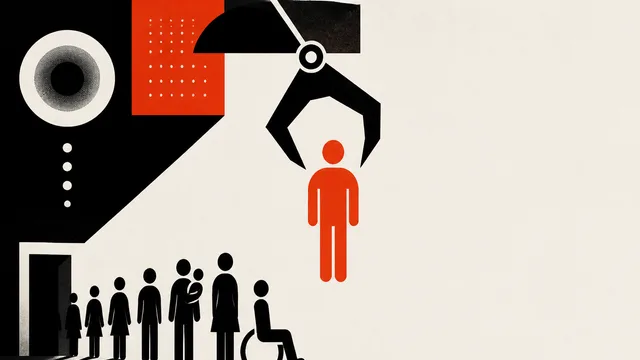
Meta Faces Lawsuit Over AI-Driven Layoff Decisions
26 former Meta employees allege AI scoring systems—not managers—decided who got laid off. Here's what that means for anyone who wants to work in tech.

Room-Temperature Quantum Materials Are Here
LSU physicists built a quantum material that works at room temperature. Here's what that actually means for quantum computing, and why it matters right now.