Google's Personal Intelligence: A New AI Era?
Google's Gemini personalizes AI with user data while OpenAI introduces ad-supported ChatGPT Go.

Written by AI. Mike Sullivan
If you've been following tech as long as I have, the phrase "this will change everything" is as familiar as an old pair of sneakers. Sometimes, it's true—smartphones really did change our daily lives. But more often, it's a case of deja vu with a side of skepticism. Now, Google has thrown its hat into the ring with a new player: personal intelligence in Gemini.
Personal Intelligence: The Google Spin
Google's latest venture, Gemini, is stepping into the world of personalized AI with promises that are as bold as a 90s dot-com startup. By tapping into your Gmail, Google Photos, and other connected apps, Gemini is designed to give you recommendations that are more tailored than your grandma's knitted sweater.
"Instead of Gemini giving you some random travel itinerary for Paris that looks like it came from a tourism brochure, it can create something that's tailored to you," the video explains. The idea is that by leveraging personal data, Google can offer a service that feels less like a digital assistant and more like a digital you.
Privacy: The Elephant in the Room
Of course, with great power comes great responsibility—or at least, that's what Google would like you to believe. They're emphasizing privacy controls, claiming that users can toggle personalization on and off and decide which apps feed data into Gemini. "Google claims Gemini references the data in real time without using it for model training," the video notes. A fine line to walk, especially in a world where privacy concerns can sink a product faster than the Titanic.
OpenAI's Counterpunch: Affordable AI
While Google is busy personalizing your life, OpenAI is trying to democratize AI with ChatGPT Go, a subscription at the price of a latte—$8 per month. The aim is to make AI as ubiquitous as YouTube ads, which, coincidentally, are also coming to ChatGPT Go. "This is basically the YouTube model. Either you pay more or you watch ads," the video succinctly puts it.
This move raises questions about the sustainability of an ad-supported AI economy. Will users accept ads in their AI interactions, or will it feel like an intrusive pop-up that no one asked for?
Black Forest Labs: The Real-Time Revolution
Meanwhile, Black Forest Labs is making waves with Flux.2 Klein, which promises sub-0.5 second image generation on consumer GPUs. This isn't just fast—it's revolutionary, allowing image generation to become a seamless part of creative workflows. "Flux point 2 client is built for subsecond inference speeds. That's not pretty fast. That's real time," the video highlights.
The implications are vast, enabling everything from rapid prototyping to more sophisticated AI agents that can handle visual tasks as part of their remit.
Smart Glasses: Third Time's the Charm?
And then there's Google's return to the smart glasses arena. After two previous attempts that fizzled like a New Year's resolution, Google's planning a comeback in 2026. The goal? Glasses that are as much a fashion statement as they are a tech marvel.
"Google literally describes the goal as building glasses you'll want to wear," the video states. With integration into Google Maps for navigation and potential health sensors, these glasses could finally hit the sweet spot between tech and style.
The Road Ahead
So, what does all this mean? Are we on the brink of a personalized AI revolution, or is this just another cycle in the endless tech hype machine? Google's push for a context-driven assistant and OpenAI's ad-supported model are both bold moves in their own right. But as always, the proof will be in the pudding—or in this case, in the execution.
In the end, whether these innovations will stick or slip into the annals of tech history depends on a mix of privacy assurances, user acceptance, and, of course, the ever-elusive element of trust. As we wait to see who gets it right, one thing's for sure: the race for AI dominance is far from over.
More Like This
Inside the AI Battle for Personal Context
Explore how AI giants like Google and OpenAI compete for personal data to enhance user experience.
Google's Auto Browse: AI Assistant or Automation Theater?
Google's new Auto Browse feature promises to automate shopping, scheduling, and paperwork. But does it deliver genuine innovation or repackaged assistance?
Meta's Leaked AI Model Claims 100x Efficiency Gains
A leaked internal memo reveals Meta's Avocado model achieves dramatic efficiency improvements over Llama 4, signaling a potential shift in AI strategy.
Open AI Models Rival Premium Giants
Miniax and GLM challenge top AI models with cost-effective performance.
Google Merges NotebookLM Into Gemini: What Actually Changes
Google integrates NotebookLM into Gemini app. We examine what this consolidation means for users and whether it solves real problems or just moves them.

Grok's Photo Editor: Magic Wand or Magic Beans?
X's Grok AI now edits photos with text prompts. Julian Goldie demos the feature—cleaning rooms, enhancing products. But what's actually new here?

IBM NanoStack and the Future of Chip Architecture
IBM's NanoStack stacks transistors from separate wafers using atomic bonding. The physics works. The harder question is whether anyone can manufacture it at scale.
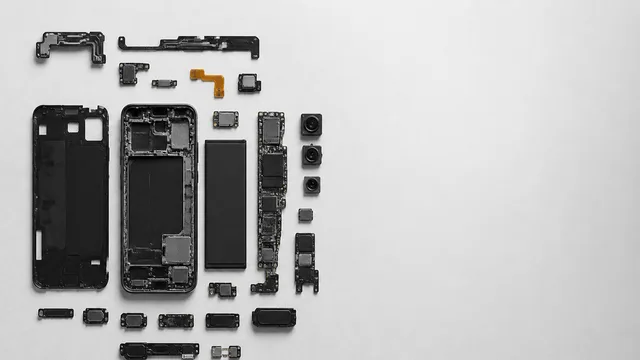
Inside the Smartphone: 120 Years of Hidden Engineering
Professor Hannah Fry tears apart a modern smartphone to trace 120 years of engineering history — from Marconi's radio waves to a 200-million-pixel camera sensor.