Harvey Tenet Legal AI Model: Cool Tech, Thin Proof
Harvey's Tenet model applies async RL to long-horizon legal tasks—genuinely interesting tech. But verified benchmarks are scarce. Here's what we know and what we don't.

Written by AI. Yuki Okonkwo
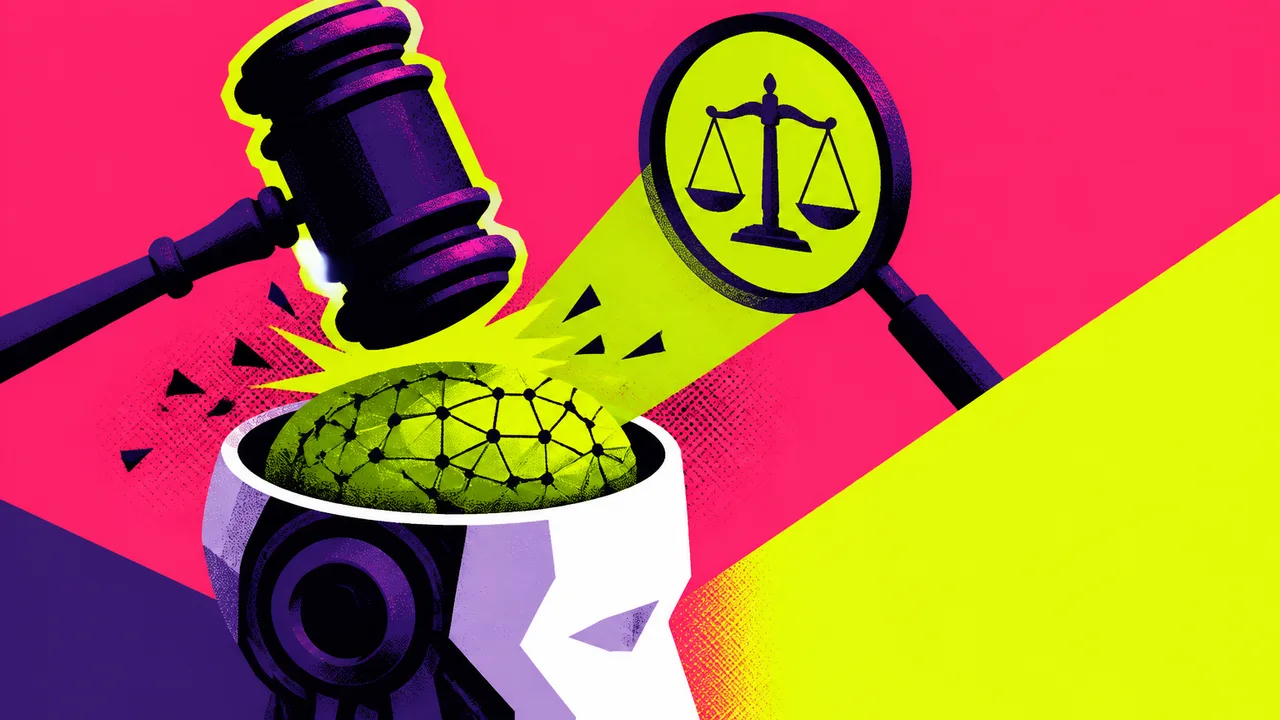
Okay, so I'll admit: when Harvey dropped the Tenet announcement, my first reaction wasn't skepticism. It was oh, that's a genuinely interesting training approach. Asynchronous RL on long-horizon legal tasks? That's not vaporware buzzword salad — that's a thoughtful framing of a real problem. My second reaction, roughly thirty seconds later, was: where's the receipts?
Both reactions turned out to be correct. And that tension is the whole story.
What Tenet actually is (and this part is legitimately cool)
Start with the technical setup, because it deserves more than a one-sentence mention.
According to Harvey's own blog, Tenet begins as a Kimi K3 base model — meaning Harvey didn't train from scratch, they started from an already-capable foundation and then post-trained it specifically for legal work. The training partner was Fireworks AI, and the method was asynchronous reinforcement learning on a corpus of publicly available legal data, synthetic data, and human expert data.
Here's why the async RL piece is worth slowing down on. Kingy.ai's breakdown puts it plainly: many agents attempted legal assignments in parallel. Think of it like having a hundred junior associates work through the same complex research problem simultaneously — not so you can average their answers, but so the system can learn, from thousands of attempts, what a complete, non-derailed run through a hard task actually looks like.
This matters because the failure mode in legal AI isn't usually "confidently wrong on a simple question." It's "starts a coherent memo and quietly goes sideways by paragraph seven." Long-horizon task completion — getting from intake to deliverable without losing the thread — is genuinely hard, and training specifically against that failure is a smarter approach than general-purpose fine-tuning. Artificial Lawyer describes the goal as setting agents on complex legal tasks "with the hope they can get from start to finish without going astray" — which is an honest summary of both the ambition and the uncertainty baked into it.
So: novel training setup, sensible framing of the actual problem, plausible mechanism. I find this stuff fascinating, and I'm not going to pretend otherwise just to seem appropriately skeptical.
Now for the part where I have questions
Here's the structure of the announcement: Harvey says Tenet works well for long-horizon legal tasks. Harvey also controls all the data about whether Tenet works well for long-horizon legal tasks.
MarkTechPost flagged this directly in an editorial note in their coverage — specifically cautioning that "scores change; re-verify before citing," and noting that Tenet is a post-trained Kimi K3 checkpoint, not a public open-weight release. No weights, no API. That's MarkTechPost's editorial read, not an independent audit — but it's a reasonable flag. If you can't run the model, you can't check the claims.
This is where it gets interesting in the way that "interesting" sometimes means "concerning." The closed-vs-open-weights debate in AI is genuinely unresolved, and there are legitimate arguments on both sides — proprietary models can be more carefully controlled, prevented from misuse, iterated on quickly. But there's a specific version of this argument that functions less like a principled position and more like a vibe: trust us, it works, we tested it ourselves.
It reminds me of when a band only lets you hear their album in a listening session they're hosting, in a room they've set up, through speakers they chose. Maybe the album is incredible! You genuinely can't tell yet. The experience of hearing it under those conditions is real, but it's not the same as independent verification.
For legal applications, this gap matters more than in most domains. Law.com's coverage notes the training combined synthetic data, publicly available legal data, and human expert data — a reasonable mix on paper, but the quality and composition of that training corpus is entirely opaque. Legal work is one of those fields where "trained on legal data" can mean anything from bar exam prep materials to nuanced deposition strategy. The distribution matters enormously.
The closed-model problem isn't new, but it hits different here
Most industries can afford to run a pilot, see if the AI tool saves time, and decide from there. If your AI-assisted inventory tool misfires, you catch it before the quarterly report. Legal work doesn't have a lot of "oops, let's try again" moments. A hallucinated citation in a brief isn't a bug you patch — it's a bar complaint.
So the standard ask from law firms isn't "can you demo this?" It's "can you show us — on our data, on our task types, with methodologies we can evaluate — that this performs?" Harvey's Tenet announcement, as currently structured, doesn't fully answer that. Harvey announced on X (without a verified link we can confidently stand behind, so take that as plain attribution) that Tenet was post-trained for legal work and performs well on long-horizon tasks. What the announcement doesn't include is what rigorous, independent reviewers made of those claims on tasks they designed.
That's not a knock on Harvey specifically — this is a pattern across the legal AI space. The verification infrastructure for AI performance claims in professional services basically doesn't exist yet, at least not at the scale the announcements would require. There's no equivalent of, say, the bar exam for AI legal agents — no shared benchmark that competing vendors all have to pass, run by people with no stake in the outcome.
The result is a trust market operating mostly on brand and case studies. Which, to be direct: I think that's a problem worth naming rather than normalizing. Law firms evaluating these tools are essentially being asked to do the independent verification themselves, with their own billable hours, on behalf of an entire profession. That's not a neutral ask.
What would actually change the story
The good news is that Harvey's technical approach is sound enough to be worth evaluating seriously — if evaluation were easier. Async RL on domain-specific long-horizon tasks is a coherent strategy for exactly the failure modes that matter in legal work. The underlying Kimi K3 base is a capable starting point. The Fireworks AI collaboration on the training infrastructure adds credibility to the process, even if we can't inspect the outputs.
What's missing isn't ambition. It's auditability. An open evals suite — even a partial one — covering the task types Tenet was trained on would let external researchers poke at the claims. Some form of access for independent researchers, even under NDA, would be better than "our internal benchmarks look great." Partnership with law schools or legal aid organizations on structured pilots would generate third-party signal without requiring a full open-source release.
None of this is technically impossible. It's a question of whether the incentive structure pushes toward it. Right now, it often doesn't — announcing a breakthrough gets coverage; releasing an honest benchmark that shows weaknesses invites criticism. Until the law firms and legal ops teams buying these tools start demanding that third-party evidence as a procurement condition, the incentives stay misaligned.
Harvey has built something that sounds like it might genuinely work. That's not nothing — the async RL approach to long-horizon legal tasks is tackling a real problem with a real method. But "sounds like it might genuinely work" is a different sentence than "works," and the legal profession — more than almost any other — needs to know which one it's buying.
More Like This

GPT 5.6 Sol vs Fable 5: Early Numbers, Real Tradeoffs
GPT 5.6 Sol is half the price of Fable 5 — but is it half as good? Early benchmark comparisons, alignment regressions, and the politics reshaping who gets access.

Tencent HY3 Reviewed: Free, Open Source, and Uneven
Tencent's HY3 is a free, 295B open-source model with real agentic strengths—but benchmark scores and real-world output quality tell different stories.
GPT-5.5 Is Great, But You Might Not Notice—Here's Why
OpenAI's GPT-5.5 dominates benchmarks and handles complex coding tasks, but many users won't feel the upgrade. We dig into the paradox.

Perplexity Launches a Legal AI Agent Built for Law Firms
Perplexity's Computer for Counsel integrates directly into legal workflows. Here's what the product actually does—and what the broader AI agent race means for professional work.

Kimi K3 Benchmarks vs. Real-World Performance
Moonshot's Kimi K3 posts frontier-class benchmarks, but early testing reveals real gaps in reliability, speed, and cost. Here's what the numbers actually show.

AI Leaderboards Are Lying to You About State-of-the-Art
Bertrand Charpentier of Pruna AI makes the case that 'state-of-the-art' is a broken concept—and that efficiency belongs in the same sentence as quality.

Claude Fable 5 Prompting Habits That Actually Matter
Nate Herk distilled Anthropic engineer insights into six Claude Fable 5 prompting habits. Here's what holds up, what's wild, and what it means for how you work.

Grant Sanderson on AI, Math, and What Comes Next
Grant Sanderson of 3Blue1Brown breaks down why AI is advancing fastest in mathematics—and what that jagged frontier tells us about everything else.