GPT-6 Astra Arrives: Benchmarks, Demos, and Open Questions
OpenAI's GPT-6 Astra scores 99.9% on ARC AGI 3 but lands fifth in aggregated rankings. Early access demos reveal what the conflicting numbers are missing.

Written by AI. Yuki Okonkwo
Photo: AI. Júlia Almeida
GPT-6 Astra scored 99.9% on ARC AGI 3. The average human tester scored 48%. Engadget reports that OpenAI is calling it "the most intelligent and aligned model in the world." Android Authority flags that the launch has already sparked AGI claims in some quarters. Let me tell you what I actually think that 99.9% means.
ARC AGI 3 tests how well agents learn to solve unfamiliar interactive tasks. It's specifically designed to resist pattern-matching, the thing LLMs are suspiciously good at. GPT-5 scored 7.8% on it. The jump to 99.9% in a single generation is so large it stops being a benchmark result and starts being a signal that the benchmark is done. When a model saturates an evaluation, the evaluation stops telling you anything useful about the ceiling; it tells you the floor just moved. The AGI framing this is generating is premature, and here's my actual concern with it: ARC AGI 3 is still a structured evaluation with knowable parameters, and the history of AI benchmarks is a history of models acing tests and then surprising us with gaps nobody thought to measure. Calling this AGI because a benchmark got solved is like declaring the map finished because you ran out of blank space.
Still, I can't just shrug at the number.
The contradiction nobody's resolving
Matt Wolfe, who got early access and documented his first look in detail, flagged something that stuck with me. Artificial Analysis, which aggregates scores across multiple benchmarks and weights them, puts GPT-6 in fifth place, roughly tied with GPT-5.6. Meanwhile, Wolfe says using the two models back to back feels like "a big leap." He's skeptical of his own skepticism: "if you've used 5.6 and then you use six, it definitely feels like a big leap, which makes me sort of question the legitimacy of this benchmark just a little bit."
The aggregated benchmark isn't wrong. It's an average, and averages flatten things. GPT-6 Astra scores 74.1% on SWE-bench, a coding benchmark built around real software engineering tasks, which puts it at or near the top of that leaderboard. But Wolfe cites Meta's Muse Spark 1.3, sourced from Meta's own website, at 75.4% on the same test, meaning GPT-6 is narrowly behind a model that launched the day before. (Wolfe notes that Muse Spark 1.3 hadn't yet appeared on the independent SWE-bench leaderboard at time of recording, so treat that figure as Wolfe's reported number rather than independently confirmed.)
Then Wolfe ran both models through a visual coding test: generate an SVG portrait entirely through code, no image assets. GPT-6 Astra wasn't close to comparable. "I don't even think they're close," he said.
So the picture is a model that's excellent at creative-technical output and less dominant than the raw SWE-bench number suggests at code correctness tasks. That gap makes sense when you realize "coding" in one benchmark means solving isolated software engineering tickets and in another means generating a visually coherent interactive world from prose. Neither is the whole picture. This is the structural tension that kept showing up with GPT-5.5: official numbers and felt experience diverging, with both sides capturing something true.
What the computer use demos actually show
The clearest signal in Wolfe's first look isn't a benchmark number. He told GPT-6 Astra to open Blender, build a humanoid wolf from scratch, rig it with bones, and animate it running, all through natural language prompts. No Blender experience required on his end. The model took control of his computer, executed the entire sequence, and produced something functional if imperfect: "a 50 bone rig and an 8-second looping animation." Then he prompted it to take that wolf into Unreal Engine and build a playable forest world around it. Thirty-five minutes later, he was running around as a wolf in a place called Whisperwood.
Wolfe is upfront about the quality: "the hammer animation is kind of leaving a little bit to be desired" and professionals who actually know Blender will not be impressed. But that framing underweights what he demonstrated. The bottleneck he removed wasn't polish; it was the entire learning curve for two professional-grade creative tools. That's end-to-end autonomous task completion across unfamiliar software interfaces, and it's what makes the ARC AGI 3 number feel less like a press release stat and more like something that correlates to actual behavior.
The speed stood out too. Wolfe's Mega Bonk 3D clone took 8 minutes where previous models needed 90. He's careful to flag that limited server load during early access may have contributed, and that caveat matters; we won't know if that speed holds at scale until the full rollout reaches all ChatGPT Plus, Pro, Business, and Enterprise users over the coming days.
Matt Berman, another early tester Wolfe highlights, built playable planet-exploration worlds and a Fall Guys-style obstacle course clone, all coded in 3JS without separately created assets. The output quality in these demos is what finally explains the gap between Wolfe's felt experience and the Artificial Analysis ranking: aggregated benchmarks aren't weighting creative-generative tasks heavily, and that's where GPT-6 Astra appears to have moved furthest.
The AGI conversation, and what I'd watch instead
Fast Company calls Astra OpenAI's "most capable and controversial model yet," and the AGI framing circulating on X will only get louder as more demos land. I find it more interesting to ask what the 99.9% ARC AGI 3 score predicts about behavior in the wild, rather than whether it clears some definitional bar. The Whisperwood demo is more convincing to me than the benchmark number, precisely because nobody designed it as a test. Wolfe just typed a prompt. The model planned, navigated two unfamiliar applications, and produced a playable artifact. That's a different kind of capability, and it's the kind that doesn't show up cleanly in aggregated rankings.
Wolfe's frustration, and the real test
Wolfe noted the day before this launch that constant model releases had become frustrating because the leaps felt incremental. He carved out a separate video for GPT-6 Astra because it broke that pattern for him: "This one does to me feel like a bigger leap. It's one of the models I've had more fun with than others."
That subjective signal matters in a moment when the official numbers keep creating confusion about where models actually stand. Wolfe tests models constantly and his reference point is calibrated. When he says this felt different, and he can point to a playable game built in 8 minutes and a wolf running through a forest he didn't design as evidence, that's data aggregated benchmarks don't capture.
The question this launch leaves me with: does GPT-6 Astra at full public scale, under real usage load, with the entire Plus and Pro user base running prompts simultaneously, still feel like a leap? Early access impressions are always shaped by an uncrowded server. The gap between fifth place on Artificial Analysis and Wolfe's felt experience will either close once the crowds arrive, or confirm that this model's strengths are genuine. That answer starts arriving in the next few days. Watch for it.
More Like This
Five AI Models Dropped This Week—Here's What Changed
Anthropic's Claude Sonnet 4.6, Google's Gemini 3.1 Pro, and xAI's Grok 4.2 all launched this week. What do these updates actually mean for users?
AI Can Write Code, But Can It Make Software Stop Sucking?
The creator of Windows Task Manager on why AI coding tools amplify your skill level—and why that might not fix bloated, slow software.

OpenAI Launches GPT-5.6 Sol, Terra, and Luna Models
OpenAI's GPT-5.6 family—Sol, Terra, and Luna—is rolling out globally. Real users, real tasks, real questions about what "capable" actually means.
OpenAI's Town Hall: GPT-5.2 and the Future of AI
Exploring OpenAI's GPT-5.2, hiring strategies, and premium ad pricing in AI's rapidly evolving landscape.

Claude Opus 4.8: Impressive Demos, Marginal Gains
Anthropic's Claude Opus 4.8 lands with better honesty, effort control, and stunning demos—but is the token cost worth marginal gains over Opus 4.7?

Qwen 3.8 Max: Alibaba's Open-Weight Gambit
Alibaba's Qwen 3.8 Max launches as a 2.4T parameter model—and the open-weight 27B release alongside it may matter more than the flagship itself.
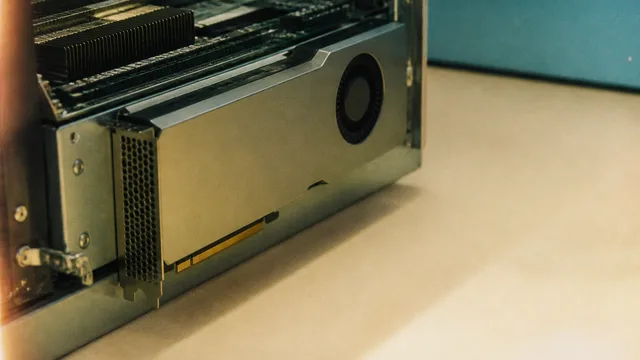
AMD Instinct MI350P: 144GB HBM3E in a PCIe GPU
AMD's Instinct MI350P brings 144GB of HBM3E and 3.6TB/s bandwidth to standard PCIe servers. Here's what it means for the mid-market AI infrastructure gap.

How Optimization Powers Modern AI and Engineering
From training ChatGPT to imaging black holes, optimization is the hidden engine behind modern AI and engineering. Steve Brunton's lecture explains how.