Gallup Links AI Companionship With Youth Loneliness
Gallup links Gen Z reliance on AI friendship to higher loneliness odds among young people with digital-only ties, raising questions about cause and connection.

Written by AI. Marcus Chen-Ramirez

More than a third of Gen Z respondents say they rely on AI for friendship. Young people with online-only friends or AI social companions have higher odds of loneliness than those without those connections, Gallup said. That pairing invites an obvious question: Is a chatbot helping someone feel connected, or taking up space where a person might be?
The reported association cannot answer that causal question; the account does not give the survey’s sample, question wording or the size of the differences. Those details would help clarify how broadly the results apply and whether “rely on AI for friendship” means occasional conversation or something closer to a daily social routine. Someone who feels lonely may seek an AI companion. Someone who uses one may also have close human friends. The finding places both possibilities on the table.
The temptation is to turn the number into a verdict on young people: one third have apparently traded friends for software. But “rely on” describes a relationship to a tool, not a schedule of abandoned plans. A student might ask a chatbot for advice before talking to a friend. Another might open it because there is nobody they feel able to call. Those are different experiences, even if a survey response puts them in the same category.
Two Types of Digital Company
The comparison brings together online-only friendships and AI social companions. They share a screen, but the social exchange works differently. An online friend can have their own needs, change their mind, leave a conversation unfinished and remember a shared history. An AI companion generates replies through software. Its apparent availability can be useful at an awkward hour; it also makes demands on the user differently from a person who has a life outside the chat.
Physical proximity is another variable. An online-only friend might offer emotional support across a long distance while being unable to help with a local problem. A nearby acquaintance might be able to show up in person but know little about someone’s private worries. Counting either relationship as a simple unit of “connection” hides what each can and cannot provide.
That is why the reported loneliness pattern needs more than a count of contacts. A person can have a busy group chat and still want someone to have dinner with. Someone else can live far from their closest friend and feel understood every day. Loneliness concerns the gap between the relationships a person wants and the relationships they experience. The location of a friend, or the presence of a chatbot, gives only part of that picture.
The strongest concern about AI companionship follows from its design. A system built to keep a conversation going can offer a quick, agreeable response whenever a user opens it. For a person who already finds human contact difficult, that predictability may make a harder conversation easier to postpone. The cost would show up outside the chat, in plans never made and relationships left unattended.
There is a strong case for the same tool serving a different purpose. Someone could use a chatbot to rehearse an apology, put words to a problem or get through a lonely evening before calling a friend tomorrow. In that case, the chat sits alongside human relationships. Its value depends on what the person does next, not simply on whether they used it.
Who Gets to Define Friendship?
“Friendship” is doing considerable work in a question about AI. People use the word to describe mutual commitments, casual conversation, comfort and companionship. A respondent who says they rely on AI for friendship might mean that it offers an attentive exchange when no one else is awake. Another might feel attached to a character they return to every day. Neither answer tells us, by itself, how many friends that person has or what those friendships are like.
For a company building conversational products, those meanings can blur together in the interface. The software can remember details, respond in a familiar tone and make another conversation easy to start. Those features may help a user feel understood. They also create a commercial question: when a product benefits from continued use, how does its maker decide whether a conversation should continue or point the user toward someone else?
That question does not require assuming that every AI companion is engineered to isolate its users. It asks what a product is rewarded for doing. Time spent chatting is easy to observe. A repaired friendship, a new club joined or a call finally made happens elsewhere. If companies use engagement as their main measure of success, they may miss outcomes that matter more to users’ social lives.
The same problem has a familiar shape. Earlier debates about social media often treated screen time as though every minute displaced a minute with friends. Yet a screen can carry a friendship, arrange an in-person meeting or fill a period of isolation. Conversational AI complicates the old argument because the system itself can play the role of the correspondent. The user may still be seeking connection, but the other end of the exchange belongs to a product.
What to Ask Before Calling It Help
A better account of AI companionship would follow what happens around the conversation. Do people turn to a chatbot after a difficult interaction, or instead of having one? Does a chat help them make plans with others? Do users feel relief for an hour and isolation the next day? Do the answers change for someone with a dependable circle of friends versus someone with no reliable person to call?
These questions also apply to online-only friendships, with different stakes. A friendship maintained through messages could be someone’s most dependable source of support. It might also leave practical needs unmet when help requires a person nearby. Asking how each relationship functions gives a fuller picture than treating the internet as a separate, lesser social world.
Parents, educators and product makers may all want a simple rule: encourage the chats or discourage them. The choices in front of a young person are less tidy. An AI companion can be available when a friend is busy, while a friend can offer reciprocity a product cannot. The issue is whether the first interaction helps someone reach the second when they want it, or makes that step easier to avoid.
Gallup’s reported figure puts AI friendship well beyond an obscure use of chatbots among Gen Z respondents. The next test is what happens after the chat window closes: whether someone has a person to reach, and whether they feel able to do it.
More Like This

Google's Open Knowledge Format for AI Agents
Google's Open Knowledge Format promises to fix how AI agents navigate knowledge bases. Here's what it actually does, what it doesn't, and why the structure matters more than the tool.

Claude Marketing Skills Ranked by GitHub Stars (2026)
Which Claude Code marketing skill repos actually earn their stars? We map the top packages—from CRO to paid media—and ask what GitHub popularity really measures.
Karpathy's Obsidian Setup Challenges RAG Orthodoxy
Andrej Karpathy's markdown-based knowledge system questions whether most developers actually need traditional RAG systems at all.
Tech Career Decisions: What to Know Before 2026
Marina Wyss breaks down seven tech roles—from software engineering to applied science—through a decision tree based on personality, not just skills.

AI Can Sound Like Therapy. Here's Where It Falls Short
A chatbot can mirror your words and feel validating. Why clinicians say that sense of being understood is not the same as assessment, alliance or accountable care.
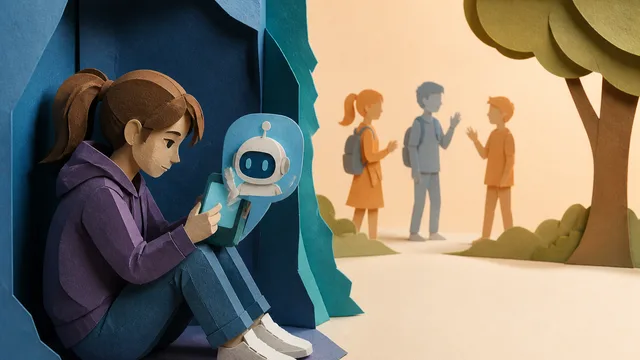
Teens Are Turning to AI Companions. Now What?
AI companions promise teens a safe space to connect—but do they help with real-world social skills or quietly replace them? Here's what the research actually says.

Two Chinese AI Labs Converge on the Same Architecture
Z.ai and Qwen independently built models with nearly identical designs. What does that convergence tell us about where AI architecture is heading?

Google Gemini 3.5 Transcribe Resets Speech-to-Text
Google's Gemini 3.5 Transcribe posts a 2.6% word error rate across 85 languages. Here's what those numbers mean—and what they leave out.