Fred Astaire Biopic Puts Adele Back in the Picture
Paul King's Fred Astaire biopic casts Tom Holland, Margaret Qualley and Sabrina Carpenter, while bringing Adele Astaire's forgotten career into view.

Written by AI. Theodore "Teddy" Ashworth III
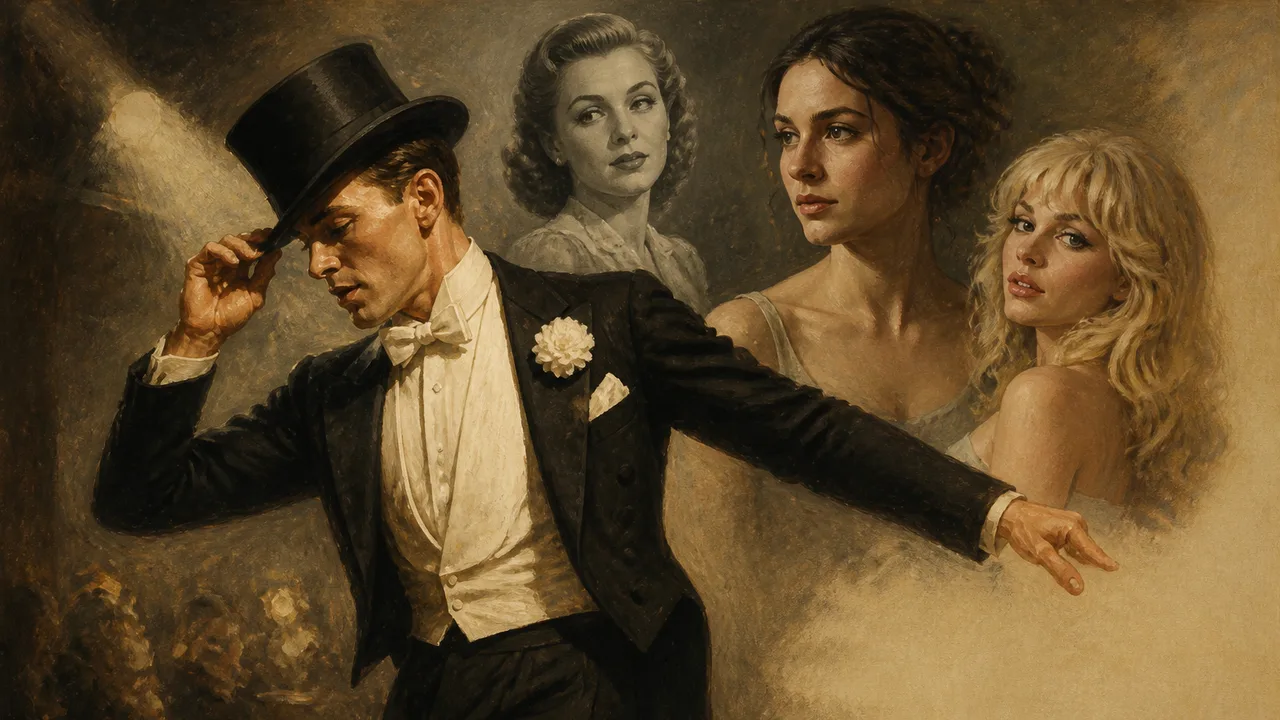
Margaret Qualley will play Adele Astaire opposite Tom Holland’s Fred in Sony Pictures’ still-untitled biopic, with Sabrina Carpenter cast as Ginger Rogers. Variety’s casting report gives the project an enviable triangle: the great stage partner, the great screen partner and the man who danced with both.
The names naturally arrange themselves according to present-day celebrity wattage. Holland is Spider-Man. Carpenter is a two-time Grammy winner. Qualley is the actor trusted with Adele, a performer whose reputation survives without the assistance of a surviving dance film. Paul King, who is directing, said in a statement that Adele’s work has been “lost to history” and that no footage of her dancing survives.
That absence supplies the film with its most intriguing problem. Fred Astaire and Ginger Rogers can be studied frame by frame, their turns replayed until the parquet flooring files for workers’ compensation. Adele has to be approached through biography, theatrical history and the testimony left by people who saw or knew her work. A movie about her must invent movement where the archive offers none.
Two Partners, Two Kinds of Immortality
Fred and Adele Astaire were major performers on Broadway and in London’s West End during the 1910s and 1920s. Adele, born in 1896, was three years older than Fred, and retired from performance in 1932. Fred then moved into the Hollywood career that fixed his image in cultural memory: white tie, tails, immaculate rhythm and the miraculous suggestion that gravity had signed a non-aggression pact.
He made 10 films with Rogers, including The Gay Divorcee, Top Hat, Swing Time and Shall We Dance, according to NME’s account of the production. Those films preserved a partnership as performance rather than reputation. Viewers can see how Rogers answered Astaire’s phrasing, how a number occupied a room and how two bodies created a shared rhythm.
Adele’s career reached audiences through live performance, whose great virtue is presence and whose historical drawback is evaporation. Her 1932 retirement preceded Fred’s defining screen partnership with Rogers. The result is an asymmetry created partly by chronology and medium: one collaborator survives in 10 films, while the other survives through written accounts and a famous surname.
That comparison has limits. Adele and Rogers worked with Fred during different phases and in different media; one cannot be treated as a rough draft of the other. Yet their unequal visibility explains why the casting of Qualley carries so much narrative weight. Carpenter inherits performances audiences can revisit. Qualley inherits a gap.
What the Production Appears to Be Building
King and Steven Levenson wrote the screenplay from Kathleen Riley’s 2012 biography The Astaires: Fred & Adele. Riley is also serving as a story and script consultant, while The Hollywood Reporter identifies the book as the screenplay’s basis. Those choices place the sibling partnership inside the project’s architecture rather than around its decorative edges.
Fred Astaire’s daughter, Ava Astaire McKenzie, has likewise described the film as a celebration of “my father and aunt.” Her son Tyler McKenzie is a consultant and co-producer, while Ava is supporting the production, Billboard reported. Family participation cannot guarantee accuracy or dramatic quality. It does show that the production has access to people invested in presenting the Astaires as a partnership.
Taken together, the source book, Riley’s consultancy, King’s statement and the family’s language support a reasonable inference: Adele will occupy more than the dutiful first-act role usually assigned to the relative who knew the genius before fame arrived. The released material frames Fred’s history through two partnerships, with Adele providing the earlier and less familiar half.
That remains an inference. No public screenplay establishes how much screen time Qualley, Carpenter or Holland will receive, and Sony has announced no release date. A title may eventually tell us whether the studio intends to market a sibling story or a conventional Fred Astaire biography. For now, the production’s personnel reveal more than its branding does.
The Marquee Names Are Doing Different Jobs
Carpenter’s casting will attract the broadest pop-cultural attention, and skepticism about celebrity casting comes free with every Grammy-winning musician who approaches a soundstage. She does, however, have an acting career that predates her current pop stature, including Girl Meets World, The Hate U Give and Work It. Calling her presence stunt casting before footage exists would require ignoring that résumé with considerable determination.
Holland brings an even more conspicuous bridge between celebrity and technique. He performed in the West End production of Billy Elliot the Musical from 2008 to 2010. In July, he said rehearsals had begun and expressed a desire to perform without dance doubles, shooting dances in single takes as Astaire did. Vanity Fair quoted Holland describing the prospect as both exciting and dreadful, a sensible response to volunteering for comparison with Fred Astaire.
The no-doubles ambition could serve more than actorly bravado. Long takes allow viewers to see continuity, partnership and the whole body at work. If King applies that approach to the Fred and Adele sequences, the film will have to create a plausible dance relationship without being able to copy surviving footage. Holland and Qualley would be reconstructing the logic of a partnership, rather than reproducing familiar steps for applause.
Qualley’s task may be the strangest of the three. Holland can study Astaire. Carpenter can study Rogers. Qualley must embody a performer whom the audience cannot check against a recording. That freedom carries danger: invention can slide into wishful portraiture, turning an elusive historical figure into whatever the screenplay requires. Riley’s involvement may help tether the characterization to biography, although consultation does not settle how a finished film will balance evidence and dramatic convenience.
A Biopic with an Archival Hole at Its Center
The familiar musical biopic arrives with a catalogue of performances ready for recreation. Costumes, choreography and camera angles can summon recognition before a scene has produced an idea of its own. Adele’s missing footage removes that safety rail. King cannot offer the simple narcotic of imitation because viewers have no famous Adele routine waiting to be copied.
That constraint may prove fruitful. It invites the film to ask how reputations are made, and why cinema remembers some performers more vividly than the stage can. Fred and Rogers became endlessly reproducible images. Adele’s fame belonged to rooms full of people who eventually left those rooms.
The film could still retreat into polished heritage cinema, with a formidable cast burnishing an approved legend until everyone gleams like hotel silver. Family involvement and a biographical source can support rigor, but they can also encourage reverence. King’s work on Paddington and Wonka shows an appetite for elaborate, affectionate spectacle; whether that sensibility can accommodate the uncertainty surrounding Adele remains open.
The casting announcement nevertheless gives audiences a useful standard for judging the eventual movie. Its success will depend on more than Holland approximating Astaire’s ease or Carpenter reproducing Rogers’s poise. The harder assignment belongs to Qualley and King: they must make Adele vivid while admitting, somewhere in the film’s bones, that the original dance has disappeared.
More Like This

Bookpilled's Vintage SFF Deep Dive Is Worth Hearing
Bookpilled's 28-minute tour of 20 obscure sci-fi and fantasy books is provisional criticism done out loud — and that's exactly what makes it worth your time.
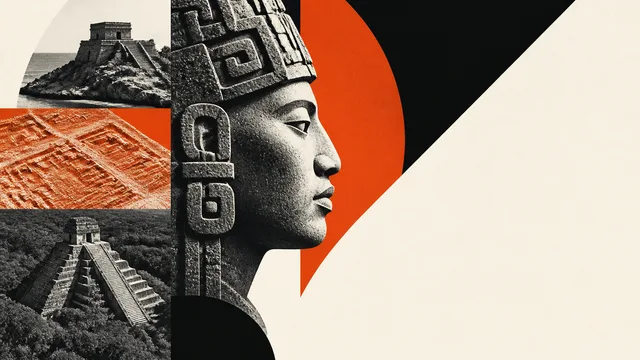
The Last Maya Cities: Tulum, Mayapan, and Cobá
A new documentary examines Tulum, Mayapan, and Cobá—the final Maya cities—through archaeology, LiDAR mapping, and a more complicated story of collapse.