EasyJet’s Starlink Rollout Leaves Wi-Fi Pricing Open
EasyJet plans Starlink Wi-Fi on 292 aircraft from 2027, but access pricing is undecided. Vueling and Ryanair show why use alone cannot settle the economics.

Written by AI. Tomas Reyes-Kim
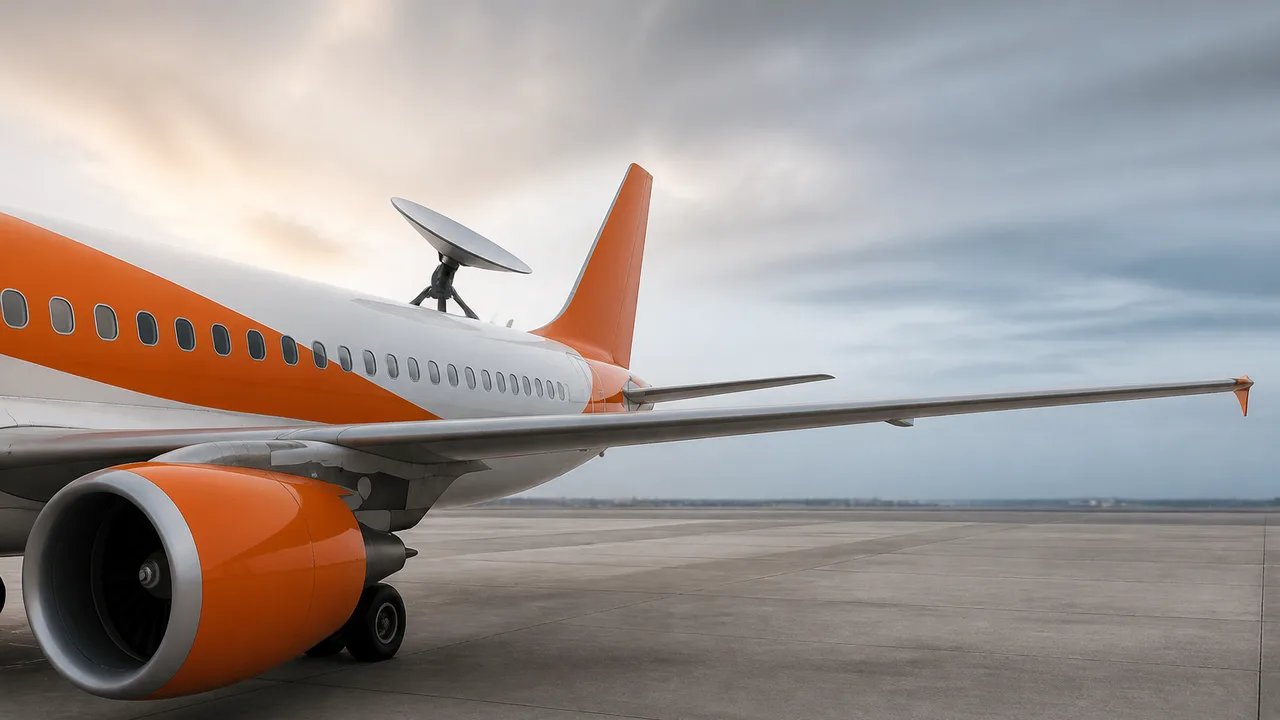
EasyJet plans to put Starlink Wi-Fi on 292 aircraft, starting in the first half of 2027. For a passenger weighing up two cheap flights, the immediate question is less glamorous than the satellite network: what will getting online cost?
Installations are scheduled across the airline’s A320, A320neo and A321neo aircraft, with the rollout expected to finish in early 2028. EasyJet has not announced whether passengers will get access free, pay for it, or encounter some combination. The airline told FlightGlobal that details on access, including pricing, will come as the first aircraft are equipped.
That leaves two separate bets inside one announcement. EasyJet is betting that connectivity improves its offer to passengers. It is also committing to an installation programme whose commercial return cannot yet be judged from the announced timetable, fleet size and access details. Those details give no passenger price or contract cost to put beside actual use once the service launches. A working connection could be handy even if few people would pay extra for it; a popular free connection could make sense to an airline for reasons beyond selling Wi-Fi passes. Those are possibilities, not EasyJet’s financial plan.
From Zero Connections to a Fleet Rollout
The starting point helps explain the size of the change. In January 2026, CAPA’s Fleet Database put onboard internet on 21% of Europe’s short- and medium-haul jets. CAPA listed EasyJet, Ryanair and Pegasus among major low-cost operators without it. That percentage describes aircraft equipped at the time, rather than passengers using Wi-Fi or the share of flights equipped today. EasyJet’s October decision moves it away from its own no-Wi-Fi starting point; the planned aircraft have yet to be fitted.
CAPA also found that charging for internet was the most common approach on connected European flights, while many airlines offered free messaging. Its snapshot helps explain why “Wi-Fi on board” has never been a complete description of what a traveller can do. Sending a message, opening a work file and streaming a film may involve different access rules. EasyJet says its Starlink service is intended to let customers stream, game and browse on their own devices. The airline has yet to say what access to those activities will look like on a booking receipt.
Earlier in 2026, after talks with SpaceX, EasyJet said the “economics aren’t quite working for us”. The airline then announced the rollout on October 26. Its announcement gives no explanation of that change or the contract terms. A better offer from SpaceX, a revised view of passenger demand and a broader competitive calculation would have different implications, so there is no responsible way to pick a winner from those explanations.
EasyJet’s older A319 aircraft are outside the Starlink plan as the airline replaces them. That makes “rollout complete” in early 2028 a statement about the aircraft in the announced installation programme, rather than a promise that every EasyJet plane flying on that date will have internet. If connectivity is important to a trip, check the service details for the flight when booking and again before departure; the airline has announced a phased installation, not a switch that turns the whole fleet on overnight.
Three Approaches to the Same Short Flight
Vueling offers a useful comparison because it is another European low-cost carrier that has already started connecting aircraft. It introduced free in-flight Wi-Fi with Viasat in October 2025. Vueling and its partners said the service had reached more than 80 aircraft and recorded more than one million online sessions by April 2026. People used a free connection when it was offered. Without a count of eligible passengers or a definition of a session, that total cannot tell us what proportion connected; a free session cannot tell us what anyone would have paid, either.
Ryanair has chosen to stay offline. Its chief executive, Michael O’Leary, put the airline’s short-flight argument this way, as quoted by One Mile at a Time: “we don’t think our passengers are willing to pay for Wi-Fi for an average one-hour flight.” That is a coherent commercial concern for an airline selling short trips. It is O’Leary’s assessment of his customers, rather than a measure of what EasyJet’s passengers would spend.
Put the three positions next to each other and the question gets sharper. Vueling’s free sessions show use at a price of zero to the passenger. Ryanair doubts its customers would pay on a short flight. EasyJet has committed aircraft to Starlink without announcing an access price. They operate in the same broad short-haul market, but Vueling uses a different connectivity system and their passengers need not value internet alike. For this comparison, the cited figures cover free sessions, an executive’s view and an installation plan, with no like-for-like costs or paid-use rates in that mix. A scoreboard based on session totals versus an executive quote would be doing spreadsheet cosplay.
A session count also skips the traveller who never opened the Wi-Fi page. To compare uptake across flights, you would need to know how many passengers could have connected, not just how many connections were recorded. A paid service would add another question: how many of those eligible passengers bought access at the stated price? Vueling’s free sessions and Ryanair’s willingness-to-pay argument sit on opposite sides of that question. EasyJet’s eventual access rules will determine which question its own usage figures can help answer.
There is a passenger angle beyond whether a Wi-Fi pass appears at checkout. EasyJet says connectivity could provide flight-status and destination information through its app and could eventually let customers order from the onboard menu on their devices. The menu feature is described as potential, rather than a service promised for the first equipped flight. For someone trying to finish work, free messaging would be a different proposition from unrestricted browsing; for someone planning to stay offline, a Wi-Fi announcement alone gives no reason to assume their ticket price or onboard routine will change.
For the airline, the useful measures will differ from the passenger’s. How many eligible passengers connect, what they can do when they connect, what access costs them and how reliably it works would show whether the service is useful on an equipped flight. To assess the business decision, those figures would have to sit alongside the costs of installing and operating it and any effect on ticket choice or onboard spending. EasyJet has described Wi-Fi as an option both business and leisure travellers want when choosing an airline. Whether that option pays for itself is a further question, especially if the eventual passenger price is zero.
The first equipped aircraft in 2027 will answer the simplest question: can an EasyJet passenger get online? The access rules will answer the one a budget traveller needs before choosing a fare: what, if anything, will it cost to use?
More Like This

Wildfires Are Reshaping Europe's Summer Holiday Map
Wildfires in Spain and France are pushing travelers toward shoulder seasons and cooler destinations. Here's what the data and experts say about Europe's shifting tourism.

Cruise Travel Insurance: What It Covers and What It Doesn't
Before you click "add insurance" at cruise checkout, here's what cruise travel insurance actually covers—and where it quietly leaves you exposed.