Digger’s Box Office Flop Tests Hollywood’s Appetite for Risk
Tom Cruise’s Digger has drawn fierce debate despite weak ticket sales. Ben Affleck fears a retreat from risk, but a flop tells only part of Hollywood’s story.

Written by AI. Theodore "Teddy" Ashworth III
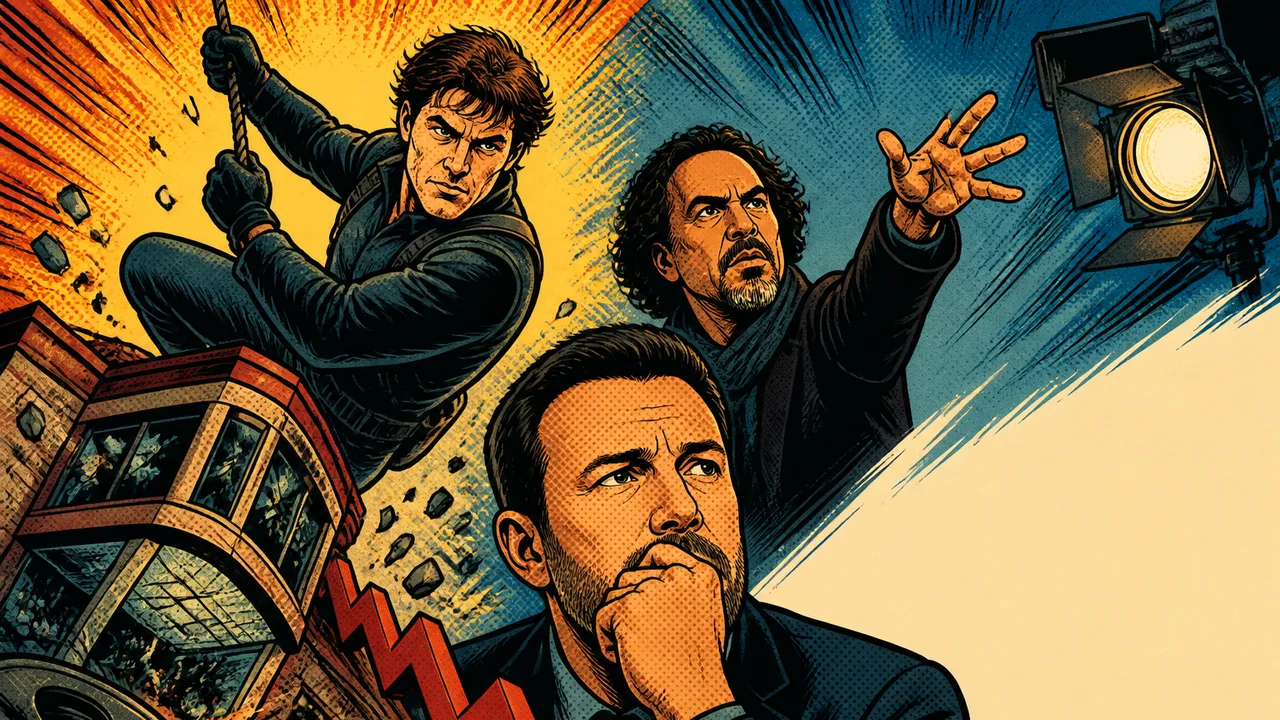
Digger earned $35.3 million worldwide in its first two weekends, a painful result for a Tom Cruise film whose reported production budget ran into nine figures. The number has become the opening line in a larger argument: when an expensive, unusual film fails, does Hollywood learn to make fewer of them? Ben Affleck fears that it does. Yet the commotion surrounding Alejandro G. Iñárritu’s environmental satire also shows how many questions a box-office total gets asked to answer.
The commercial result needs little embellishment. Digger opened to $8 million domestically and $20 million worldwide, then saw ticket sales fall 60% in its second weekend. Its domestic total reached $14.4 million, with the worldwide figure at $35.3 million. Warner Bros. faces a projected theatrical loss of $245 million. That loss is a forecast, rather than a settled account of the film’s eventual finances. The ticket totals, meanwhile, describe a theatrical audience that has fallen far short of the scale of this release.
Digger opened in more than 3,300 North American theaters, while its reported production budget was $160 million to $180 million. The film puts Cruise, long associated with blockbuster spectacle, in an R-rated satire about an oil tycoon responsible for an environmental disaster. A large theatrical rollout and a large budget invite an immediate verdict in dollars; the film’s subject and its maker invite a different conversation. Neither audience owes the other a conversion.
Affleck entered that conversation on Josh Horowitz’s Happy Sad Confused podcast. He compared the pleasure some people took in the failure to “high-school bullying” and argued that punishing ambitious films would yield “a bunch of s**tty homogenized movies,” as quoted by IGN. His strongest point concerns incentives. If executives treat a costly miss as a warning against backing unusual work, and the public turns that miss into a punchline, the next proposal may have a harder time finding money. He is defending the conditions that allow films to take a swing, rather than asking anyone to buy a ticket out of charity.
The immediate financial objection deserves equal precision. A studio can reasonably ask whether the size of this particular bet suited the film it made. Black comedies are typically small films, and Digger was not made as one. That leaves several possible lessons for a decision-maker: spend less on a risky comedy, reconsider how to sell it, or pass on it altogether. Only the last choice amounts to abandoning the work Affleck wants protected. The box-office figures show why a studio would ask the question; they cannot tell us which answer its executives will choose.
Cruise’s presence complicates the tidy story of the brave original crushed by an unadventurous public. His name carries expectations of scale, and a costly theatrical release asks a mass audience to act on them. Iñárritu’s film asks that audience to follow him into environmental satire instead. A ticket buyer may decline that invitation while remaining open to another unfamiliar film. Likewise, someone applauding Digger online may admire the decision to fund it without enjoying the result. Taste, price and institutional appetite cannot be read from the same weekend gross, however tempting it is to fit them into one headline.
The Argument that Outran the Audience
Digger developed a noisy life on X and Letterboxd while its theatrical run faltered. A rapid dispute over the film’s merits developed, with defenses circulating even before release. It also rose among Letterboxd’s most discussed films in the days afterward. His account of that early debate captures an intense cinephile conversation, rather than a measure of how widely the public saw or liked the movie. A post costs less than a ticket and can be written by somebody who has yet to see the film; those facts explain how the argument and the grosses can travel in opposite directions.
The debate has acquired a studio-politics subplot. Michael De Luca and Pam Abdy, the executives who greenlit Digger, were fired during its opening week, as David Ellison took charge. Supporters treated the film as a symbol of their willingness to take risks and of their fears about the studio’s next direction. Warner Bros. even ran ads drawing on praise and criticism. That chronology makes the symbolism intelligible without making the film’s opening a demonstrated cause of the personnel change, or an advertisement for either management team. Once a movie stands in for an argument about executives, a judgment about its jokes or its politics can sound like a vote on an entire slate.
The film’s mixed reception resists that shortcut. The film had a 53% critics’ Tomatometer score and a 74% audience Popcornmeter score at the time of the report. Those figures offer a snapshot of differing responses among people who chose to rate it. They do not convert a disappointed box office into a misunderstood masterpiece, any more than the grosses settle whether the satire succeeds. Hemphill calls the film a masterpiece.
Hollywood has supplied earlier flops with longer second acts. Michael Cimino’s Heaven’s Gate later entered the Criterion Collection, and Elaine May’s Ishtar found admirers among a newer generation of cinephiles. Both acquired reputations beyond their commercial failures. Their resemblance to Digger lies in the gap between a release-time financial label and a film’s possible critical afterlife. The pace is different: defenses of Digger appeared within days, while the reassessment of those predecessors took decades. Nor does later affection for two older films tell us that this one will follow their path, or that their industrial circumstances match its own.
The earlier films clarify what has changed in the argument. Critics and cinephiles once had years to reconsider a notorious failure; Digger had defenders and detractors drafting its legacy almost as the opening receipts arrived. Speed offers the film a chance to be discussed beyond its balance sheet. It can also flatten discussion into rival certainties before a reputation has had time to develop. Criterion recognition for Heaven’s Gate demonstrates what an afterlife can look like. It supplies no advance booking for Digger.
For now, the practical question sits between Affleck’s warning and Warner Bros.’ arithmetic. A weak theatrical run gives the studio a reason to examine the size and shape of its investment. The reaction to that run may influence the language used around the next ambitious pitch, though one film cannot disclose the industry’s next decision. Digger has already become a conspicuous failure at the ticket counter and a lively subject elsewhere. The choice that will reveal more about Hollywood’s appetite for risk is what gets funded after the laughter dies down.
More Like This

Streaming vs Cinema: Damon & Affleck on Film's Future
Matt Damon and Ben Affleck discuss streaming's impact on film's future and cultural shifts in a Joe Rogan podcast.

Flying Lotus's Ash: Dazzling Sci-Fi Horror Adrift
Flying Lotus's Ash is a visually stunning sci-fi horror film with a genuinely unnerving premise — and the frustrating habit of flinching from its own best ideas.

Spain vs. France: The Sound of a World Cup Semifinal
How FOX's audio engineers will capture, mix, and transmit the Spain vs. France World Cup semifinal from AT&T Stadium to 11pm living rooms worldwide.