Crossed Film Faces a Test Beyond Comic-Book Violence
Rob Jabbaz's Crossed adapts Garth Ennis's comic. Its teaser raises a question beyond graphic violence: how will the film make its intelligent monsters frightening?
Written by AI. Theodore "Teddy" Ashworth III
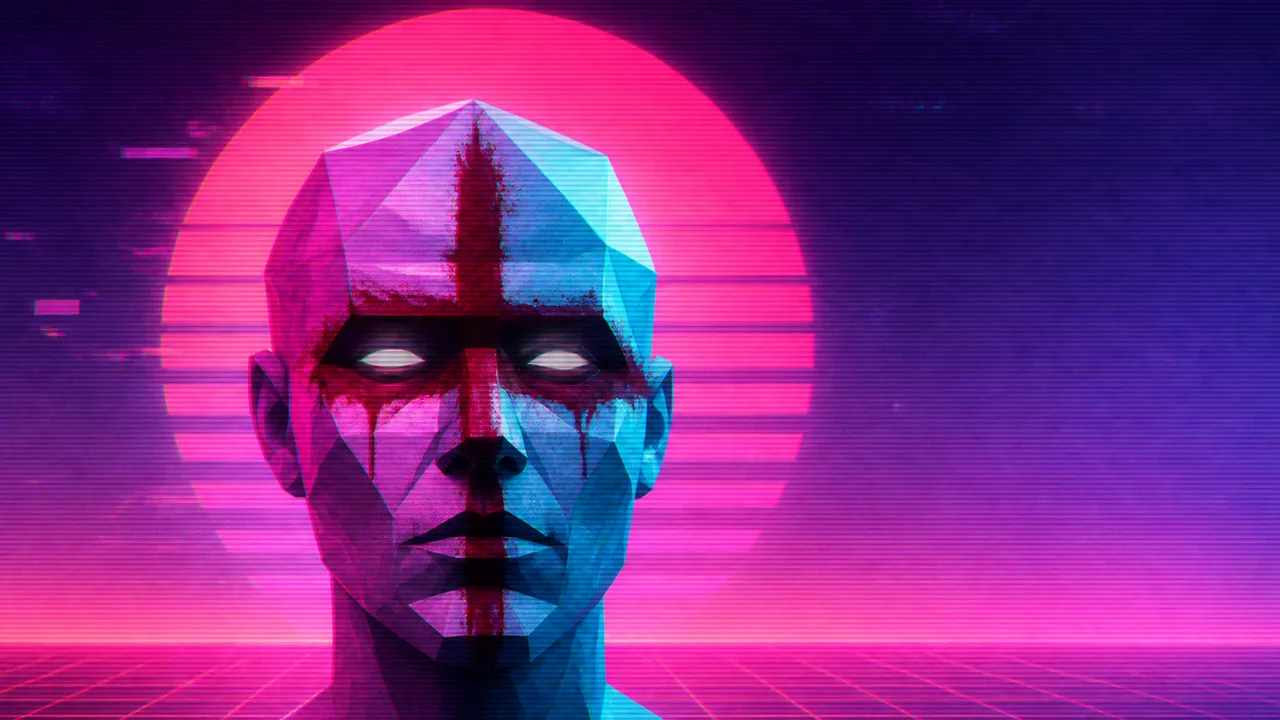
The first Crossed film teaser has arrived, bringing Garth Ennis and Jacen Burrows’s horror comic closer to the screen under director Rob Jabbaz. Ennis wrote the screenplay from the comic’s original 10 issues. Devin Druid and Ash Santos play Stan and Cindy, who lead survivors through a devastated landscape while evading infected people called the Crossed. The teaser is age-restricted; the infected retain human intelligence even as they lose control of their worst impulses. A facial mark identifies them. That last combination gives the film a more demanding problem than finding room on the screen for blood.
A creature that can think can recognize another person’s fear, pursue a goal and exploit an opening. An infection that unleashes impulses complicates what those actions mean: the threat has human capacities, even if the story changes the conditions under which a person uses them. For an adaptation, the question is how to make that intelligence felt. Graphic violence can establish what the Crossed do. Their ability to think could determine how long the dread lasts before anyone is hurt.
An Escape Route with No Simple Enemy
Crossed follows a group traveling north to escape an infection that leaves red cross-shaped marks on people’s faces and drives their worst impulses. The premise encompasses murder and sexual violence. Naming that content is more useful than treating the comic’s reputation for extremity as a dare. It tells prospective viewers what sort of horror this adaptation draws from, without pretending that a short teaser settles how much of it the finished film will depict.
The journey gives Stan, Cindy and their companions a destination, but reaching it would require decisions about other people along the way. If an infected person can think, a survivor cannot assume that evasion works the way it would against a mindless pursuer. It suggests a way for Jabbaz to generate suspense through anticipation and misjudgment, as well as through attacks. A marked face might warn the characters whom to avoid; intelligence could make the warning arrive too late.
There is a competing artistic case for showing the violence directly. A story about atrocities risks becoming coy if it uses their prospect for suspense while making their consequences conveniently invisible. Yet an accumulation of explicit acts could also flatten differences between victim, survivor and attacker into one extended endurance test. The choice concerns attention: whose decisions the film follows, whose suffering it asks viewers to register, and whether an assault alters the survivors’ conduct after the immediate danger passes. None of those choices follows automatically from an age restriction. A teaser can announce the threat; a feature has to live with it.
Which Crossed Gets Adapted?
The property already has a history of changing scale. Crossed debuted through Avatar Press in 2008 and acquired continuations and spin-offs over the following decade. One of them, Crossed + One Hundred, ran from 2014 to 2017; originally written by Alan Moore, it explored the world a century after the apocalypse. The film’s screenplay returns to Ennis and Burrows’s original 10-issue run. That gives the adaptation a narrower starting point than the entire body of Crossed stories.
The century-later premise asks what remains after catastrophe has had generations to become ordinary. The film’s northbound survivors face a nearer question: how does a small group keep moving through a world where another person may be a calculated threat? This contrast follows from the announced setting and the spin-off’s premise; it does not turn Crossed + One Hundred into a blueprint for a film based on different issues. It does, however, explain why selecting the original run is a creative decision. The larger property has room for stories about a changed civilization. This film begins with people trying to get away.
Ennis’s involvement sharpens the adaptation question rather than resolving it. He co-created the comic and wrote the film’s screenplay, his first feature script written directly for the screen. He has written for other screen projects, including the 2020 Boys short film Butcher. Familiarity with the original gives him command of its premise; filmmaking still requires choices about duration, performance and what a camera allows viewers to see. A comics panel can leave a reader at an image for a self-determined moment. A film controls how long an image stays and what comes after it. That is a difference between forms, not a verdict on which can carry more difficult material.
The original-run choice also offers a useful guardrail for expectation. Someone drawn to the later stories’ century-spanning possibilities may come looking for an account of what the infection makes of a society. The announced film follows a group in flight. Its dramatic measure may be smaller and more immediate: can its characters distinguish a stranger who needs help from one who intends harm, and what does that uncertainty do to their willingness to help at all? Those are questions the premise permits the film to ask, not promises about scenes it contains.
What The Sadness Can Tell Us
Jabbaz has directed an infection story before. His 2021 Taiwanese horror film The Sadness also concerns a virus that turns people toward homicidal violence rather than the behavior associated with mindless zombies. The overlap makes his appointment to Crossed readily intelligible: he has worked with the premise of dangerous people who remain more than shambling bodies. Crossed also brings an existing comic and its co-creator’s screenplay into the process, constraints that the premise of The Sadness alone cannot explain.
The comparison is most useful as a question for the finished film. When the infected can pursue impulses with human intelligence, suspense can come from a character’s reading of another character, or from the terrible discovery that the reading was wrong. Jabbaz’s previous subject suggests an interest in this territory; it does not answer whether he and Ennis will give the survivors enough interior life to make each encounter more than a pretext for spectacle.
As of October 9, Crossed had no announced distributor or release date. For now, the teaser establishes its route north and the nature of the danger on it. The question waiting at the end of that route is whether the film can make us fear what the infected understand, as much as what they might do.
More Like This
Moana 2's Villain and His Polynesian Mythic Roots
Moana 2's storm god Nalo draws from real Polynesian myth. A look at Tāwhirimātea and Whiro reveals how deep those roots actually run.
Danny Goler's Laser Experiment and the Code of Reality
Danny Goler turned a cheap red laser and DMT into a years-long experiment on the nature of reality. Here's what he found—and what remains genuinely unresolved.