Consumer Router Security Flaws and AI in the Homelab
Outdated firmware, hidden backdoors, and AI agents with shell access—Lawrence Systems' latest homelab Q&A covers the real state of consumer network security.

Written by AI. Marcus Chen-Ramirez

Photo: AI. Tomoko Hayashi
There's a particular kind of dread that comes from looking at a device millions of people have plugged into their homes and realizing it's running software from 2012. Not "inspired by" 2012. Not "based on a 2012 codebase that's been carefully maintained." From 2012, more or less untouched, handling your network traffic right now.
That's the picture that emerged when Lawrence Systems host Tom Lawrence walked through a security assessment of the TP-Link BE800—a Wi-Fi 7 router—conducted by Wendell of Level1Techs. What started as Wi-Fi 7 performance testing apparently took a hard left turn into a catalog of software archaeology. The BE800 shipped with a Linux kernel from August 2022 (end of life), an ancient version of ProFTPD from 2012, Samba from 2014, Net-talk from 2017, a three-year-old OpenVPN build, and an outdated version of StrongSwan—the software that handles IPsec VPNs and carries known CVEs from both 2021 and 2023.
That last detail matters more than it might seem. The issue isn't that StrongSwan is a bad protocol implementation. It's that there are documented, public vulnerabilities in the specific version TP-Link shipped, and patches exist in newer releases. The question isn't whether TP-Link could have addressed these. It's whether they bothered. As Tom put it during the stream: "There's a real doubt that they actually took the time to fix any of these."
Could TP-Link have silently backported patches while displaying old version numbers? Technically possible. Probably not what happened here. Consumer router vendors have a well-documented habit of shipping hardware on compressed timelines, locking firmware to whatever passed QA, and then moving on. The incentive structure doesn't reward ongoing security maintenance—it rewards getting the next SKU out the door.
The Netgear Finding Is Its Own Category
If TP-Link's situation reads as negligence, the Netgear Nighthawk finding reads as something more deliberate. Wendell's assessment found that an SSH daemon on the device listens on UDP port 22 and is designed to accept a "magic packet"—a specific signal that would spawn a shell and open firewall holes. Tom described it plainly: "It's waiting and listening for something to be sent to unlock it. That's essentially looking like a back door there."
To be fair, the audit couldn't actually produce a working magic packet. The mechanism uses SHA-256 hash credentials, so it's not trivially exploitable. But "we couldn't crack it during this audit" is a very different statement from "this is not a back door." The architecture of the thing—a hidden listener waiting for a secret handshake to grant shell access—isn't what you'd design if your goal was user security. It's what you'd design if you wanted a persistent remote access capability baked into hardware deployed at scale.
Netgear does have a bug bounty program, though it's currently paused for new submissions. TP-Link, for comparison, appears to have no formal bounty program—just a "report vulnerabilities to us" page, which is the security equivalent of a suggestion box.
The uncomfortable truth Tom surfaces here is that security scrutiny is distributed very unevenly across the firewall landscape. PfSense and OPNsense get picked apart constantly by researchers and practitioners. UniFi gets meaningful attention. TP-Link and similar mass-market brands largely don't—not because they're clean, but because the incentive to look is weak. Bug bounties matter. Community scrutiny matters. Wendell finding what he found while testing Wi-Fi speeds should give anyone with a consumer router pause.
The Trustworthy Firewall List Is Short
Tom's practical hierarchy, built from years of running a managed services operation, is pretty straightforward: pfSense and OPNsense at the top, followed by OpenWRT for those willing to source compatible hardware. UniFi sits in a workable middle ground—not open source in the same way, but a vendor that has demonstrated it can move faster than the threat. During a prior UniFi vulnerability disclosure Tom referenced, Ubiquiti had patches ready before active exploitation began in the wild. That's the bar. It's not a high bar, but plenty of vendors can't clear it.
The price gap between the consumer alternatives and something like a UniFi Dream Router has closed considerably. Tom compared a roughly $99 GL.iNet home router against the UniFi Express at $199, and his conclusion was essentially: the delta is real but the value proposition has shifted. "I think the budget constraints are not as close as people think. The gap has closed."
What's harder to price is the cost of running outdated firmware on a device that's the single point of entry to your network. That math looks different after you've read a CVE list.
AI in the Homelab: The Intern Problem
The second half of Lawrence Systems' session shifted to a topic that's been circulating in sysadmin circles: whether YouTube tutorials are losing ground to AI assistants for technical problem-solving. Tom mentioned that Steve Gibson raised it on Security Now, and he'd had the same conversation with Jeff from Craft Computing. His read: "I have a feeling that asking AI is where a pretty massive amount of people are heading right now for that type of question."
This isn't framed as catastrophe. It's framed as a shift with tradeoffs. AI answers are instant, reasonably good for common tasks, and get better with specific prompts. They're also confidently wrong in ways a bad YouTube tutorial isn't—a tutorial at least shows you what someone actually did. The chat consensus in Tom's stream settled on a hybrid: watch the video for complex topics, ask the AI for quick lookups, verify with forums when stakes are high.
The more interesting thread here is Turnstone, a self-hosted orchestration tool being developed by Wendell that puts AI agents to work on actual infrastructure tasks—with shell access, file search, web access, and the ability to SSH into systems and execute commands. The pitch is: local-first, no telemetry, bring your own models, your data never leaves your hardware.
Tom's live demo was characteristically honest—he'd shut down one of the required services before the stream, spent a few minutes troubleshooting it live, and eventually got things working. But the underlying concept is genuinely interesting. You build a "skill," tell Turnstone what to do, and the system prompts you for confirmation before taking any action. It assesses, reports back, asks permission. Tom called it "that back and forth" and flagged it as the design feature that makes this worth using rather than worth fearing.
The scoping principle he kept returning to is the right one: "Treat AI as the intern. Don't give them too much permission." Tom deliberately pointed Turnstone at lab machines he calls "victims"—isolated from anything that matters. The use case he's excited about is mundane: standing up three test VMs with specific configurations while he works on something else. Lab automation. Not production orchestration.
That instinct—to sandbox, scope, and stay skeptical—is the same one you'd want applied to your router firmware choices. The pattern repeats: the technology isn't the threat. The threat is deploying it without understanding what it can actually reach.
"Every ability we hand off to the machine, we will lose. Choose carefully." Tom displayed that quote during the stream, credited to a friend. He noted someone immediately pointed out a typo. Clearly, he said, AI didn't write it. Neither did he.
The irony of a sysadmin quoting that warning while simultaneously demoing an AI agent SSHing into his servers is not lost on anyone paying attention—least of all Tom. The question isn't whether to hand anything to the machine. It's whether you understand, precisely, what you're handing over.
More Like This
Reflex: Python's Answer to Full-Stack Web Apps?
Exploring Reflex, the Python framework claiming to simplify full-stack web apps, but is it truly revolutionary or just rewrapped React?
Why Your C++ Code Is Secretly Unmaintainable
Klaus Iglberger's workshop preview reveals how dependencies and coupling quietly transform simple C++ codebases into nightmares nobody wants to touch.

AI's Speed Problem: Hacks, Lawsuits, and Your Attack Surface
Google's zero-day warning, the OpenAI lawsuit pressure cooker, and why AI's speed makes old security hygiene dangerously obsolete.
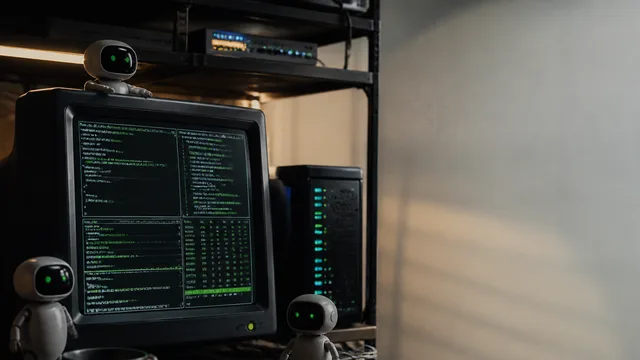
Who's Watching the AI Agent at 3am?
AI agents now run unsupervised for days on remote servers. Samira Okonkwo-Barnes examines the governance gap this infrastructure creates—and who's liable when things go wrong.
Moltbot Hit 82K GitHub Stars—Then Security Fell Apart
The fastest-growing open source AI project reveals why agents that actually do things are both irresistible and architecturally dangerous.
The $153 KVM That Shows Tech Hardware's Democratization
GL.iNet's Comet Pro KVM costs what enterprise versions did five years ago. That price collapse tells a story about hardware accessibility and power.

Data Science Case Study Interviews Are Getting Harder
Data science interviews now test business judgment, not just code. Here's what the shift toward case study formats means for candidates and hiring managers alike.

Google AI Teaches Quantum Computers to Learn From Errors
Google researchers have built an AI system that keeps quantum computers calibrated mid-computation. Here's what that actually means—and why it matters.