Claude Code and Clay Automate Cold Email Lead Generation
Nate Herk's Claude Code and Clay workflow pulls 50 enriched leads with personalized emails for $12. Here's what it actually does—and what it doesn't.

Written by AI. Bob Reynolds

Photo: AI. Júlia Almeida
Cold outreach has always had two problems that people conflate into one. The first is finding real businesses with real decision-makers and real contact information — the data problem. The second is managing the pile of tools required to do anything with that data once you have it — the tool problem. AI automation creator Nate Herk's recent demonstration of Claude Code connected to Clay is worth examining because it actually treats these as two separate problems, and solves each of them differently.
Herk's framing is clear: "Clay is going to fix the data problem and Claude Code is going to fix the tool problem." Claude Code acts as the orchestrator, issuing instructions in plain English to Clay's API without the user ever needing to learn Clay's interface. Clay handles the actual data work — sourcing business records, verifying emails and phone numbers, and enriching leads with context like Google ratings, review counts, and signals about what's recently happened at the company.
The waterfall is the part of this worth understanding. Clay doesn't pull from a single B2B database. It checks its primary provider, then cascades down through secondary and tertiary sources if the first returns nothing. Herk claims this pushes email match rates to somewhere between 80 and 90 percent — substantially better than the roughly 30 percent you'd get from any single vendor. Whether those figures hold across different industries and geographies is a question the demo doesn't answer, but the logic of multi-source enrichment over single-vendor dependency is sound regardless of the exact numbers.
The real work in this setup isn't technical. It's in what Herk loads into Claude Code before he types a single instruction. His demo project contains a business profile, case studies, FAQs, proof points, offer details, and website copy — everything Claude needs to write outreach that doesn't read like it was generated by a machine that knows nothing about the sender. "If Claude Code currently knows nothing about you," Herk says, "it'll be pretty hard for it to write a really good cold email for you." That prerequisite gets mentioned briefly in the video, but it's actually the highest-effort part of the whole workflow, and it's entirely on the user to build.
The demo itself targets HVAC businesses — small shops, owner-operated, the kind of business where a single review thread can define the company's reputation. Herk uses Claude's /goal prompt feature to set an endpoint: 50 fully enriched leads, every one with a verified email, a personalized subject line, and a tailored email body. Claude spawns six sub-agents, each targeting a different metro area, which then aggregate, deduplicate, and verify their results. The whole run took an hour — not because the system is slow, but because Herk asked for verification passes and even, improbably, had the agents debate each other on whether the copy was good enough. A simpler run for raw leads took five minutes.
The cost for the full enriched run: 172 Clay credits, which Herk puts at roughly $12. Do the math: fifty leads at $12 scales to 5,000 leads at $1,200. Whether that's cheap depends entirely on what your sales process is worth, but the unit economics are defensible for anyone selling a high-ticket service.
One sample email from the output is worth quoting in full because it illustrates what the system can actually do when it's fed good context:
"Hey Ante, saw the review about a customer still waiting on a call back about a month later. A few different people reaching out with no one following through. Rare miss for a shop at 4.7 stars across 4,100 reviews. We recently helped a local business turn calls it was missing into booked jobs without adding anyone to the phones. Honest offer — I'm still getting this off the ground. No case study yet. I'll set this up on your line. Run it free for 30 days. If it doesn't book jobs, you'd have missed. You owe nothing. Only ask if it works as a reference. Can I send over a 90-second video?"
That's not a bad cold email. It references a specific review, acknowledges the shop's otherwise strong reputation, makes an honest concession about lacking case studies, and asks for something small. Whether Claude wrote it wholesale or Herk's context files did most of the lifting is a reasonable question — but the output quality suggests the combination works when both elements are in place.
The spam machine question
Here is where the demonstration runs into something worth sitting with. A fresh domain blasting hundreds of cold emails gets flagged by spam filters, added to blacklists, and eventually burned — sometimes within days. This is not a hypothetical risk; it's the standard fate of aggressive cold outreach from unaged domains. Clay addresses this with built-in domain warming and a 30-emails-per-day cap on new accounts, and Herk walks through purchasing and configuring those accounts from within Clay's interface. He's not pretending the problem doesn't exist.
But the 30-per-day constraint collides directly with the scale the rest of the demo celebrates. At 30 emails per day, 5,000 leads represents nearly six months of sending from a single account. You need multiple domains, multiple warmed accounts, and genuine patience — or you risk torching the whole operation. The workflow is more capable than most people in this space have assembled, but the volume ceiling on responsible cold email hasn't moved. That's a constraint the tools don't solve.
There's also a question of where this sits for someone without an existing business profile to load into Claude. The warmth of that sample email comes from specific case studies, a defined offer, and a coherent company identity. Someone who skips the context-building step and just points the system at a list of leads will get generic output, regardless of how good Clay's enrichment is. Herk acknowledges this — "I don't want to teach you guys a new UI, I just want to have my agent figure out how to navigate" — but glossing past the context-building work undersells it. That part isn't automated at all.
The people for whom this workflow is genuinely well-suited have a clear profile. They're running a service business, they've already put thought into their offer and positioning, and they're doing enough outreach volume that building a proper context library pays off quickly. For them, a system that pulls verified, enriched leads and drafts personalized copy for $12 per 50 contacts is a meaningful operational improvement over the current state of stitched-together point solutions.
The people who will buy the tools, watch the tutorial, and still get mediocre results are the ones who came hoping the AI would figure out their positioning for them. Every cold email workflow since the dawn of the form has had the same failure mode: the tools get better, the fundamentals stay hard.
Herk closes with a note that Clay's MCP server doesn't yet handle all campaign management functions, and assumes that capability will arrive soon. He's probably right. But the more interesting trajectory is what happens when everyone's cold outreach is running through the same enrichment waterfall and the same AI writing stack. Match rates go up, copy quality rises, and inboxes fill with increasingly personalized emails from increasingly automated senders. At some point the personalization that makes this demo impressive becomes table stakes, and the signal-to-noise ratio in a stranger's inbox looks about the same as it did before.
That's not an argument against using the workflow. It's an argument for using it while it still works.
More Like This

Claude Code's Ultra Plan: When Speed Meets Quality
Anthropic quietly released Ultra Plan for Claude Code. It uses parallel AI agents to plan projects faster—and execution follows suit. Here's what's happening.
Why Your Claude Code Sessions Cost More Than They Should
Most Claude users don't need higher tier plans—they need to understand how tokens actually work. Here's what's burning through your budget.
Multica Wants to Turn AI Agents Into Project Managers
An open-source tool promises kanban boards for Claude and other coding agents. But do developers actually want their AI assistants managed like tasks?

Building Claude Skills With NotebookLM: A Technical Autopsy
Julian Goldie shows how to build custom Claude AI skills using Google's NotebookLM. We examine what works, what's overhyped, and what you should know.
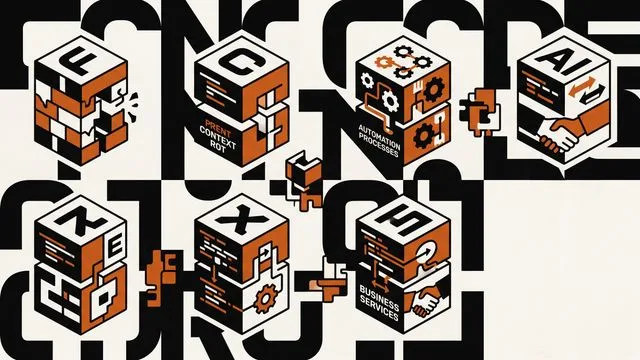
6 Claude Code Skills That Actually Sell to Businesses
Nate Herk spent 400 hours in Claude Code and found 6 skills businesses keep paying for. Here's what they do—and what to verify before trusting the hype.

What 10 Million Cold Emails Reveal About Selling
Austin Schneider sent 10M cold emails and found 6 patterns that actually drive replies. Here's what globally-minded sellers need to know—and where the framework breaks.

Scroll World: AI-Generated Scroll Animations Explained
Chase AI demos Scroll World, an open source skill that uses AI coding agents to build cinematic scroll-animated websites in a single prompt session.

AI Loop Engineering: Separating Hype from Practice
Loop engineering is the latest term developers are chasing. A new video argues the fundamentals — prompt, context, harness — still matter more than the label.