Multica Wants to Turn AI Agents Into Project Managers
An open-source tool promises kanban boards for Claude and other coding agents. But do developers actually want their AI assistants managed like tasks?

Written by AI. Bob Reynolds
The Better Stack team has released a detailed walkthrough of Multica, an open-source tool that layers project management workflows onto AI coding agents like Claude Code and OpenCode. The pitch is straightforward: instead of conversing with your AI assistant, assign it tickets, track its progress through a kanban board, and schedule recurring tasks. It's Jira for bots.
The question worth asking is whether this solves a problem developers actually have.
Multica lets you create custom agents with their own system prompts and skills, then manage them through a familiar issue-tracking interface. You can set priorities, assign due dates, and watch your agents move tasks from "To Do" to "In Progress" to "In Review." There's an autopilot feature for scheduled tasks—essentially an open-source version of Anthropic's paid Claude Routines. The entire stack can be self-hosted on a VPS using Docker, giving you control over your infrastructure and data.
The Better Stack demonstration shows this in action. They set up a "Medibot" agent with access to private medical records, asked it whether the user could eat calamari given a shellfish allergy, and watched it work through the problem. The agent searched directories, located the relevant files, and returned an answer—all while updating its status in the kanban board. They also configured a recurring task to scan RSS feeds from tech newsletters and identify video-worthy topics.
The setup process, however, reveals what you're really signing up for. The demonstration spends considerable time navigating authentication issues, Docker containers, daemon processes, and environment variables. As the narrator notes: "I usually skip the whole setup stage, but for self-hosting with Multimodal, there are a few things I had to figure out that weren't in the documentation."
This is self-hosting's familiar trade-off: you get control and privacy, but you become your own IT department. The payoff includes using your own infrastructure, avoiding Anthropic's usage restrictions ("just don't tell Anthropic," the video winks), and potentially saving money by routing tasks to cheaper models. But you lose mobile notifications, pre-built integrations with Slack or Telegram, and the convenience of someone else managing security updates.
The Workflow Question
The more fundamental tension is philosophical. The Better Stack narrator admits: "To be honest, I'm not the biggest fan of communicating with agents by assigning tasks and watching them progress through a Kanban board." This matters because it surfaces a question the AI tooling ecosystem hasn't settled: how should humans and AI agents actually work together?
Project management workflows evolved for coordinating human teams across time zones and disciplines. You need tickets and status updates when you can't simply turn to your colleague and ask, "How's that authentication bug coming?" But AI agents respond in seconds or minutes, not days. They don't take lunch breaks or have conflicting priorities. The latency that makes kanban boards useful for distributed teams largely disappears.
The narrator prefers what he calls "more of a dialogue with my agents, actually seeing what they do, the tools they use, and the problems they come across so I can help debug with them." This is how most developers currently use Claude Code or Cursor—as conversational partners, not ticket assignees. You watch the agent work, intervene when it goes astray, and build understanding through interaction.
Multica assumes a different model: agents as junior developers who work semi-independently while you focus elsewhere. Create a ticket, assign it to the appropriate agent, check back when it moves to "In Review." The system even handles the workflow logic—agents move tasks forward through the board automatically, though they wait for human approval to mark things complete.
This could be useful if you're managing multiple agents across different projects, each with specialized prompts and skills. The demonstration shows you can connect multiple VPS instances to a single Multica interface, theoretically creating a distributed team of specialized agents. One for frontend work, another for documentation, a third for data analysis.
But most developers aren't there yet. They're still figuring out how to effectively use one AI assistant, not orchestrating teams of them.
The Economics of Control
Multica's strongest argument may be financial rather than functional. Anthropic charges separately for Routines and managed agents, while Multica is free if you're willing to host it yourself. As the video notes, it's "a very solid tool that is much cheaper if you use a different model than using some of the Claude managed agents or Claude routines."
This matters because AI costs haven't stabilized. We're still in the phase where providers are competing on capability rather than price, and managed services carry premium pricing. Self-hosting shifts infrastructure costs to you, but gives you flexibility in model selection and usage patterns.
The security angle also carries weight. The demonstration chose self-hosting "purely because of security"—a reasonable concern when your agents have access to private repositories and sensitive data. Managed services run on someone else's infrastructure, which means trusting that someone else with your code and credentials. Self-hosting means trusting yourself, which for many developers is preferable despite the additional work.
But that additional work is real. The video glosses past the security implications with a recommendation to use Tailscale and "make sure you're always up to date with the latest versions"—both of which require ongoing attention and technical competence. This is not a tool for casual users.
What This Reveals
Multica is well-executed open-source software solving a problem that exists, but perhaps not widely. The developers who want kanban boards for their AI agents now have a credible option. The developers who don't want kanban boards—which appears to include Multica's own demonstrators—have a data point about what agent orchestration might look like as these tools mature.
The real lesson is that we're still experimenting with interaction models. Some people will want to assign tickets to AI agents and review their work asynchronously. Others will want continuous dialogue. Still others will want something we haven't imagined yet because the technology is six months old.
Multica represents one possible future: agents as managed resources, orchestrated through established project management patterns. Whether that future arrives depends on whether developers actually want to manage their AI assistants, or whether they prefer assistants that don't need managing.
The open-source nature means you can try it, modify it, and discard it without financial commitment. That's the right approach for software that's genuinely uncertain about what problem it's solving. Build it, release it, see who uses it and how. The answer will tell us something about where this technology actually wants to go.
More Like This
Paperclip Wants You to Run a Company With Zero Humans
Open-source tool Paperclip promises to orchestrate AI agents into a working company. David Ondrej demonstrates the setup—and the gaps between vision and reality.
Dokploy Promises Vercel Features at VPS Prices
A new tool claims to deliver platform-as-a-service convenience on cheap VPS infrastructure. Better Stack demonstrates what works and what doesn't.
This Free Tool Lets You Run Multiple AI Agents At Once
Collaborator is an open-source app that orchestrates multiple Claude AI agents in one workspace. Here's what it actually does—and what it can't.
Inside an AI Engineer's Workflow for Building MCP Servers
AI engineer Alex demonstrates his complete workflow for building and deploying MCP servers, revealing how AI tools shape—and complicate—modern development.
Playwright CLI vs MCP Server: The Token Usage Battle
Better Stack tests Playwright CLI against MCP Server for Claude Code. Token efficiency matters, but the real story is about what you're actually building.
What Happens When AI Gets Root Access to Your Computer
A YouTuber gave an AI agent root access to his Linux system. The results reveal both the promise and the friction of our autonomous software future.

Selling AI Is a Storytelling Problem, Not a Tech One
Nate B. Jones argues that AI sales stall because of weak storytelling, not weak tools. Here's what that means for agencies, operators, and C-suites.
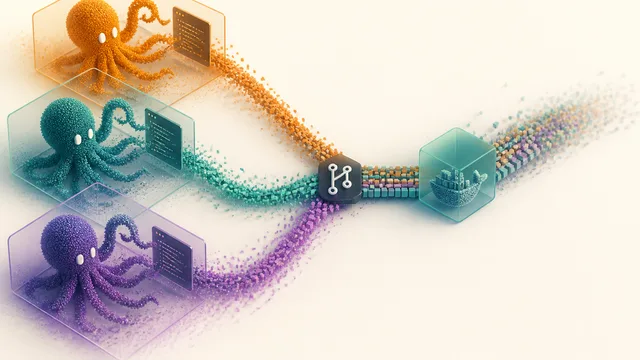
Running Parallel AI Coding Agents Without Chaos
Running multiple Claude Code sessions in parallel creates real coordination problems. Here's the infrastructure stack that actually prevents them from breaking each other.