CCAT's New KID Readout Pushes Submillimeter Astronomy Forward
CCAT's new two-octave KID readout system handles up to 8,192 detectors across four RF networks, reshaping what submillimeter astronomy can see.

Written by AI. Nadia Marchetti
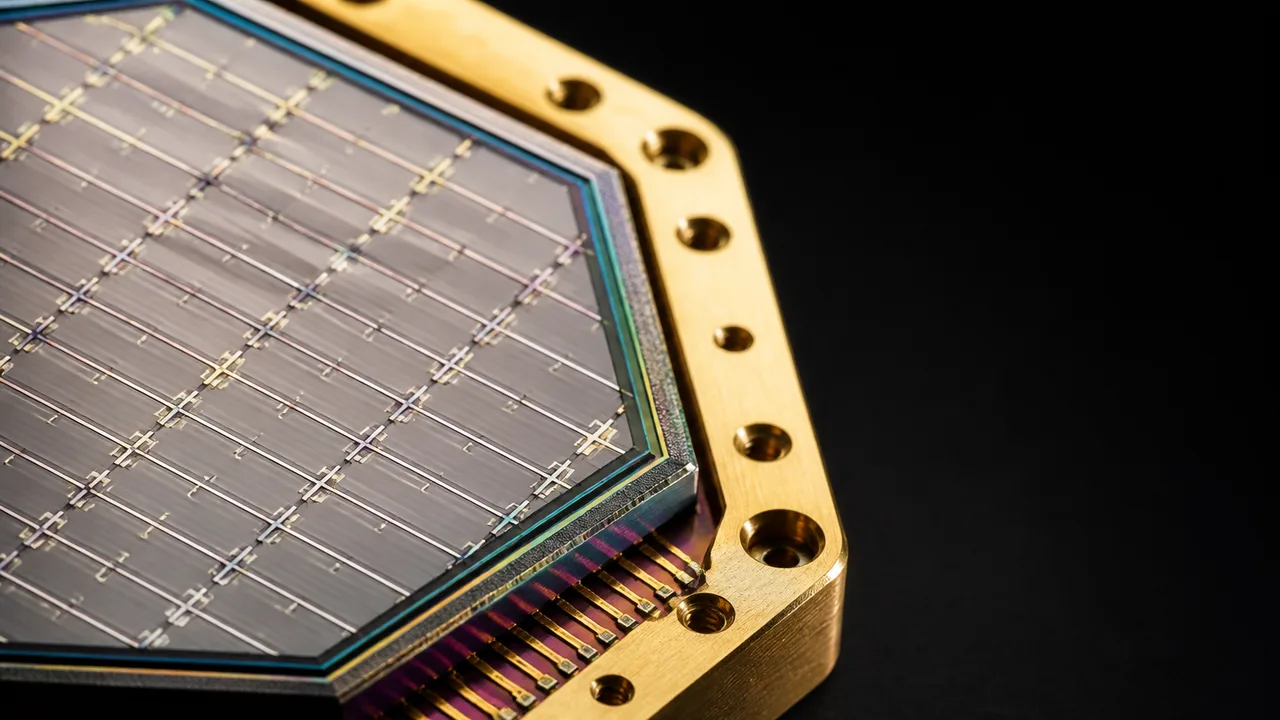
There's a specific kind of frustration that accumulates in observatory engineering: you build a detector array capable of capturing faint signals from the early universe, and then your readout electronics can't keep up. The telescope becomes the least interesting bottleneck in the system. That's the problem the CCAT collaboration has been chipping away at — and a new paper posted to arXiv Astro-ph describes what may be their most significant step yet.
The paper details a two-octave 1.024 GHz kinetic inductance detector (KID) readout system, built specifically for the CCAT Prime-Cam instrument. The architecture reads out four independent RF networks simultaneously, each with 1.024 GHz of instantaneous bandwidth and capacity for up to 2,048 detectors per network — meaning the full system can, in principle, handle up to 8,192 detectors at once, according to arxiv.org. For a technology that was struggling with bandwidth ceilings not long ago, that's a meaningful jump.
Why Readout Bandwidth Is the Story
Kinetic inductance detectors are compelling precisely because they're multiplexable: you can read hundreds or thousands of detectors over a single transmission line by assigning each one a unique resonant frequency. The catch is that "reading" all those frequencies simultaneously demands serious signal processing muscle. The more detectors you want per array, the wider the bandwidth your readout electronics need to cover — and the harder it becomes to do that cleanly and efficiently.
Previous approaches relied on lookup-table (LUT) based tone synthesizers to generate the probe signals sent into the detector array. They worked, but they imposed hard limits on how much bandwidth you could practically use. Arxiv.org's write-up of the earlier CCAT DSP work is direct about this: the overlap-channel polyphase synthesis filter bank (OC-PSB) approach "successfully lifts the bandwidth limitations of previous LUT-based approaches." At the time of that publication, an FPGA clock constraint capped operational bandwidth at 256 MHz — a real ceiling. The new RFSoC-based system documented in the August 2026 preprint is designed to push well past that.
The technical mechanism worth understanding here is the polyphase synthesis filter bank itself. Rather than generating each probe tone individually — which gets computationally expensive and spectrally messy as detector counts grow — the OC-PSB approach synthesizes many tones efficiently in the frequency domain and converts them to time-domain signals in a structured, overlapping way. The "overlap-channel" part matters because it allows the system to handle tones that fall near channel boundaries without the distortion artifacts you'd otherwise accumulate. It's a signal processing technique borrowed from telecommunications that turns out to be exceptionally well-suited to the MKID readout problem.
The RFSoC Advantage
The platform choice — Xilinx's Radio Frequency System-on-Chip (RFSoC) — is worth flagging. RFSoC integrates high-speed analog-to-digital and digital-to-analog converters directly with FPGA fabric on a single chip, which matters enormously here. The data rates involved in reading thousands of KID resonances simultaneously would, on conventional hardware, require an ungainly chain of discrete components with their own latency, synchronization headaches, and power budgets. Putting the RF front-end and the digital signal processing on the same chip simplifies the architecture considerably and opens up the bandwidth headroom the new design exploits.
SPIE proceedings from the same research group, published by the SPIE Digital Library and authored by Ruixuan (Matt) Xie, Adrian K. Sinclair, James Burgoyne, Scott Chapman, and Anthony Huber, trace the multi-rate DSP development that led to the current architecture. The through-line across that work and the new preprint is a deliberate effort to build readout systems that scale — not just for Prime-Cam's current detector complement, but for the larger arrays that submillimeter observatories are trending toward.
What Prime-Cam Is Actually Trying to Do
CCAT's Prime-Cam is being developed for the Fred Young Submillimeter Telescope (FYST), a 6-meter aperture instrument slated for Cerro Chajnantor in Chile — at roughly 5,600 meters elevation, one of the driest, highest observatory sites on the planet. The submillimeter and millimeter wavelength range it targets sits in an observational sweet spot: it's where the cosmic microwave background carries polarization signatures from the epoch of inflation, where dusty star-forming galaxies shine brightly even at cosmological distances, and where molecular gas in our own galaxy betrays the physics of stellar nurseries.
The 850 GHz module specifically — the subject of related CCAT detector work cited on ResearchGate — targets some of the most scientifically rich submillimeter frequencies. Dual-polarization detection at these frequencies enables measurements of polarized dust emission, which traces magnetic field structure in star-forming regions and can help disentangle foreground contamination in CMB polarization surveys. More detectors means better sensitivity, faster survey speeds, and ultimately more science per telescope-hour.
The Scaling Problem No One Talks About Enough
Here's the tension that the new readout architecture quietly exposes. Detector array technology has been advancing faster than readout electronics for years. Fabrication techniques for KIDs have matured to the point where building large arrays isn't the hard part anymore — reading them out is. Every time the detector community pushes to higher pixel counts, the readout engineers have to run to catch up.
The OC-PSB on RFSoC represents one answer to that chase. But it's worth asking: is 8,192 detectors across four networks actually the ceiling the design targets, or is it a waypoint? The arXiv preprint describes up to 2,048 detectors per RF network as the design goal — which is already ambitious — but next-generation survey instruments are already being discussed at detector counts well above that. The submillimeter community isn't building for today's science case; it's building for the one that becomes possible once the readout infrastructure actually exists.
That's not a criticism of the CCAT approach. It's closer to an observation about the nature of the problem: the instruments we build shape the questions we can ask, and the readout systems we build shape the instruments. Getting the electronics right isn't downstream of the science — it is the science, at this stage.
What "Noise-Limited Performance" Actually Means
One phrase that appears in the broader CCAT electronics literature, cited via ResearchGate, is "detector noise limited performance." It's technical shorthand, but it deserves unpacking because it's actually the goal state for any readout system. If your readout electronics add noise above the intrinsic noise of the detectors themselves, you're degrading your instrument — the electronics are the limiting factor, not physics. Achieving detector-noise-limited performance means the readout has been made quiet enough that the detectors are the actual bottleneck, which is the correct bottleneck to have.
That the CCAT team is citing this benchmark as a design target for their RFSoC-based system tells you something about the maturity of the engineering effort. This isn't exploratory prototyping anymore. It's a system designed to perform.
The companion wideband receiving channelizer described in the arXiv preprint completes the picture: you need both a clean synthesis path (generating the probe tones you send into the detector array) and a clean analysis path (decoding the array's response). Getting both right, at this bandwidth and detector count, in a package that can actually be deployed at 5,600 meters altitude, is an engineering achievement worth taking seriously.
What gets imaged once all of this works is almost beside the point — except that it isn't. Star-forming regions, galaxy clusters, the polarized fingerprints of inflation: these aren't minor scientific questions with minor instruments. They're the big ones, waiting on the electronics to catch up.
More Like This
The Most Sensitive Dark Matter Detector Might Find Nothing
LUX-ZEPLIN sits a kilometer underground, waiting for dark matter. But success might look like silence—and that would tell us something huge.

Heavy Spoilers Builds an Office, Ditches the Algorithm
YouTube creator Paul from Heavy Spoilers explains why he built a garden office, changed his logo, and chose depth over views in content strategy.

How Astroparticle Physics Built Itself From Borrowed Parts
A new arXiv review traces how astroparticle physics didn't emerge from a single discovery—it assembled itself from three fields that kept bumping into the same cosmic questions.

Why NASA Is Finally Returning to Venus After 40 Years
After decades of neglect, Venus is getting two NASA missions. Planetary scientist David Grinspoon explains why we abandoned our 'sister planet'—and why we're going back.
LIGO May Have Found a Primordial Black Hole
LIGO's latest catalog may contain a sub-solar-mass black hole that couldn't form from a star—and what that means for our understanding of the early universe.

DESI Maps 4 Billion Cosmic Objects in 5.6 Trillion Pixels
The DESI Legacy Imaging Surveys team just released the biggest 2D map of the universe ever made—and it's publicly free. Here's why that matters.

Seven Proofs That the Harmonic Series Diverges
Michael Penn's 31-minute video walks through seven distinct proofs that the harmonic series diverges—from a 1350 grouping trick to a prime-number infinite product.

Artemis 2 Carried America's 250th Birthday to the Moon
NASA's Artemis 2 mission carried "America 250" markings to lunar orbit, blending national celebration with the next chapter of deep space exploration.