Apollo's EasyJet Buyout: What It Means for Workers
Apollo's £5.7bn EasyJet takeover is a win for shareholders. For cabin crew and ground staff across Europe, the calculus is far more complicated.

Written by AI. Carmen Rodriguez
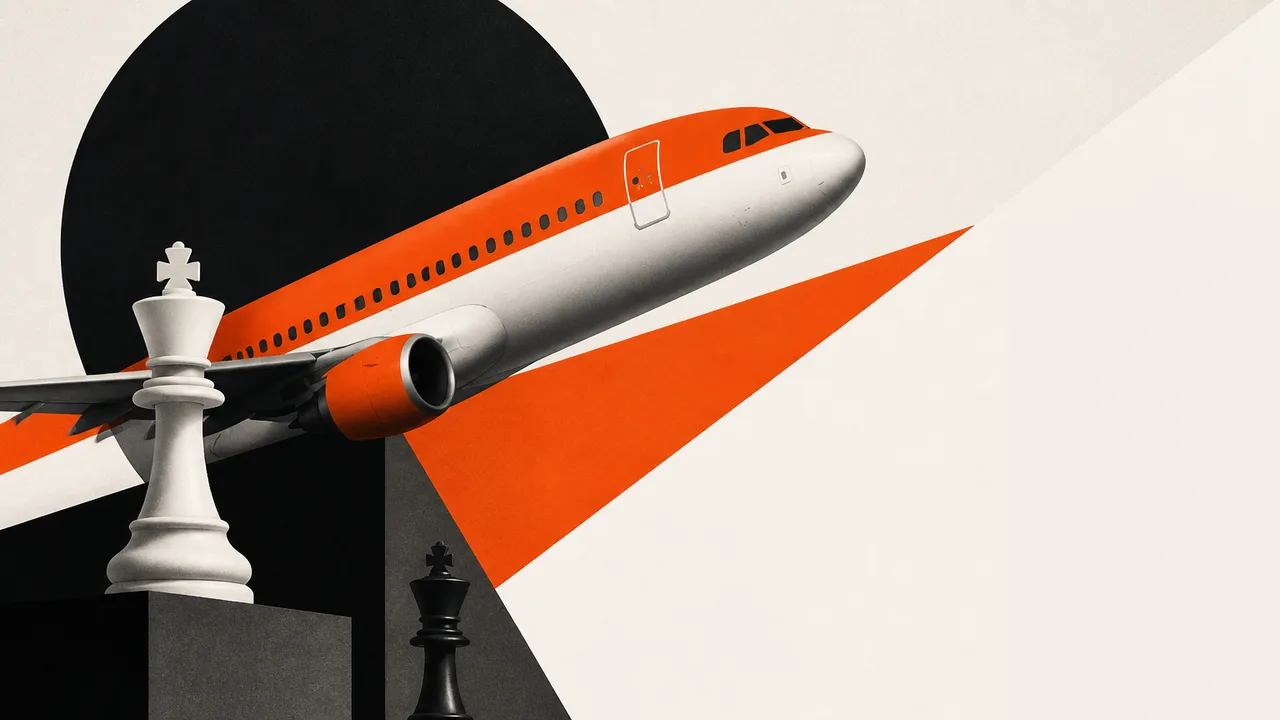
Imagine you're an EasyJet cabin crew member. A few years ago, you went on strike — bags packed, boarding gate empty, management furious — fighting for a pay raise that kept pace with what inflation was doing to your rent. You won something. Not everything, but something. Then you went back to work. You flew the routes, managed the delays, handled the passengers who were taking out their frustrations on you instead of the weather. And this Friday morning, you open your phone and find out your employer has agreed in principle to be acquired by a U.S. private equity firm called Apollo Global Management, in a £5.7 billion deal that the financial press is describing as a win.
For whom, exactly, is the question worth sitting with.
What happened, and quickly
The sequencing matters here, so let's run through it. According to Yahoo Finance, EasyJet had days ago accepted a bid from U.S. investor Castlelake — and then Apollo showed up with a bigger number. The airline confirmed it had agreed in principle to Apollo's £5.7 billion ($7.7 billion) offer, topping Castlelake's prior proposal. CNBC reported shares surged as much as 14% on the news. BBC confirmed EasyJet said Apollo's bid had trumped Castlelake's. TradingKey noted the takeover battle played out over the course of a week, with Apollo Global Management emerging as the winning bidder.
The financial press has covered this as a straightforward M&A story: bidding war breaks out, bigger checkbook prevails, stock pops, shareholders cheer. That story is accurate as far as it goes. It just doesn't go very far.
Apollo is not new to aviation
To understand what this deal means, it helps to know that Apollo's interest in airlines is not a sudden impulse. According to Apollo's own published insights, the firm identified a gap in the market to grow Sun Country Airlines — a move that speaks to Apollo's thesis that aviation assets, properly structured, can generate returns that more conventional investors undervalue. That's the intellectual frame Apollo brings to EasyJet: not a passion for aviation per se, but a conviction that the market is mispricing the asset.
What Apollo is acquiring is a carrier with operations across a dozen European countries, with hubs at Gatwick, Amsterdam, Berlin, Geneva, and Milan Malpensa — the last confirmed as an active EasyJet base directly by the airline. EasyJet sits in what is genuinely a strong structural position in the post-pandemic travel recovery: budget carriers with established route networks and brand recognition are hard to replicate. Apollo's financial thesis is not irrational.
But Apollo's aviation thesis has been tested in the relatively contained labor environment of a U.S. regional carrier. EasyJet is something different: a multinational European operation with unionized workforces operating under multiple national labor frameworks, a history of collective action, and a workforce that has already demonstrated it knows how to apply pressure when ownership pushes too hard.
The labor terrain Apollo is walking into
Here's where the financial narrative and the workplace reality diverge most sharply.
EasyJet's labor history is not quiet. Cabin crew affiliated with Unite the Union have taken strike action in past years over pay disputes — disputes that took place, it's worth noting, in an era of high inflation that was compressing real wages across the sector. Pilots have similarly organized through BALPA. Ground staff operate under their own agreements, some negotiated at the country level. The workforce across EasyJet's European network is not a monolith, but it is organized — and it has institutional memory of what happens when it pushes back and what management is willing to concede under pressure.
This is the pressure map Apollo is inheriting. And private equity firms, whatever their sectoral expertise, tend to bring a particular operational philosophy to acquisitions: find efficiencies, service debt, work toward an exit horizon of five to ten years. The tension between that financial rhythm and the expectations of a unionized European workforce is not hypothetical. It's the central question the deal raises.
The structural issue is leverage. When a private equity buyer finances an acquisition with significant debt — which is the standard PE model — the acquired company's cash flows have to service that debt. In a capital-intensive, margin-thin business like budget aviation, the variables that can be adjusted to meet debt obligations are limited. Fuel costs are what they are. Airport fees are what they are. Labor costs are the variable that PE owners historically reach for. That's not a slur against Apollo specifically; it's a description of the financial logic that makes PE acquisitions in labor-intensive industries worth scrutiny.
What workers will be watching
The immediate questions for EasyJet's workforce are concrete: Will existing collective agreements be honored through the ownership transition? Will Apollo seek to renegotiate contracts under the pressure of debt service? Will the company pursue operational changes — restructuring routes, reclassifying roles, offshoring functions — that affect employment levels or conditions?
These questions won't be answered in the press release announcing the deal, or in the shareholder vote that will follow. They'll be answered in the first round of negotiations after Apollo takes control. And the answers will be shaped by how organized and prepared the workforce is when those negotiations begin.
European labor law gives workers more formal standing in M&A processes than their U.S. counterparts typically have — works councils in Germany and the Netherlands, for instance, have consultation rights that can slow or complicate ownership transitions. That's a meaningful structural difference from Sun Country Airlines. Apollo's deal team knows this. Whether its operational team has calibrated for it is less clear.
The irony worth naming: EasyJet's value to Apollo depends substantially on maintaining the service quality, route reliability, and brand trust that EasyJet's workforce delivers. A deal that degrades working conditions and triggers labor unrest doesn't just create bad press — it undermines the asset Apollo paid £5.7 billion to acquire. The financial logic and the labor logic aren't always opposed. Sometimes they point in the same direction. The question is whether Apollo's management recognizes that before it finds out the hard way.
What the bidding war tells us about the asset
It's worth pausing on the fact that Castlelake put in a bid before Apollo topped it. Two major U.S. private equity firms looking at the same European budget airline and both deciding it's worth billions suggests genuine conviction about EasyJet's market position — not a distressed acquisition, but a competitive bet on the strength of a recovered travel market and EasyJet's place in it.
That's actually relevant to workers. A distressed acquisition is its own kind of pressure; a growth-oriented acquisition can carry different incentives. Apollo buying EasyJet because it thinks the airline can expand is a different operating environment than Apollo buying EasyJet to strip it for parts. The evidence here — two firms competing, a premium price paid — points toward the former.
But "growth-oriented" and "worker-friendly" are not synonyms. Growth can mean longer hours, expanded routes, more intensive schedules, pressure on staffing ratios. The workers who staff those expanded routes have to be part of that conversation, not notified after the fact.
EasyJet's pilots and cabin crew and ground staff across twelve countries will not be voting on the Apollo deal. They'll be watching it close, then going to work, then sitting across a bargaining table from new ownership that has an exit horizon and debt to service. The experiment Apollo's shareholders just approved — whether American private equity can manage a unionized, multinational European aviation workforce through a successful ownership cycle — will be run on their time, on their bodies, in their negotiations. The financial markets gave Apollo an enthusiastic opening day. The workforce will determine whether the final act looks anything like what the prospectus promised.
More Like This
Business Rules 2026: Impact on Labor and AI
Explore how emerging business rules and AI technology reshape labor dynamics and worker dignity by 2026.

Financial Crises Follow Patterns — But Not for Everyone
Kuran Francis maps four recurring patterns behind every major financial crisis. The framework is solid. What it leaves out is the story of who pays when the system breaks.

Wall Street Knew the Crash Was Coming. Saying So Got You Fired.
Jeremy Grantham's famous poll revealed 398 analysts knew the dot-com crash was guaranteed. A 2003 study shows why none of them said so publicly: accuracy cost careers.

Dubai's Crisis Has a Worker Problem No One's Covering
Dubai's economic model was built on migrant labor with almost no rights. Now, with airstrikes and a blockaded strait, those workers face the worst of the fallout.

A New Object in the Sky: The JetBlue Drone Strike
A JetBlue pilot reported hitting a drone on approach to JFK. What the incident reveals about airspace rules built before drones existed.

Delta's 2026 Profit Bet Rides on High Airfares Holding
Delta reaffirmed its 2026 earnings forecast despite fuel volatility—but the plan depends on keeping fares high for customers it says can afford it.

China's Robotaxi Push and the Workers in Its Path
China's robotaxi companies are expanding globally on EV supply chain strength—but what does that mean for the drivers whose livelihoods disappear in the process?

EU Entry/Exit System: Border Delays and What They Mean
The EU's new EES biometric border system is causing summer travel delays. Here's what it asks of travelers, workers, and the institutions behind both.