Anduril’s Navy Submarine Deal Tests a New Supply Model
Anduril plans a $3.7 billion Maryland facility after an up-to-$2.9 billion Navy award. The test is whether qualified parts reach submarine builders on time.

Written by AI. Jin Seo
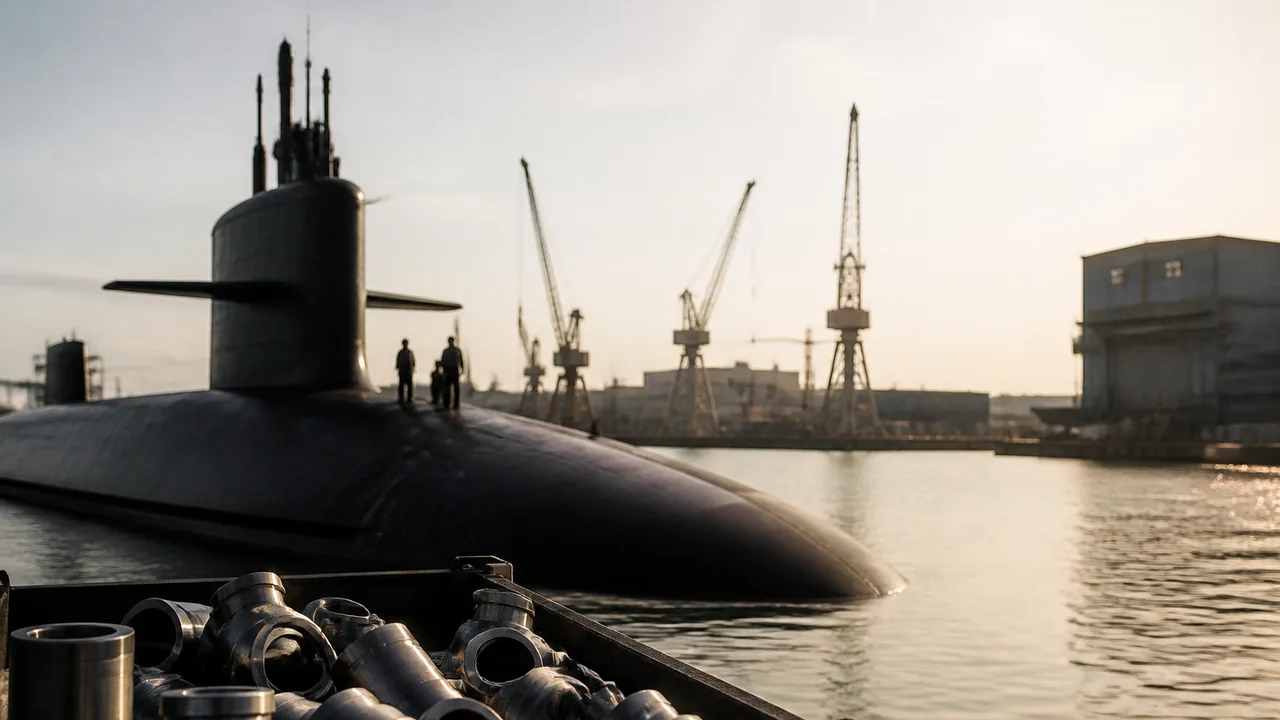
Anduril won a Navy award worth up to $2.9 billion on Tuesday to help produce Virginia-class submarines, while announcing a separate $3.7 billion plan for a facility at Sparrows Point, Maryland. The planned facility, called Arsenal-2, is slated to begin operating in 2030. Anduril says it could create about 3,100 jobs.
The two dollar figures describe different things. The Navy award is a reported maximum contract value, not a statement that the government has paid Anduril $2.9 billion. The $3.7 billion is Anduril’s planned investment in building capacity, not a second Navy payment. Readers trying to follow the money should keep those figures in separate columns.
The production plan is narrower than the word shipyard might suggest. General Dynamics Electric Boat and Huntington Ingalls Industries’ Newport News Shipbuilding build the Virginia-class submarines. Anduril intends to make components and, eventually, larger assemblies for the two builders to incorporate into their ships. If the plan works, its value will come from adding qualified work to that supply chain, not from handing final submarine assembly to a new contractor.
A Factory Enters a Crowded Production Schedule
Anduril plans to start with components including torpedo tubes. Its submarine work is also beginning at a separate facility in Orange County, California, where it intends to develop manufacturing processes before production starts in Maryland. A senior administration official told FOX45 News that torpedo tubes are constraining progress on some Virginia-class submarines already under construction. Producing those parts sooner could help those boats move forward, the official said. That is a plausible near-term target, though the planned Maryland plant has a much longer timetable.
The sequence after the first parts is demanding. Anduril plans to demonstrate that its components meet Navy quality and safety requirements before attempting increasingly complex assemblies. Large modules and major ship sections remain longer-term ambitions. A building can have room for a submarine section and still lack permission, skilled people or proven processes to make one that the Navy’s builders can use.
The strongest case for the project begins with a measurable bottleneck. In a review of shipbuilding, the Government Accountability Office identified shortages of yard space and skilled workers, along with aging infrastructure. GAO said in June 2024 that Virginia-class Block V production was running at about 60% of the Navy’s goal of two submarines a year. That dated measure describes the pressure behind the new investment; it is not a forecast of what Anduril will add.
A supplier able to deliver an accepted component on schedule could take work off a constrained builder’s floor. Consider a torpedo tube: making more of them helps only if they pass the required checks and arrive when the builder can install them. If another shortage holds up the boat, additional tubes alone will not produce another submarine. This is the operational question behind the announcement: which work can move to Anduril, and will that transfer increase completed output rather than shift the waiting line?
The money follows a similar sequence. The Navy’s payments are tied to demonstrated production outcomes, FOX45 News reported. An industry official told the outlet that the federal award should not be understood as reimbursement for construction of Arsenal-2; Anduril says it is putting up the capital to create capacity and bears most of the execution risk. Those are descriptions of the proposed arrangement, not a substitute for the contract’s detailed terms. Maryland and Baltimore County have also committed to incentives tied to the investment, some of which still need legislative or council approval. If the projected jobs arrive, local workers and businesses stand to benefit. Public incentives put taxpayers on the other side of that bet even if Anduril finances the plant itself.
The Navy Has Bought Capacity Before
GAO’s longer view makes the attraction of a new supplier understandable. The Navy and Defense Department have already invested billions in shipbuilding infrastructure and workforce development. Yet GAO found that the Navy had not fully assessed whether those investments worked as intended and that the two departments were not fully coordinating their efforts to avoid overlap. For Anduril, counting square feet, jobs and dollars committed will be easier than establishing how many additional submarine components passed inspection and reached builders when needed. The latter measures would answer the capacity question.
A separate Navy program offers a useful comparison with firm limits. The Shipyard Infrastructure Optimization Program began in 2018 with an initial estimate of at least $21 billion over 20 years. The projected cost of modernizing four public shipyards now exceeds $200 billion and the work could extend beyond 2080, Engineering News-Record reported, citing GAO’s September review. The newer figure is in then-year dollars and is not a final validated Navy estimate. The Navy calls the original figure a rough early estimate; the program’s scope expanded to include such work as utilities, transportation and environmental projects.
Those public shipyards overhaul, repair and modernize submarines, while Anduril proposes a privately financed facility supplying parts for new construction. Their costs and schedules cannot be used to predict Arsenal-2’s. The comparison instead shows how an industrial-capacity plan changes as engineers, builders and budget officials turn an ambition into operating facilities. In the public-yard program, work omitted from early estimates later became impossible to ignore. At Sparrows Point, the relevant checks will be whether Anduril’s planned facility opens, whether it can staff and qualify production, and whether its output fits the builders’ schedules.
That also gives the project’s advocates a fair test. If California-made components can be qualified and delivered before the Maryland facility opens, the Navy could see useful output without waiting until 2030. If Anduril can then move from parts to assemblies that Electric Boat and Newport News can install reliably, the two existing builders gain another source of usable capacity. The company and its workers benefit from sustained orders; the Navy benefits if submarine production actually moves faster. Neither outcome follows automatically from the size of the award.
Anduril’s next consequential milestone is not another investment total. It is an accepted part delivered when a submarine builder needs it.
More Like This

What Fintech Affiliate Models Could Teach iGaming
Line Peteri argues fintech's education-first affiliate model and retention focus offer a playbook iGaming has ignored for a decade. Here's what that gap actually costs.

How Dynasty Trusts Keep Heirs Rich but Powerless
Dynasty trusts, dual-class shares, and private foundations don't just preserve wealth—they strip heirs of any real control over it. Here's how the architecture works.