American Airlines' Starlink Plan Covers Mainline Jets
American's Starlink expansion covers more than 1,030 mainline jets. Here's what the 2027 start, Delta's Leo plan and United's flight metric mean for travelers.

Written by AI. Tomas Reyes-Kim
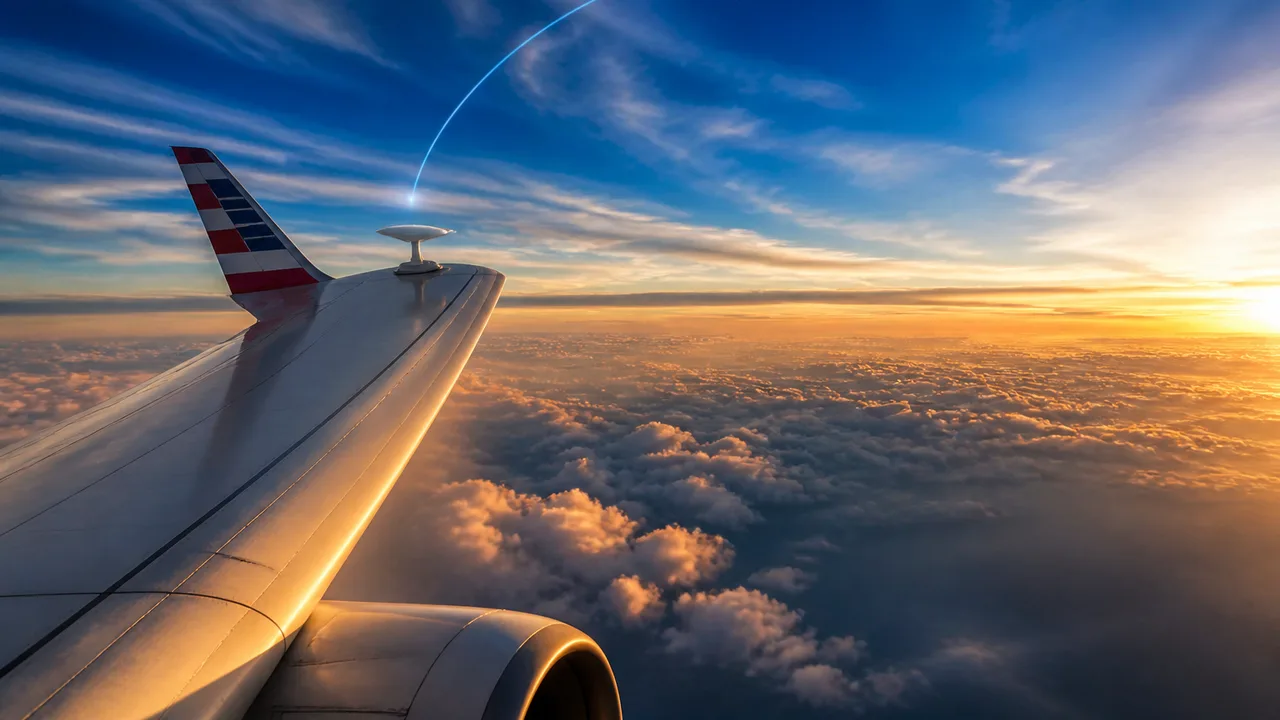
American Airlines expanded its Starlink plan on October 8 to cover more than 1,030 mainline aircraft, with installations set to begin in early 2027. That is a substantial commitment: more than 500 Airbus narrowbodies, over 400 Boeing narrowbodies and at least 130 Boeing widebodies. For anyone choosing a flight because they need to work online, though, the useful question is smaller. Will this plane have it?
American has given travelers a fleetwide destination and a starting window. It has not given them a date when every eligible plane will be equipped, or said which Boeing aircraft will go first. A traveler booking a 2027 departure cannot turn “installations begin” into a promise about the Wi-Fi on that departure. The airline is committing to the retrofit, but the booking decision happens one flight at a time.
How the Promise Got Bigger
American's May plan covered more than 500 Airbus narrowbodies. The October expansion brings Boeing narrowbodies and widebodies into the program. That history changes the practical stakes. The first version primarily concerned one part of the fleet; the new commitment reaches aircraft used for long-haul flying, where passengers may be counting on a connection for many hours rather than a quick domestic hop.
Some American 777s and 787s still use older Panasonic connectivity and can encounter coverage gaps. Starlink's inclusion in the plan gives those passengers a potential future upgrade. It does not say when a particular 777 or 787 will receive one.
The scope also stops at a boundary travelers can easily miss: American Eagle regional jets are outside the mainline Starlink commitment. An American itinerary can include a regional flight, so the airline name on a booking is an incomplete Wi-Fi checklist. A mainline aircraft falls within the announced plan; a regional jet does not. Neither fact identifies the equipment installed on the plane operating your flight today.
American says its planned Starlink terminal can deliver speeds of up to 1 gigabit per second. That figure describes a terminal's advertised capability, not a speed promised to every seat. Shared onboard capacity, installation timing and the service actually fitted to the aircraft all sit between that number and a passenger trying to upload a file. A big peak-speed figure is exciting if your current connection makes sending an email feel like filing it by post. It still cannot tell you what you will get on a booked flight.
Delta is a Useful Comparison, with a Catch
Delta chose Amazon Leo and announced an initial installation on 500 aircraft beginning in 2028. American's stated start comes earlier, and its announced Starlink scope covers more aircraft. But those counts describe different commitments: American has named its entire mainline fleet, while Delta has specified an initial tranche. Without installation rates or completion dates, the start years cannot tell travelers which airline will finish first, much less which will offer the better connection on a given route.
Amazon says Leo-powered Wi-Fi will be free for Delta SkyMiles members. Delta already had a free Wi-Fi program for SkyMiles members before this agreement. In its March announcement, the airline said that existing service had reached more than 1,150 aircraft. Delta's later Leo start therefore does not mean its passengers must wait until 2028 to find connected flights. Leo is a planned change to a network that already serves passengers, just as American's Starlink retrofit will meet an existing patchwork of onboard systems.
American's own offer has a similar membership wrinkle: its Starlink connectivity is expected to remain free for AAdvantage members. If the price of getting online affects which ticket you buy, keep the membership condition separate from the satellite brand. “Free Wi-Fi” is useful information only after you know whether your flight has the relevant system and whether you meet the access terms.
Viasat-3 Flight 2 began covering the Americas after its November 2025 launch, and an upgrade was expected to more than double network capacity there in September. More network capacity could help during busy periods; it is not a measured guarantee of speed on any one flight. That gives the Starlink-versus-Leo contest a less tidy shape than the logos suggest. Passengers will spend the rollout years using today's connectivity as well as whichever new system reaches their aircraft.
United says Starlink is on 46% of its daily flights. That is a flight-level measure, rather than the number of aircraft an airline intends to equip. American's announced aircraft count and United's stated share of flights cannot be compared as if they used the same denominator.
For travelers, the sensible reading of American's news is conditional. Its wider commitment now includes the Boeing planes that its Airbus-only May plan left out, a change with obvious appeal to people who need connectivity on longer flights. The early-2027 start tells you when installations are supposed to begin. Until the airline identifies equipped aircraft and flights, the number that belongs in your booking decision is the Wi-Fi service on your departure, not 1,030.
More Like This
Delta's Amazon Leo Wi-Fi Bet Puts Rollout Before Speed
Delta plans to start Amazon Leo Wi-Fi installations in 2028. Here is what its Starlink decision means for connection quality, logins and the flights you book.

Accor and H World Link 19,000 Hotels in Loyalty Deal
Accor and H World are linking loyalty programs across 19,000 hotels and 430 million members. Here's what it means for travelers—and why execution is everything.

What Smart Travelers Do Right After Boarding a Plane
From seat checks to jet lag tricks, here's what experienced flyers actually do in the first few minutes after boarding—and why it matters.